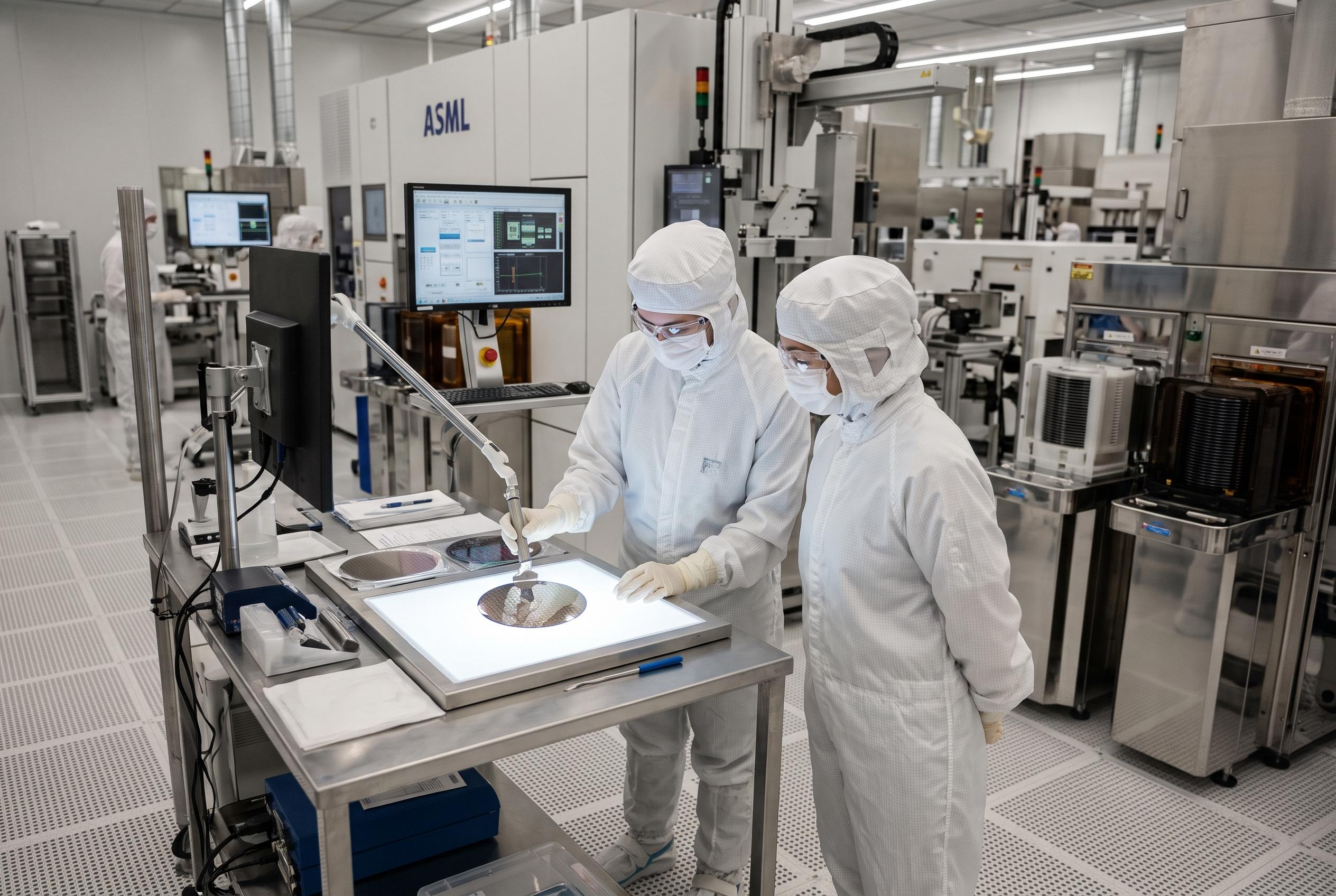

China’s biggest memory chipmaker is preparing limited HBM3E production despite usable yields of only 20% to 30%, underscoring the challenge of reducing reliance on foreign suppliers.
China’s biggest memory chipmaker, CXMT, is preparing to enter the market for HBM3E, the high-bandwidth memory used in artificial intelligence chips, even though its production yield is still far below industry leaders, according to Reuters. Two people familiar with the matter told the news agency that only about 20% to 30% of output is currently usable, a level that would make the product expensive to manufacture and difficult to scale. CXMT has already sent samples to several Chinese AI chip designers and is expected to begin limited production within about two months.
High-bandwidth memory is stacked to move data rapidly between memory and processors, making it a critical component in systems used to train and run large language models. Reuters said CXMT’s early testing showed performance closer to SK Hynix’s older HBM3 than to its newer HBM3E. One of the people cited by Reuters said the company has circulated two versions of the chip: a standard design and an updated variant intended to improve yield. Even so, the memory is likely to cost more than comparable foreign products if it reaches the market in its current form.
CXMT’s push comes against a backdrop of acute supply pressure in China’s AI hardware sector. Reuters reported that domestic chipmakers have struggled to secure enough advanced memory to lift output, after the United States tightened export controls on some HBM products bound for China in December 2024. As a result, Chinese firms have sought memory through unofficial channels, where prices can be several times higher. Reuters also reported last month that Huawei, Cambricon, MetaX and Iluvatar CoreX raised AI chip prices by 20% to 50% as memory costs increased.
The move also underlines how far CXMT still has to travel in the high-bandwidth memory market. Counterpoint Research data cited by Reuters showed SK Hynix held 50% of global HBM revenue in the second quarter, Samsung 33% and Micron 18%, while CXMT accounted for 10% of global DRAM revenue as a conventional memory supplier. Reuters said CXMT told investors in September that it had caught up with Samsung and Micron in standard memory and had swung to a profit of nearly $20bn this year as prices rose. In HBM, however, its competitors have already moved on: SK Hynix said on Wednesday that HBM4 had exceeded its yield target and would overtake HBM3E in shipments and revenue in the fourth quarter, while Samsung said in July that it had expanded HBM4 sales and shipped HBM4E samples.
Disclaimer: This content is intended for informational purposes only. Readers are advised to exercise their own judgement, conduct due diligence, or consult a qualified expert before acting on any information provided.