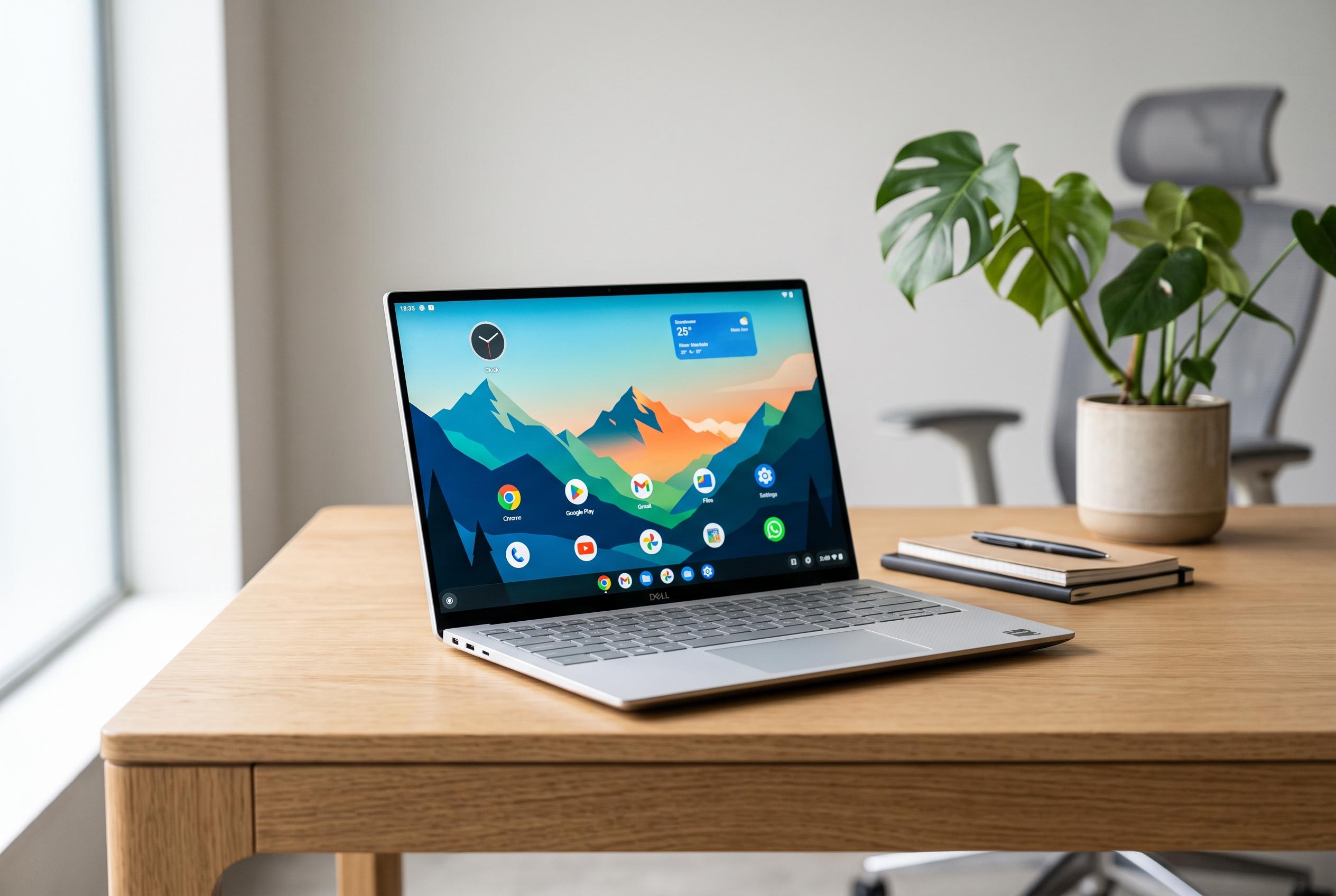

Dell appears to be developing its first laptop for Google’s emerging Android-based desktop platform, signalling a potential shift in Google’s strategy to challenge Windows and macOS with a new, AI-integrated OS.
Dell may be preparing its first laptop built for Google’s new Android-based desktop platform, with Geekbench results pointing to a machine listed as the Dell XPS 13 (DX13267). Russian outlet Ferra reported the benchmark entry, and the listing has prompted speculation that Dell is testing a high-end model for what some observers are calling a Googlebook-style device.
The leaked specification details suggest a premium configuration: Qualcomm’s Snapdragon X Elite processor, 16GB or 32GB of RAM, a 13.4-inch OLED display with a resolution of 2880 by 1800 and touch support, plus Wi-Fi 7, Bluetooth and two USB-C ports. The Geekbench scores, at roughly 2,200 in single-core testing and more than 9,500 in multi-core results, indicate performance in line with other recent Snapdragon X Elite laptops.
The broader significance is Google’s reported work on Aluminium OS, an Android-based desktop system intended for laptops, tablets, detachables and mini-PCs. According to Android Central, the platform is being built with Google’s Gemini artificial intelligence models at its core and is meant to strengthen Google’s position in a PC market still dominated by Windows and macOS. The report added that Google does not appear to be abandoning ChromeOS immediately, suggesting a period of overlap rather than a sudden switch.
TechSpot reported that a now-deleted Google job listing referred to an Android-based operating system called Aluminium and described a transition from ChromeOS. Android Authority and PCWorld both said the company appears to be working towards a single desktop direction that blends Android and ChromeOS, while Google’s accidental leak, reported by Tom’s Guide, showed an early interface with Android-like multitasking and Play Store support. If the Dell device is indeed tied to this effort, it would be one of the clearest signs yet that Google’s desktop plans are moving from internal development towards hardware.
Disclaimer: This content is intended for informational purposes only. Readers are advised to exercise their own judgement, conduct due diligence, or consult a qualified expert before acting on any information provided.