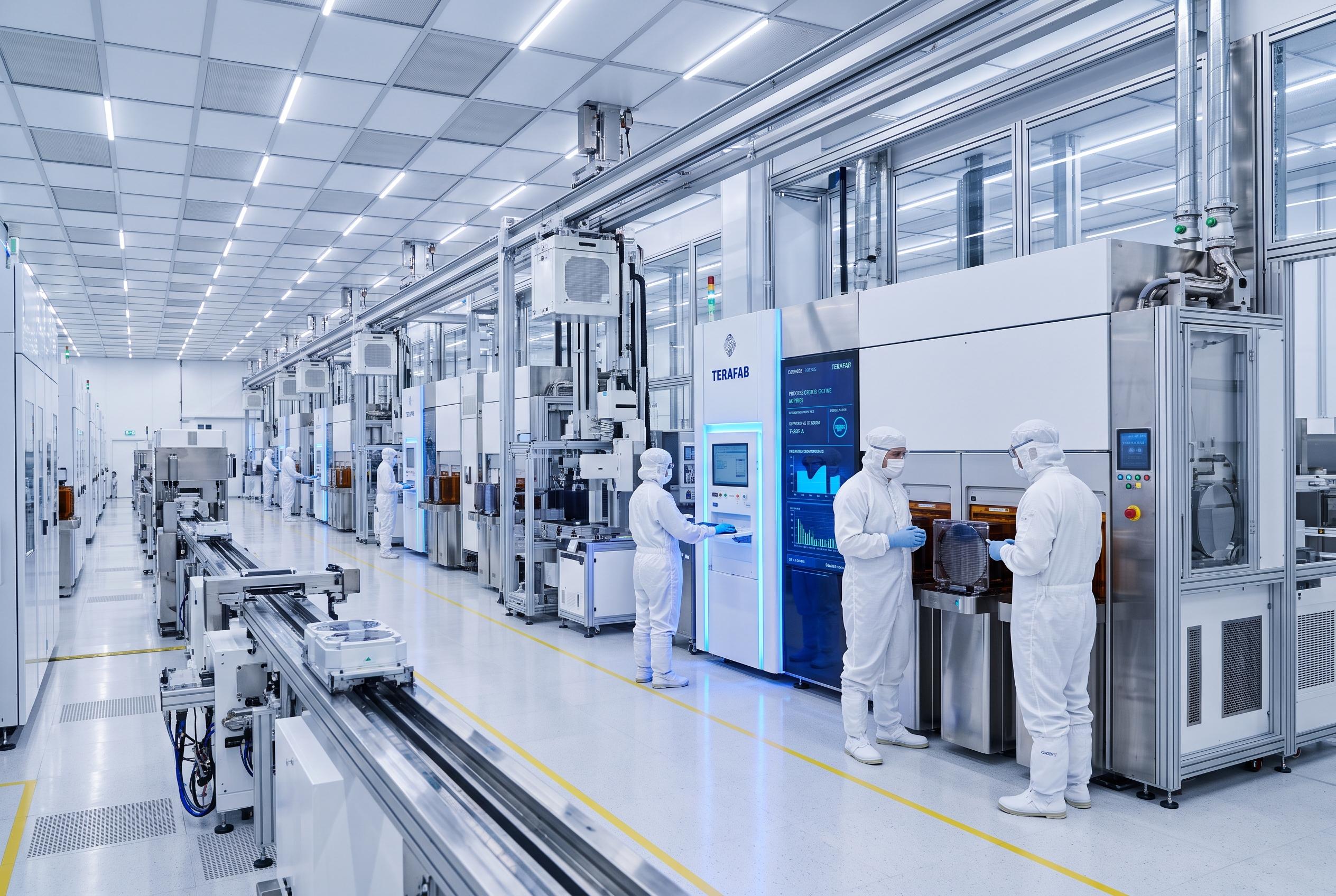

Musk’s ambitious Terafab project seeks to integrate design and production, challenging traditional supply chains and aiming for strategic control in the next era of computing, with potential implications for giants like Apple.
Elon Musk’s Terafab proposal is less a single factory than an attempt to redraw the boundary between design and manufacture. According to reports from Tom’s Hardware, the project is meant to bring chip logic, memory, packaging, testing and rapid iteration into one industrial system, with Tesla, SpaceX and xAI all expected to draw from it.
That ambition matters because it goes beyond the usual logic of outsourcing. A conventional chip designer depends on a chain of specialist firms for masks, wafer fabrication, packaging and qualification. Terafab appears intended to shorten that chain so that product changes can move from concept to prototype with fewer commercial hand-offs and fewer scheduling delays.
The scale being discussed is extraordinary. Tom’s Hardware reported that the initial phase would involve a semiconductor campus in Grimes County, Texas, with roughly 100 million square feet of manufacturing space and an initial capital commitment of $16.8 billion. Separate reporting has described the project as aiming eventually to support more than one terawatt of compute annually.
The physical size is only part of the signal. The more important point is that Musk’s businesses are trying to link software, AI, vehicles, robotics, communications and launch systems into a shared manufacturing base. That would give them a tighter feedback loop between product design and industrial production than most technology companies have ever attempted.
Yet the project remains more vision than proven semiconductor operation. Producing advanced logic and memory at scale is difficult, expensive and slow, and there is no guarantee that a single campus can deliver the yields, reliability and process maturity required for leading-edge chips. The large footprint may impress, but in semiconductors floor space is not the same as capability.
There is also a difference between building a factory and building a lithography platform. Reporting around Terafab has linked the project to in-house lithography, packaging and testing, but there is no public evidence that it will replace established EUV systems in the near term. That matters because next-generation chipmaking depends on far more than a powerful light source: optics, masks, stage precision, contamination control, resists, metrology and process control all have to work together.
In that sense, Terafab should be read as a bid for strategic control rather than complete self-sufficiency. Even if it succeeds, Tesla, SpaceX and xAI will still rely on outside suppliers for much of the semiconductor ecosystem, including equipment, materials and upstream expertise. The point is to reduce dependence in the most sensitive areas, not to eliminate it entirely.
That distinction is relevant to Apple, which has long practised a different form of integration. Apple designs its own processors and tightly couples hardware, software and services, but it still relies heavily on external manufacturing partners for wafers, packaging and assembly. It has gained enormous strength from that model, yet it also inherits the limits of supplier capacity and the priorities of the wider semiconductor market.
Those limits are becoming more visible as AI distorts memory demand. Micron has said that appetite from AI systems is reshaping memory architectures and manufacturing decisions, especially where high-bandwidth memory and advanced packaging are concerned. Even companies that do not build data-centre hardware can feel the pressure when capital, cleanroom space and engineering resources are pulled towards AI workloads.
For Apple, the risk is not just shortage, but timing. Future devices may need more unified memory, more local AI processing and more specialised packaging than today’s products. If capacity is already spoken for when those products are ready, a supplier relationship alone may not be enough to secure the needed output on favourable terms.
Apple has begun to respond through partnerships rather than outright ownership. Its American Manufacturing Programme, as described in company disclosures, ties together a domestic supply chain involving wafer makers, chip foundries, packaging houses and equipment suppliers. That approach buys influence and resilience without forcing Apple to build every factory itself.
A more realistic long-term answer for Apple may be selective ownership. Advanced packaging, prototype production, memory co-development, chiplets, photonics and manufacturing automation are all areas where deeper control could matter more than owning a traditional leading-edge fab. Complete independence is unlikely in an industry as interconnected as semiconductors, but strategic control over the most critical layers is still achievable.
Terafab therefore matters less as a finished project than as a warning. The companies that control the next era of computing may be those that can secure physical capacity, not just design elegant products. Apple’s ecosystem remains powerful, but if the centre of gravity in technology shifts further towards robots, autonomous systems and industrial AI, the company will need more than design excellence to stay ahead.
Disclaimer: This content is intended for informational purposes only. Readers are advised to exercise their own judgement, conduct due diligence, or consult a qualified expert before acting on any information provided.