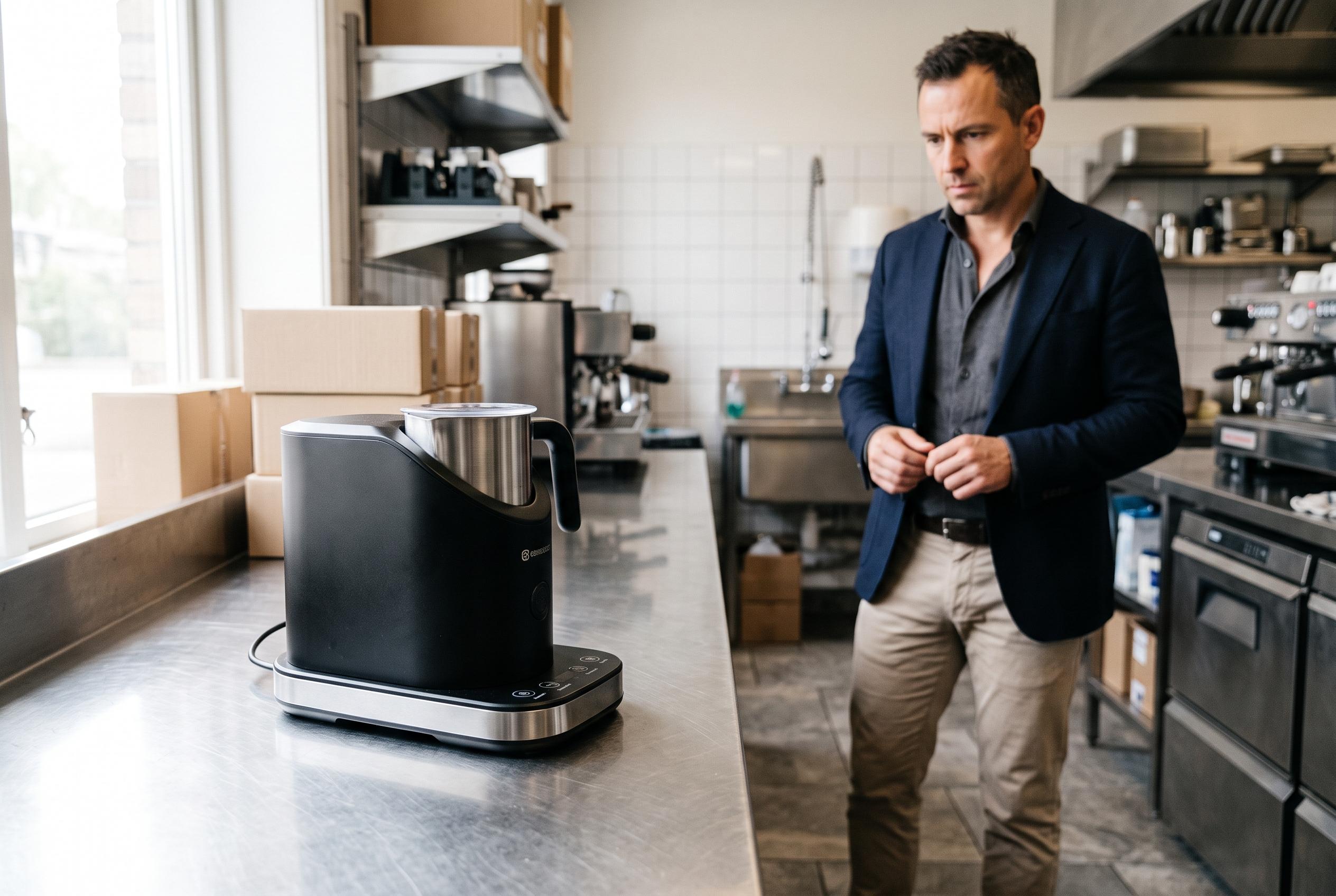

As China emerges as a major producer of milk frothers, buyers are advised to scrutinise product consistency, safety compliance, and supply chain reliability to safeguard brand reputation in a competitive global market.
China has become a significant production base for milk frothers, serving cafés, hotels, retailers and private-label brands, but buyers still need to separate broad manufacturing capacity from genuine product consistency. Blossom Grinders says Chinese suppliers often combine metal processing, plastic moulding, motor assembly and packaging expertise, yet the real test is whether a unit produces fine, stable foam, not just whether it looks well finished. That means checking foam quality after use, as well as the whisk, shaft, seals, battery housing and charging port. A loose lid or weak fit can quickly erode confidence.
For commercial and household buyers alike, temperature control is central to performance. The article points to the Specialty Coffee Association’s milk temperature range of 55–65°C as a useful benchmark, because overheating can damage texture and flavour. It also notes that whisk, steam and induction designs serve different needs: whisk models suit smaller, quicker jobs, while steam and induction systems generally offer greater capacity and more stable heating. Grand View Research and Technavio are cited as identifying electric frothers, automation and temperature consistency as key market drivers, but the practical conclusion is simple: buyers should ask for measured cycle times, load wattage, usable capacity and noise data rather than relying on catalogue claims alone.
Compliance is another area where careful checking matters. The guide recommends IEC 60335-1 safety evidence, model-specific test reports, and properly matched CE and RoHS documentation, rather than generic certificates that may not cover the exact unit being purchased. For food-contact parts, buyers should also request material specifications and relevant FDA-related statements. The broader point is that paperwork can support credibility, but it does not replace verification of the whisk shaft, heating plate, power cord and sealed housing.
Factory due diligence should extend to order terms and production realities. The article advises buyers to confirm minimum order quantities, sample charges, lead times, replacement policies and the degree of customisation available before paying. It suggests separating sampling, tooling, mass production and inspection into distinct timelines, with realistic planning for delays in components or freight. It also recommends checking whether the tested sample matches the production sample, because a polished presentation can hide uneven process control.
A final purchasing scorecard should weigh landed cost, warranty terms, certification scope and supply risk rather than unit price alone. The International Trade Centre’s Trade Map is cited as showing China’s strength in broad electrical appliance exports, while the World Bank’s commodity data is used to underline exposure to metals, energy and freight volatility. The most practical buying strategy is to verify capability through samples, records and inspection, then judge whether a supplier can communicate clearly under pressure. In a category where minor defects can affect both foam quality and brand reputation, that discipline matters as much as technical specification.
Disclaimer: This content is intended for informational purposes only. Readers are advised to exercise their own judgement, conduct due diligence, or consult a qualified expert before acting on any information provided.