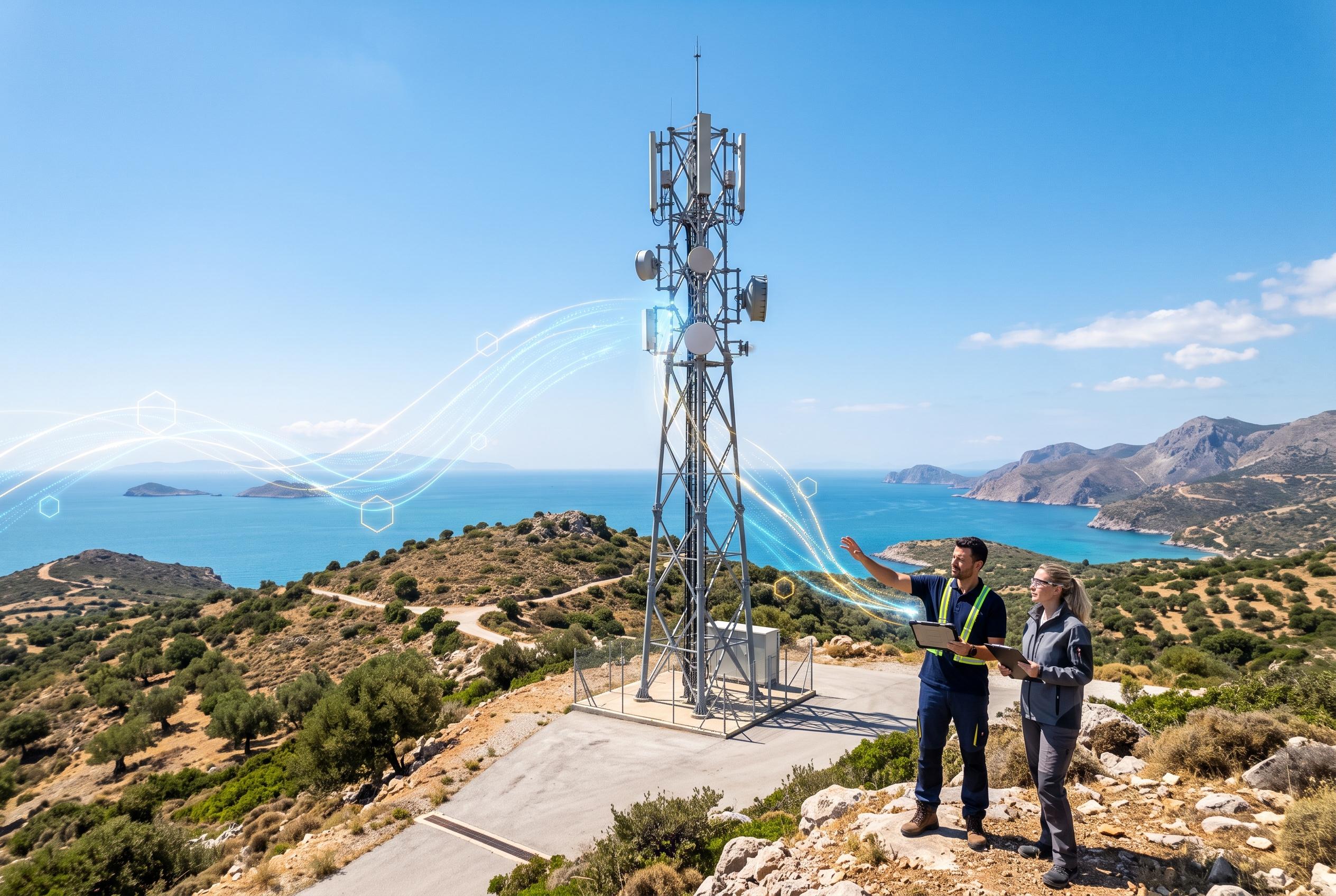

Ericsson’s latest Mobility Report reveals that global 5G subscriptions have surpassed 3.1 billion, as artificial intelligence begins shaping network design and devices, laying the groundwork for the next generation of mobile technology.
The mobile industry has entered a new phase in which 5G is no longer the story on its own. According to Ericsson’s June 2026 Mobility Report, global 5G subscriptions passed 3.1 billion in the first quarter of 2026 after 162 million were added in three months, while mobile networks carried about 210 exabytes of data a month. The report says the next shift is already visible: artificial intelligence is starting to shape how networks are designed, how devices behave and how operators plan for 6G.
Ericsson’s figures show how quickly 5G has become the dominant mobile standard. Around 660 million new 5G subscriptions were added in 2025, and the technology now accounts for about half of global mobile data traffic. North America remains the most mature market, with 79% of mobile subscriptions on 5G, while north-east Asia stands at 60%, western Europe at 54% and the Gulf states at 53%. Ericsson expects 5G subscriptions to reach 6.4 billion by the end of 2031, when they should represent roughly two thirds of all mobile subscriptions worldwide.
Greece has been moving faster than many European markets in adopting the new generation of networks. George Pappas, head of Ericsson Greece, said the country has made “remarkable” progress, citing high nationwide population coverage and the fact that all domestic operators have announced commercial 5G Stand Alone availability. That matters because 5G SA uses a fully new core network rather than relying on earlier generations, making it better suited to advanced services, network slicing and more demanding industrial applications.
The report also shows that the upgrade to 5G is happening alongside the retreat of older standards. 4G subscriptions fell by 77 million in the first quarter of 2026, while 3G and 2G shutdowns continued across the world. By the end of 2025, 80 operators had fully switched off 3G and 46 had closed 2G networks. At the same time, consumer traffic remains heavily video-driven, with video accounting for about 75% of mobile data use.
Artificial intelligence is increasingly affecting the shape of that traffic. Ericsson says uplink, the flow of data from device to network, is rising faster than downlink for many operators, driven by AI tools and cloud services. Pappas said this is already changing the mix of traffic and the type of devices networks must support, pointing to smart glasses, drones and humanoid robots as examples of equipment with very different needs from traditional consumer handsets. Ericsson’s device outlook suggests smart glasses are still at an early stage, but global shipments reached around 10 million in 2025 and are expected to grow sharply in the near term.
The same report places RedCap, a reduced-capability form of 5G designed for lower-cost, lower-power internet of things devices, on a faster commercial path. Ericsson expects it to gain broader industrial relevance by 2028. More broadly, cellular IoT connections reached about 4.5 billion at the end of 2025 and are forecast to hit 8 billion by 2031, while total IoT connections are projected to rise from 22.3 billion to 47.1 billion over the same period. The scale of that expansion underlines why mobile operators are being pushed to build networks that can serve both mass consumer traffic and large fleets of connected machines.
For Greece, the challenge is no longer simply to extend 5G coverage. Pappas said the country must now build on its early progress by preparing for 6G through spectrum policy, continued infrastructure investment and stronger support for universities, start-ups and innovative firms. Ericsson says international standard-setting for 6G has already begun, with technical specifications due by late 2028 or early 2029 and initial commercial services expected around 2030. The company argues that the next generation will build in AI, sensing, tighter integration with satellites and new business models for digital twins, autonomous mobility and extended-reality services.
The wider message of the report is that mobile networks are becoming part of a broader digital system linking connectivity, cloud services and AI. Ericsson says the winners of the next decade will be the markets and operators that can turn higher speeds and greater capacity into practical platforms for new applications. For Greece, that means the 5G rollout is best understood not as an end point, but as the foundation for the 6G era.
Disclaimer: This content is intended for informational purposes only. Readers are advised to exercise their own judgement, conduct due diligence, or consult a qualified expert before acting on any information provided.