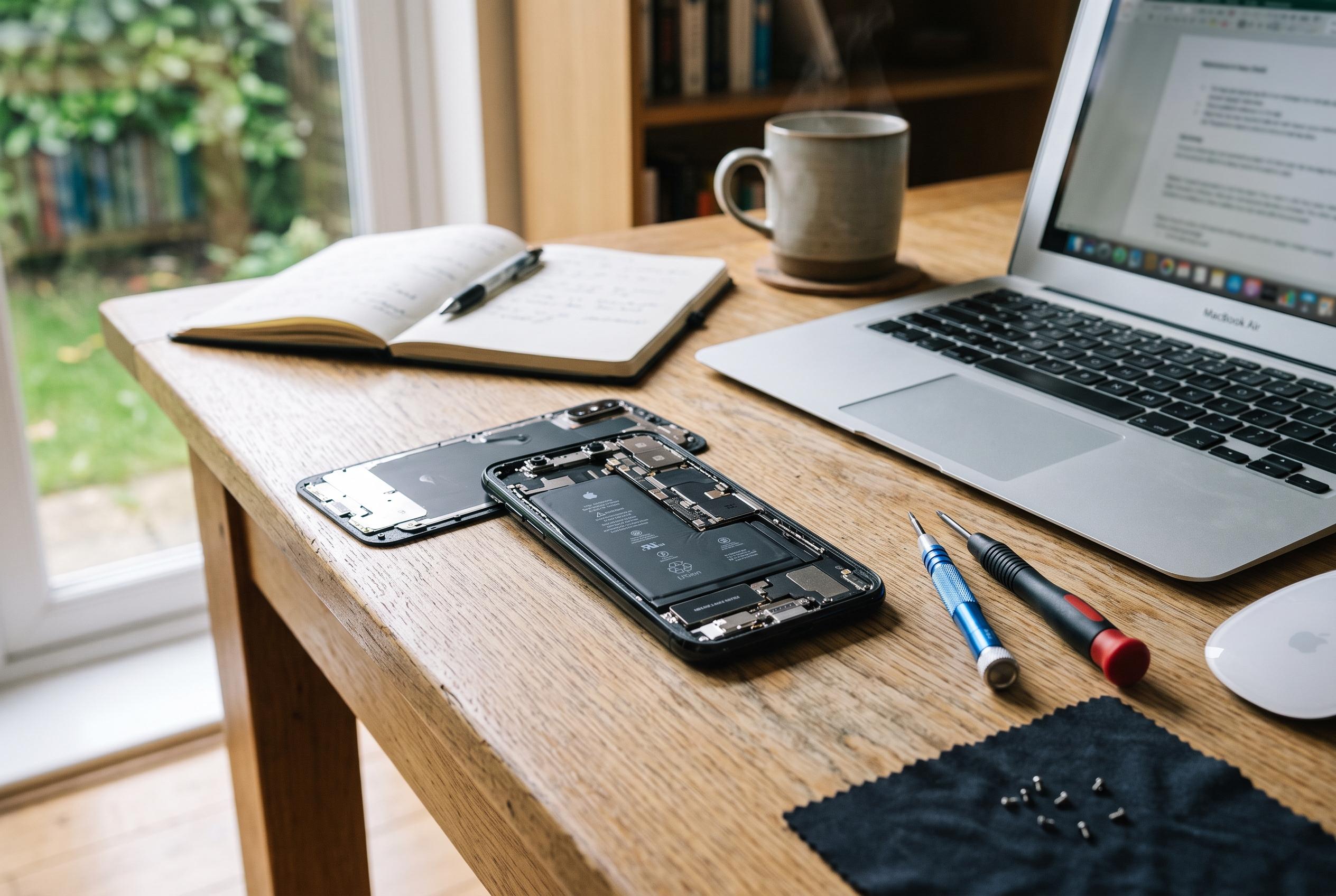

New EU rules on portable batteries are prompting manufacturers to reintroduce removable batteries in smartphones, laptops, and accessories, signalling a shift driven by regulation and consumer repair trends.
Removable batteries, once common in phones and laptops, are edging back into view as Europe’s rules on product design begin to reshape the market. According to the Vietnamese report, the decline of user-replaceable packs was driven by the industry’s preference for slimmer, more tightly integrated devices, with Apple’s move to a fixed battery in the 2009 MacBook Pro 17-inch cited as an early example of that shift.
The case for sealed batteries has long rested on engineering trade-offs. Manufacturers have used them to save space, improve structural rigidity and make room for larger cells or other components. But the advantages of modern lithium-ion systems, including faster charging and lower self-discharge, have also helped fixed batteries become the default across many consumer devices.
The change now gathering pace is being pushed by regulation. The European Commission says the EU Batteries Regulation will require portable batteries to be removable and replaceable by end users from 18 February 2027, although it has also added exemptions for some smaller or more tightly sealed products, including certain wearables, on safety grounds. The Commission said those carve-outs reflect concerns about miniaturisation and water resistance.
That regulatory pressure is already influencing product design. The Vietnamese report says Fairphone 6 and HMD Skyline still ship with removable batteries, while Sennheiser has introduced a wireless headphone model with a replaceable battery and Nintendo is expected to follow a similar approach with its next Joy-Con controllers. For manufacturers, the practical challenge is no longer whether removable batteries can be made, but which products can accommodate them without compromising size, durability or repairability.
Disclaimer: This content is intended for informational purposes only. Readers are advised to exercise their own judgement, conduct due diligence, or consult a qualified expert before acting on any information provided.