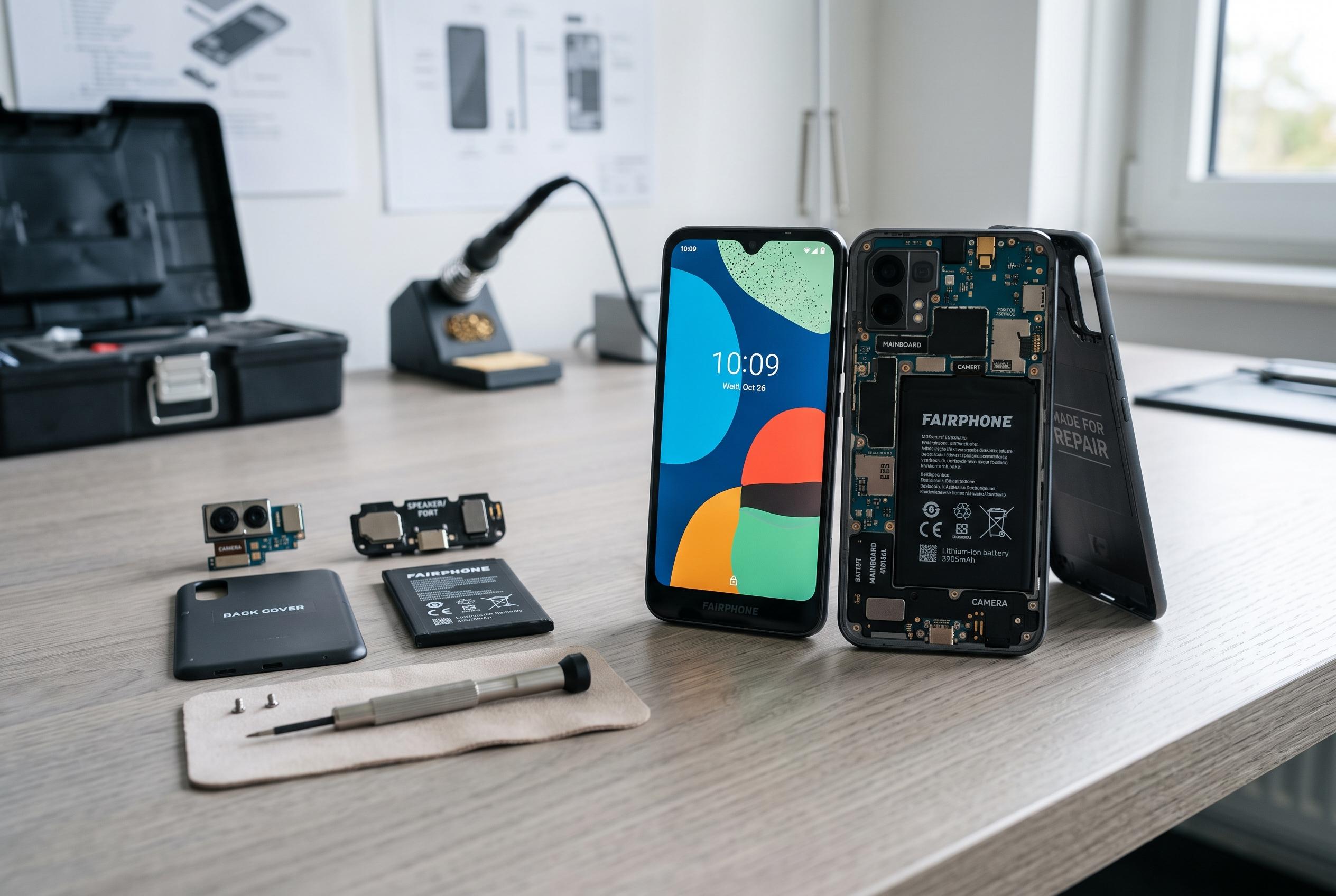

The European Union’s recent right-to-repair legislation aims to make repairs easier and more affordable, encouraging longer-lasting, repairable devices such as modular smartphones exemplified by Fairphone, marking a shift towards a circular economy.
Every few years, Anita Vliegenberg replaces her Fairphone, passing the old handset to a friend and buying the latest model. The habit suits a device built around modular components, because parts can be swapped rather than the entire phone being discarded. Fairphone says that approach is central to its design, with repair guides, spare parts and support intended to make maintenance at home or through service centres as straightforward as possible.
That philosophy now sits within a wider European policy shift. The Council of the European Union says the bloc’s right-to-repair rules entered into force on 30 June 2024 and require member states to transpose them into national law by 31 July 2026. The aim is to make repairs easier, cheaper and faster, while encouraging products that last longer and are simpler to reuse and recycle.
In practical terms, the policy challenges a familiar consumer calculation. A coffee machine, vacuum cleaner or similar appliance has often been replaced because a repair seemed too slow or too expensive. The new framework is meant to reverse that logic by obliging manufacturers to provide spare parts and accessible repair information, making repair a realistic first choice rather than an afterthought. Fairphone has been working in that direction for years, offering replaceable parts for items such as displays, batteries and charging ports, alongside tutorials for owners who want to do the work themselves.
Vliegenberg’s small story about a lost coffee-machine lid captures the appeal of the repair economy. A spare part rescued from another broken appliance turned a nuisance into a solution, with no need to buy a replacement. That is the logic behind the right-to-repair movement: fewer things thrown away, more things fixed and a shift away from treating broken equipment as waste at the first sign of trouble.
Disclaimer: This content is intended for informational purposes only. Readers are advised to exercise their own judgement, conduct due diligence, or consult a qualified expert before acting on any information provided.