
Dutch company Fairphone launches its modular, repair-focused Gen 6+ smartphone in the US, challenging industry norms with extended support and lower repair costs aimed at eco-conscious consumers willing to trade prestige for longevity.
Fairphone has brought its repair-focused smartphone to the United States, betting that some buyers are ready to trade raw prestige for lower long-term costs. The Dutch company’s Gen 6+ launches at $650 and is being sold as a device designed to stay in service rather than be discarded after the first serious fault. According to TheStreet and corroborating reports from Ars Technica and 9to5Google, the device is available through Fairphone’s website and Amazon, with support for T-Mobile and AT&T networks.
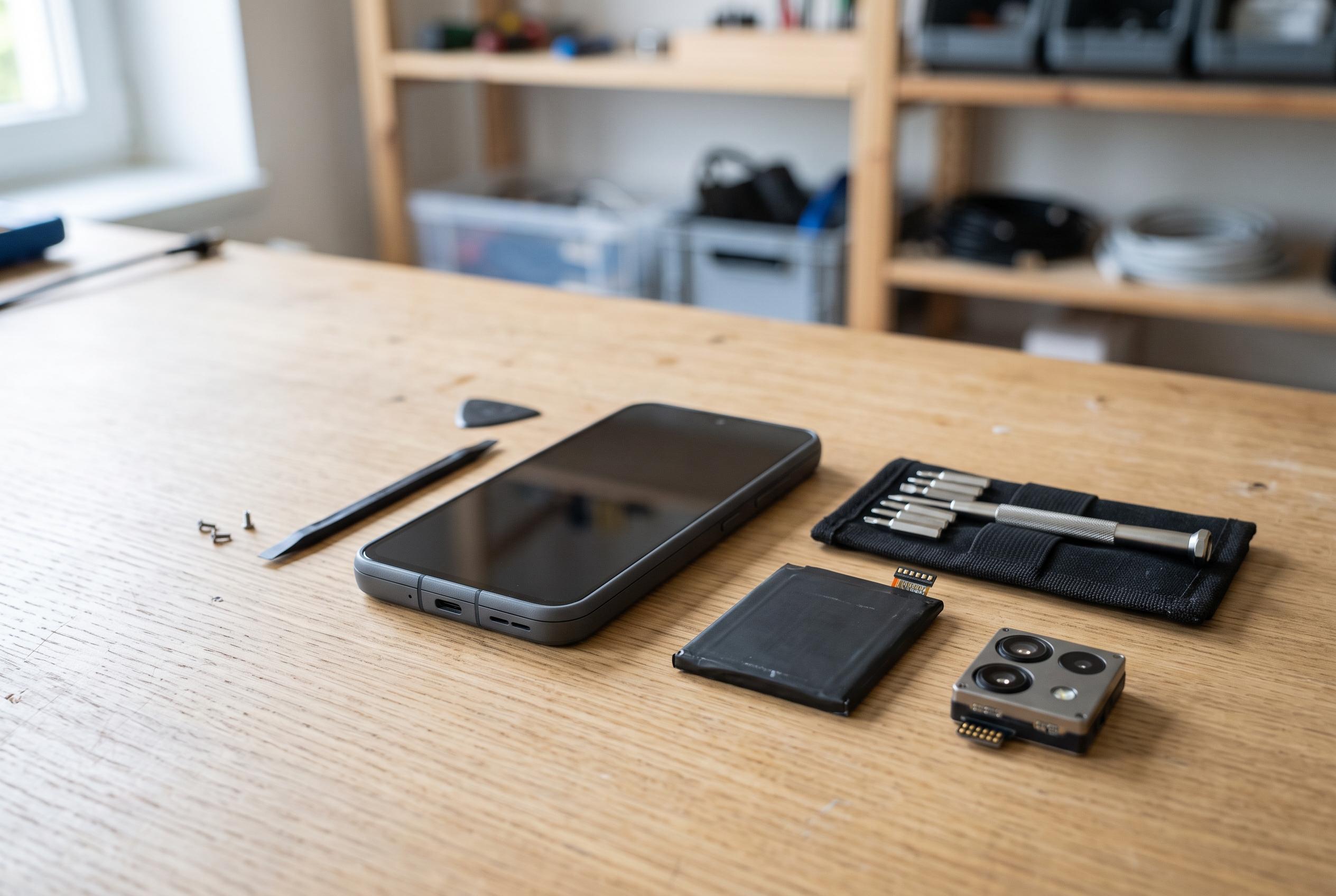
The proposition is deliberately different from the mainstream model favoured by Apple and Samsung. Fairphone says owners can replace 12 modular components themselves, including the screen, battery and USB-C port, and the company ships the phone with a screwdriver to make that possible. Replacement parts are priced to keep repairs accessible: a display costs $90, a battery $40 and a charging port $20. That sharply undercuts the sort of repair bill consumers often face on sealed flagship phones, where even a single screen replacement can run into several hundred dollars.
Longevity is central to the pitch. Fairphone offers a five-year warranty and says the Gen 6+ will receive software updates until 2033. The handset has also earned a 10 out of 10 repairability score from iFixit, placing it at the top of a category where most premium smartphones are still difficult to open and service. For buyers who keep a phone for years, the economics are straightforward: the initial price matters, but so do the costs of keeping the device running.
The hardware is not positioned as a top-spec challenger to the latest iPhone or Galaxy Ultra. Ars Technica reported that the phone uses Qualcomm’s Snapdragon 7s Gen 4 chip and 12GB of RAM, while 9to5Google added that it has a 6.31-inch LTPO AMOLED display, 256GB of storage, microSD expansion and a dual rear-camera system. The emphasis is less on benchmark chasing than on a balance of decent mid-range performance, practical features and a design meant to be serviced at home.
Fairphone is also trying to broaden its appeal beyond the sustainability niche that originally defined the brand. The company says more than half of the phone is made from fair-trade or recycled materials and that the device is assembled using renewable energy, but it has also acknowledged that many customers respond first to quality and value rather than ethics alone. TheStreet reported that Fairphone’s shipments rose 74% in the first half of 2026 from a year earlier, and that 80% of Gen 6 buyers were new to the brand. That suggests the repairability message is beginning to travel beyond its core audience.
Even so, the U.S. market remains a difficult entry point. Carrier sales dominate smartphone distribution, and industry research cited by TheStreet puts that share at as much as 66%, a structural obstacle for any smaller brand without broad retail backing. Fairphone is therefore entering at a time when several other handset names have struggled to gain ground in North America. Its success will depend on whether enough buyers see modularity and repairability as a worthwhile trade-off against the convenience and marketing power of the major incumbents.
Disclaimer: This content is intended for informational purposes only. Readers are advised to exercise their own judgement, conduct due diligence, or consult a qualified expert before acting on any information provided.