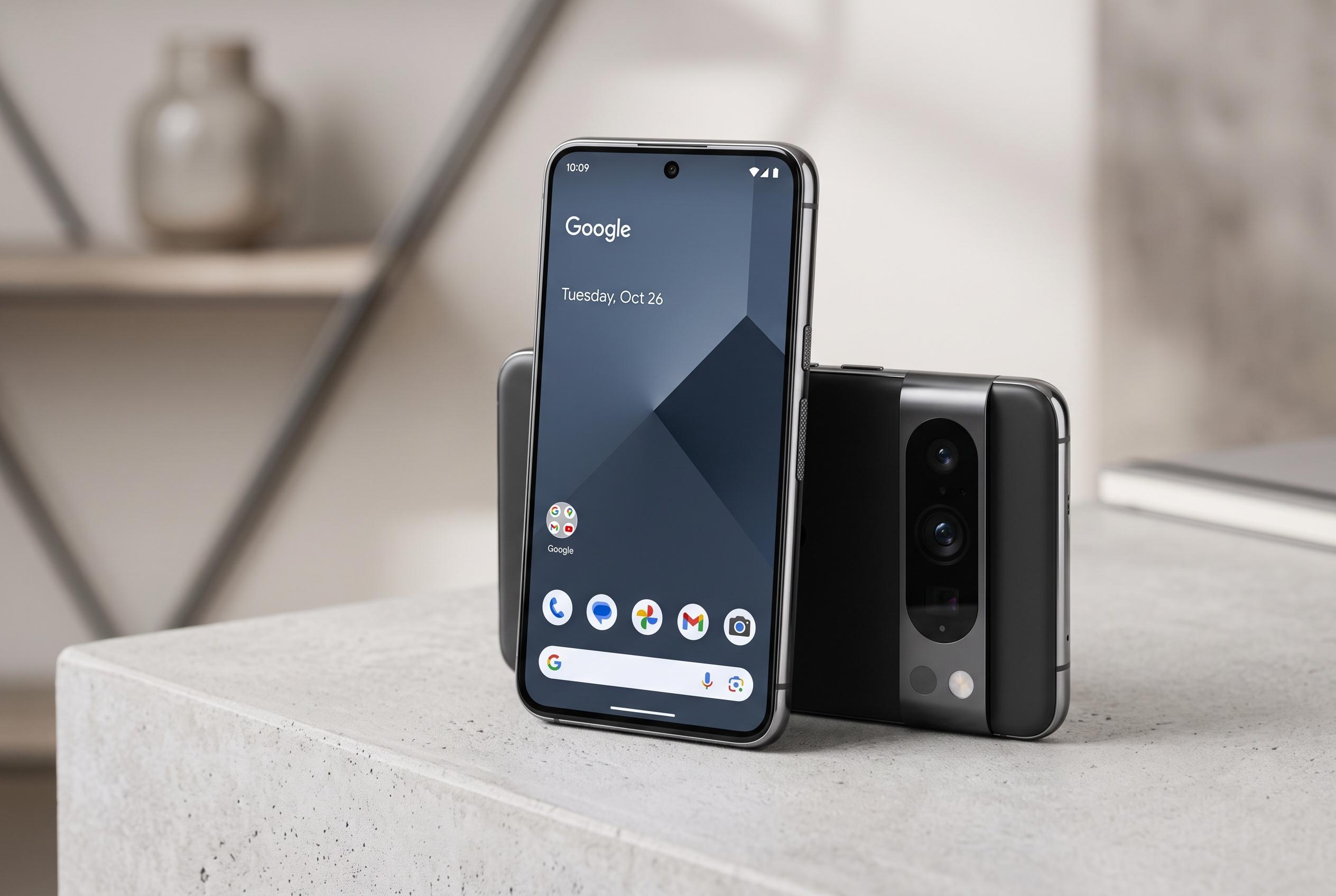

Google has launched the Pixel 11 family, emphasising a new AI-first design and upgrading its flagship lineup with enhanced performance, camera improvements, and a focus on AI integration across hardware and networks. The move signals Google’s shift towards positioning Pixel as a showcase for AI-led smartphone experiences and its broader ambitions in advanced network technology and image sensor manufacturing partnerships.
Google has unveiled its Pixel 11 family, pitching the devices as a sharper expression of its AI strategy and moving the range further upmarket. According to reporting from Android Central, the line-up was announced on 12 August 2026 and now includes four models: the Pixel 11, Pixel 11 Pro, Pixel 11 Pro XL and Pixel 11 Pro Fold. Google has also removed 128GB variants, making 256GB the starting point across the range, while the top-end foldable reaches $1,899. The company says all four handsets run on its Tensor G6 chip, which it claims delivers substantially higher compute performance and much faster on-device AI processing. Coverage from TechRadar and What Hi-Fi said the phones add new display, notification and Gemini features, while Digital Camera World reported camera changes aimed at better low-light performance and more flexible zoom.
The product reset is also a sign of how aggressively Google is tying Android hardware to its AI software stack. Rick Osterloh, Google’s senior vice-president of platforms and devices, told CNBC the Pixel and iPhone are moving in “very different directions”, arguing that Gemini could one day become the main interface for phones and other devices. Paolo Pescatore, founder and president of PP Foresight, told Mobile World Live that Pixel is effectively a showcase for what an AI-first smartphone can look like, and a shop window for Android and Gemini. The wider implication is that Google is no longer positioning Pixel simply as a premium Android alternative, but as a reference point for the company’s own AI-led design language.
In network technology, Samsung Electronics and NTT Docomo said they have validated AI-RAN systems that adapt to individual users rather than applying the same settings to everyone connected to a base station. The companies said in their joint test in Japan earlier this year that the system analyses user behaviour alongside network conditions to predict service problems before they affect quality, and it reduced the frequency of data-rate degradation from 13% to 7% in validation tests. Samsung said it is extending AI across the whole radio access network, while Docomo’s Amnart Boonkajay called the work a major step towards proactive, self-aware 6G networks.
Separately, Sony Semiconductor Solutions and TSMC have signed a binding agreement to create a JPY747 billion, or $4.7 billion, joint venture to manufacture smartphone image sensors. According to the companies, the venture, called Advanced Vision Semiconductor Manufacturing, will be controlled by Sony and operate as a subsidiary, with production targeted to start in 2029 if regulators approve the deal and other conditions are met. Sony will contribute JPY465 billion, including a factory in Koshi City, while TSMC will provide JPY282 billion, and both sides are considering extra funding to reach full capacity. Industry commentary quoted by Mobile World Live suggested the partnership is intended to help Sony and TSMC fend off rivals such as Samsung Electronics, which has been gaining ground in image sensors used in Apple devices.
Disclaimer: This content is intended for informational purposes only. Readers are advised to exercise their own judgement, conduct due diligence, or consult a qualified expert before acting on any information provided.