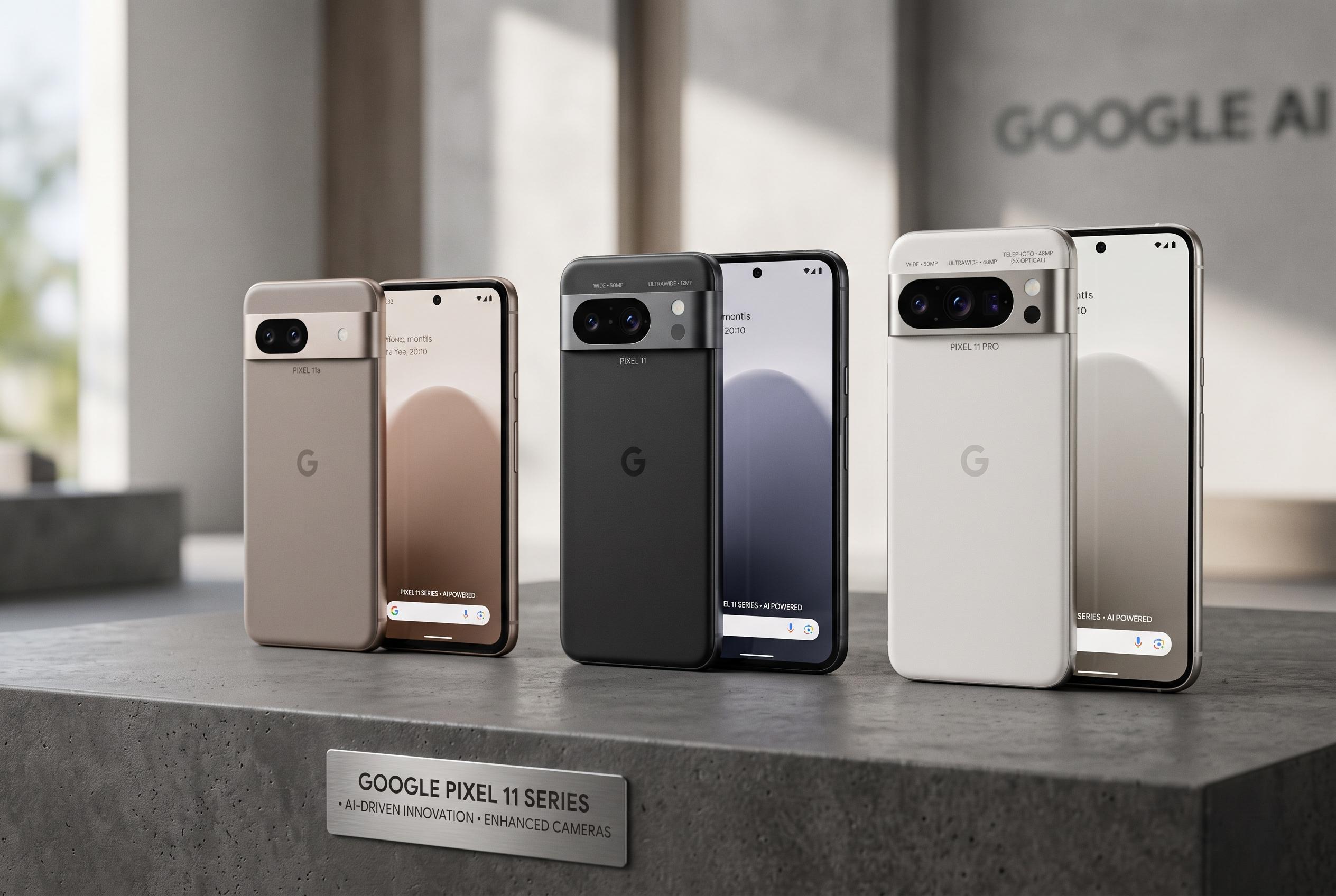

Google’s Pixel 11 range marks a shift towards AI-centric phone design, integrating Gemini as a core component and introducing advanced camera and performance features ahead of its August 2026 release.
Google’s Pixel 11 range marks a clear shift towards AI-led phone design, with Gemini now positioned as the central layer across the device rather than a feature added on top. According to reports on the launch, Google is pushing tools such as Rambler, which cleans up spoken dictation by handling filler words more neatly, live translation for audio and video, and sign-to-text conversion for users of sign language. Android Central said Gemini is being tied into more than 40 apps, with contextual cards and lock-screen information meant to make the phone feel more proactive.
The camera system is also being pushed harder. Digital Camera World reported that the standard Pixel 11 uses a larger 48-megapixel main sensor with 56 per cent greater light sensitivity, while the Pro models move to a 50-megapixel main camera and a 48-megapixel telephoto unit with up to 120x Pro Zoom. Google is also adding Magic Capture, which is designed to save both still images and short video clips from the same moment, alongside Camera Looks, a styling tool that lets users tune the appearance of their photos more deliberately.
Performance claims centre on the Tensor G6 chip. The launch coverage says Google is promising a 25 per cent faster web browsing experience, 15 per cent quicker app launches and a 50 per cent increase in TPU performance for AI tasks. Android Central reported that, when paired with the latest Gemini Nano, on-device AI work should run up to 3.5 times faster while using up to 3.5 times less energy. The Pro models also gain Instant Night Sight, which Google says is up to 4.5 times faster, and a new HiLight LED system that can surface subtle alerts and Gemini status cues without waking the display.
Beyond the headline AI features, Google is refining the hardware rather than reinventing it. The company has made the camera bar slimmer, increased base storage to 256GB across the Pixel 11, Pixel 11 Pro and Pixel 11 Pro XL, and added support for Pixelsnap and Qi2.2 wireless charging at up to 25 watts on the main models. Android Central said the Pixel 11 Pro Fold follows the same strategy, focusing on durability with a tougher hinge, stronger materials and an IP68 rating. Taken together, the range looks more like a measured upgrade than a clean break, which means Pixel 10 owners may find the strongest appeal in the software and camera changes rather than in the hardware alone. Digital Camera World also reported that pricing starts at $899, with the Pro Fold at $1,899, and that the devices are due to reach buyers on 20 August 2026.
Disclaimer: This content is intended for informational purposes only. Readers are advised to exercise their own judgement, conduct due diligence, or consult a qualified expert before acting on any information provided.