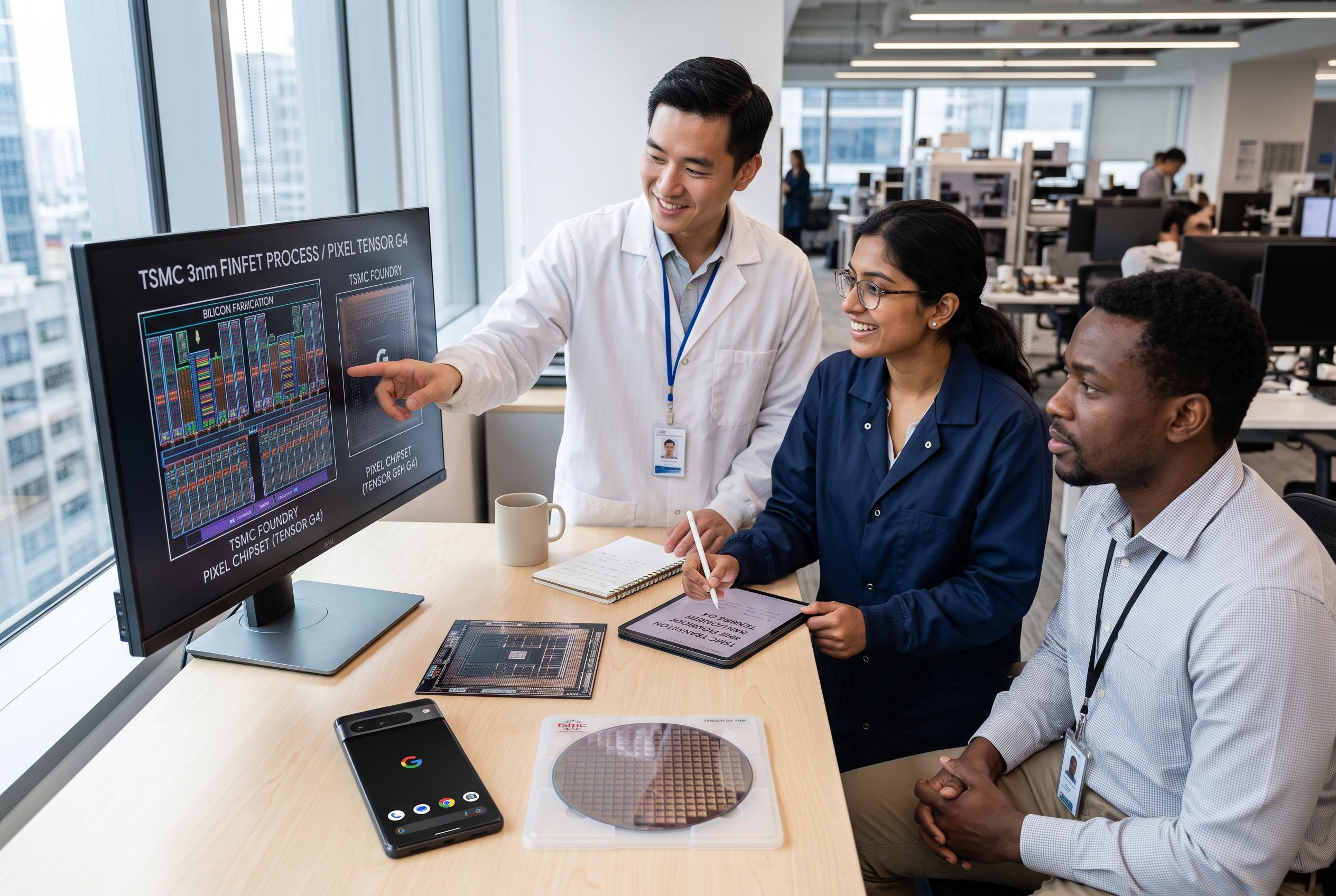

Google is increasingly moving its Pixel chip and modem manufacturing away from Samsung, indicating a broader shift in its hardware strategy and challenging Samsung’s semiconductor dominance, even as their software partnership remains intact.
Samsung’s long-running hardware partnership with Google is becoming less important on the semiconductor side, even as the two companies remain closely aligned in software and new device categories. Google still relies on Samsung devices to showcase Android, Gemini and other AI tools to a huge audience, but the latest shifts in Pixel hardware suggest that the Korean group is no longer the default supplier for key components. The change matters because it reaches beyond one product cycle and into the design of future devices.
The clearest sign is Google’s decision to move its Tensor chip production away from Samsung Foundry and to TSMC. Reports from SamMobile and other technology outlets say Google began this transition with Tensor G5 and has now extended it to newer Pixel generations, with TSMC handling the latest custom silicon. That marks a major break from the earlier arrangement, when Samsung manufactured Google’s Tensor processors for several generations and helped bring Google’s on-device AI plans into hardware.
A similar pattern is emerging in modem supply. Samsung’s Exynos modems had been used widely in Pixel phones, including the Pixel 9 and Pixel 10 lines, but the newest devices pair Tensor G6 with a MediaTek M90 modem instead. That suggests Google is broadening its supplier base rather than staying tied to Samsung for the full component stack. PhoneArena’s breakdown of the Tensor G5 move also pointed to the wider industry logic behind the switch: better efficiency, stronger manufacturing performance and sharper control over the final product.
For Samsung, the loss is significant because semiconductor business is built on design wins that can last for years. Once a major customer moves to another foundry or modem vendor, winning it back is difficult. That is why the shift is more worrying than the loss of a single order: it weakens Samsung’s role in Google’s long-term platform strategy. SamMobile reported that Samsung has improved its 2nm chip yields and won other major orders, but that progress has not been enough to keep Google in the fold.
Even so, the broader relationship is far from broken. The companies remain closely linked on software, and Samsung’s Galaxy products continue to act as major showcases for Google’s AI services. They are also working together on Android XR, including smart glasses and headsets, where Google provides the platform and Samsung gives it hardware reach. The lesson for Samsung is a clear one: Google still values the partnership, but not every part of it carries the same weight. In consumer silicon, history alone is no longer enough to secure the business.
Disclaimer: This content is intended for informational purposes only. Readers are advised to exercise their own judgement, conduct due diligence, or consult a qualified expert before acting on any information provided.