
Google releases new developer guidelines alongside its Pixel 11 series, emphasising adaptive design for foldables, smarter wearables, and on-device AI to enhance user experiences across its latest devices.
Google has paired its latest Pixel hardware launch with a fresh set of developer recommendations aimed at making Android apps work better across foldables, smartwatches and on-device AI. The guidance arrives alongside the Pixel 11 series unveiled at Made by Google in New York on August 12, including the Pixel 11 Pro Fold, which Google and industry reports say is thinner, lighter and built around a new Tensor G6 chip, with availability due from August 20.
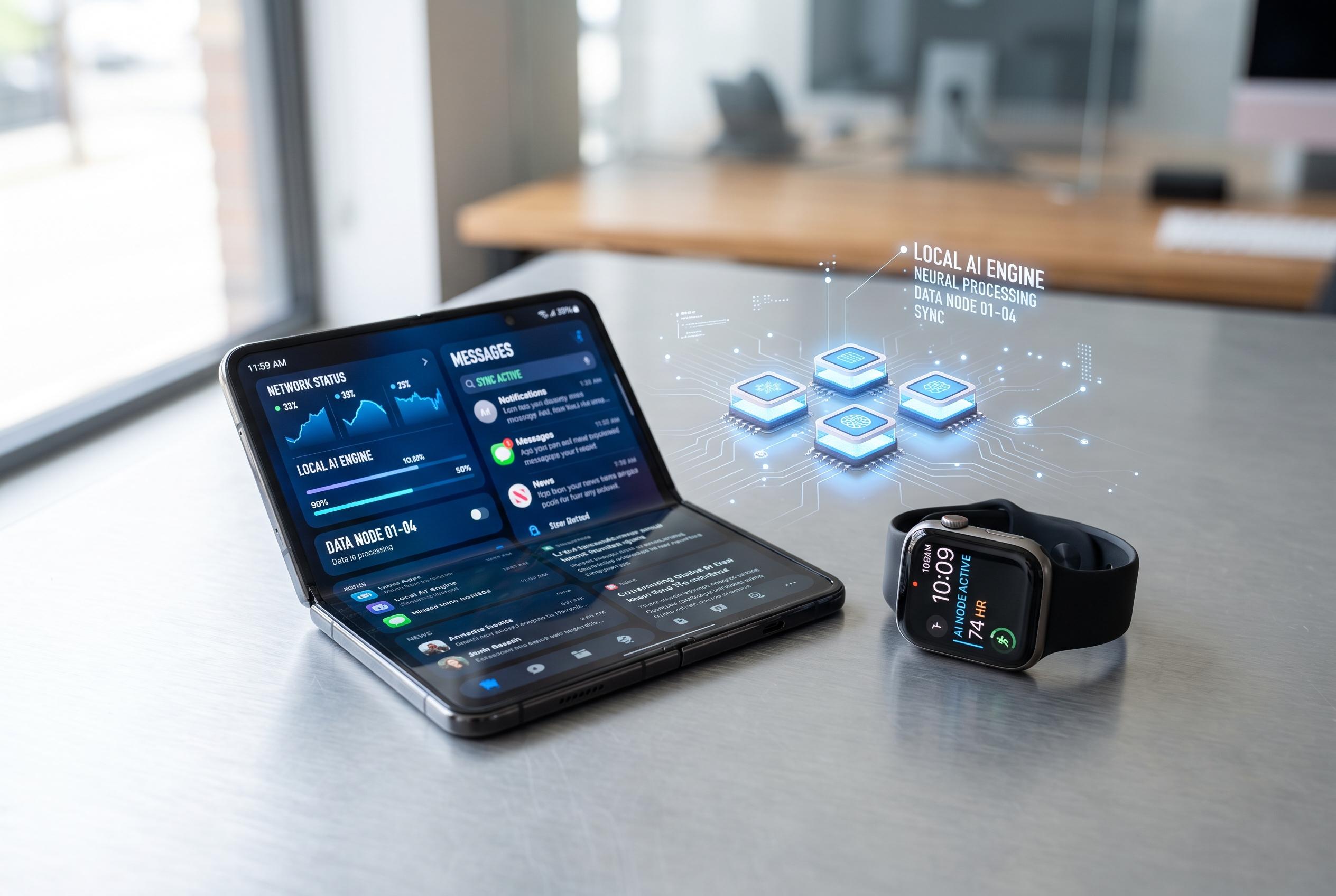
The strongest message is for foldable phones. Google says developers should stop building fixed layouts and instead design around the space actually available on screen, rather than the physical dimensions of the handset. That approach matters on devices such as the Pixel 11 Pro Fold, where the inner and outer displays change how users move between single-pane and split-screen views. Google recommends Jetpack Compose tools, including Navigation 3, Grid and FlexBox, to help interfaces reflow cleanly, while Window Size Classes and FoldingFeature updates can be used to treat hinges and folds as natural boundaries in the layout. Reports on the new Fold note that Google is also leaning on durability and multitasking as selling points, which makes responsive app design more important rather than less.
Google also wants developers to think more carefully about camera and posture-aware experiences. Its guidance points to tabletop mode for cases where controls should sit in the lower half of the display and video or preview content should stay above. For camera-heavy apps, Google recommends CameraX for sensor rotation and scaling, while Camera2-based apps can use CameraViewfinder for similar behaviour. Those tools are meant to support dual-screen previews, rear-camera selfies and other foldable-specific workflows that are now becoming a more visible part of the Android ecosystem.
The same document extends to wearables and on-device AI. On the Pixel Watch 5 and Wear OS 7, Google says developers can use the 1.7 beta of Compose for Wear OS 7 to add gesture controls such as double-pinch and wrist turn. It also highlights Live Updates for time-sensitive information such as delivery tracking and sports results, plus Wear Widgets built with Jetpack Glance and RemoteCompose. On the AI side, Google says Pixel 11 devices are designed to run Gemini Nano 4 locally, which should reduce cloud round trips for supported tasks and allow natural-language prompts through the ML Kit GenAI Prompt API. Google says the model supports more than 140 languages and adds structured output and thinking mode, while a separate set of Android skills is being pushed to help development agents generate adaptive layouts and camera behaviour more efficiently.
Disclaimer: This content is intended for informational purposes only. Readers are advised to exercise their own judgement, conduct due diligence, or consult a qualified expert before acting on any information provided.