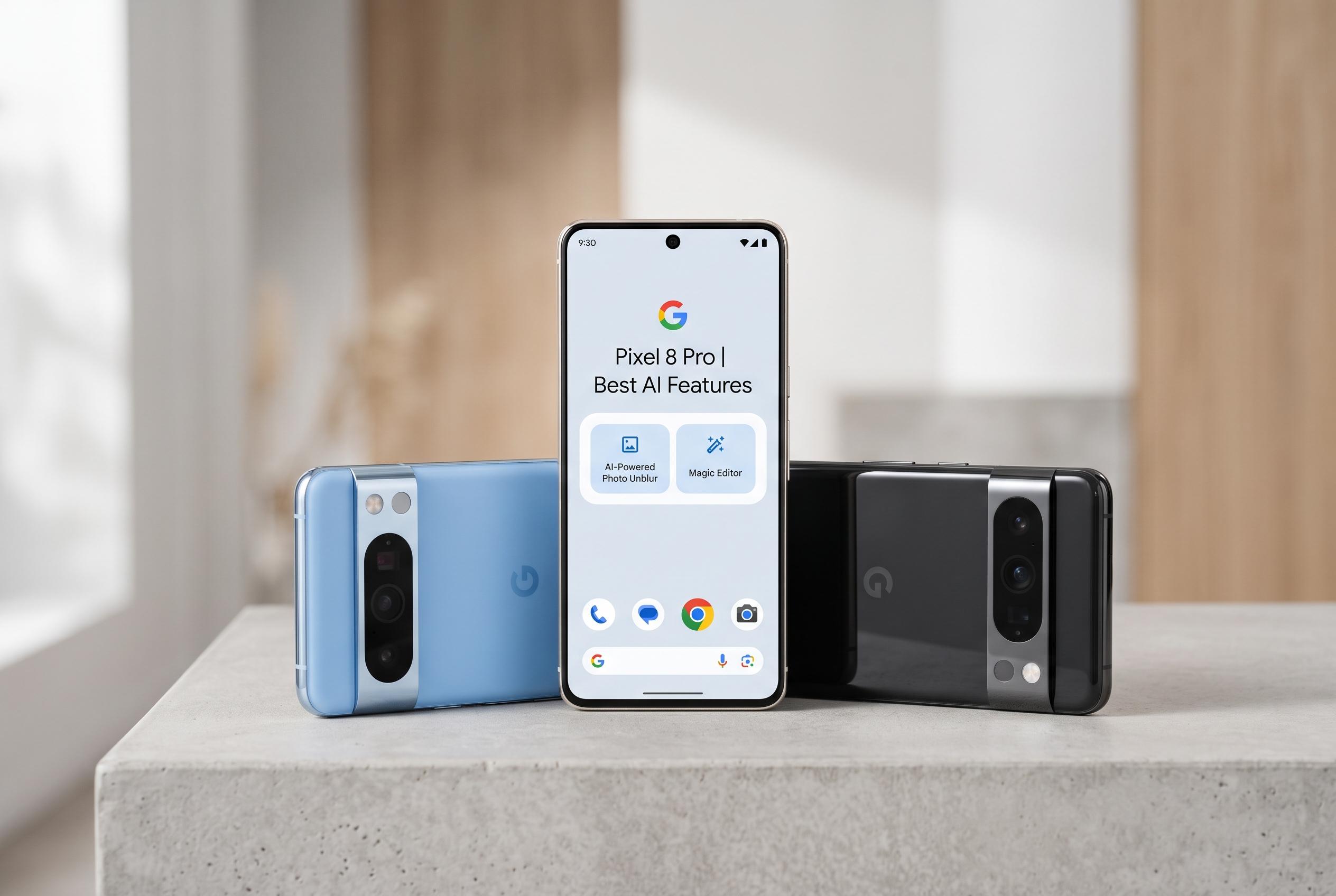

Google has launched its latest Pixel phones, emphasising enhanced AI features, longer battery life, and a broader ecosystem, signalling a shift towards software-driven innovation in the smartphone market.
Google has unveiled its latest Pixel phones, betting that thinner camera hardware, faster zoom and a wider set of artificial intelligence tools will persuade more people to upgrade and draw more users into its Gemini ecosystem. The new line includes the Pixel 11, Pixel 11 Pro, Pixel 11 Pro XL and Pixel 11 Pro Fold, all of which go on sale in the United States after the company’s announcement on Wednesday. According to Reuters-style reporting in the source material, the launch is part of Google’s broader push to make AI the main selling point of its handset business.
The phones begin with 256 gigabytes of storage, doubling the old base level, and Google says battery life reaches 30 hours with faster wireless charging. The company has also dropped the lower-cost 128GB Pixel option, which previously started at $800. Pricing now starts at $900 for the Pixel 11, $1,100 for the Pixel 11 Pro and $1,300 for the Pixel 11 Pro XL, while the foldable model starts at $1,900. That represents a $100 increase across the range from last year’s prices.
Google is leaning heavily on software changes to justify those higher prices. New functions include live translation for videos, podcasts and voice messages, along with camera tools such as Magic Capture, which can record a burst of photos and video from a single shutter press. The Pro models also gain Instant Night Sight for quicker low-light shots and HiLight, a feature that lets users assign a colour to important contacts and have the phone light up in that colour when it is face down. The company says the phones also improve light sensitivity and video stabilisation.
That strategy reflects a wider shift in the smartphone market, where hardware gains alone are no longer enough to drive replacement cycles. Forrester analyst Andrew Cornwall said Google continues to frame AI as the main reason to buy a new Pixel, pointing to features such as extracting photos from video, a teleprompter mode and improved speech-to-text. Google has steadily added more AI to Pixel devices since 2023, while Apple has also moved to highlight AI in its latest software and services, though it has been seen as trailing Google in this area.
Google is also using the launch to widen the reach of its services. Buyers of the Pixel 11 Pro and Pixel 11 Pro XL will receive six months of the company’s AI Pro plan at no extra charge, a clear effort to convert device sales into longer-term use of Gemini, Google’s answer to OpenAI’s ChatGPT. The company also introduced its first tracking accessory, Pixel Tag, priced at $30 individually or $100 for a four-pack and designed to work with phones running Android 9 or later.
Disclaimer: This content is intended for informational purposes only. Readers are advised to exercise their own judgement, conduct due diligence, or consult a qualified expert before acting on any information provided.