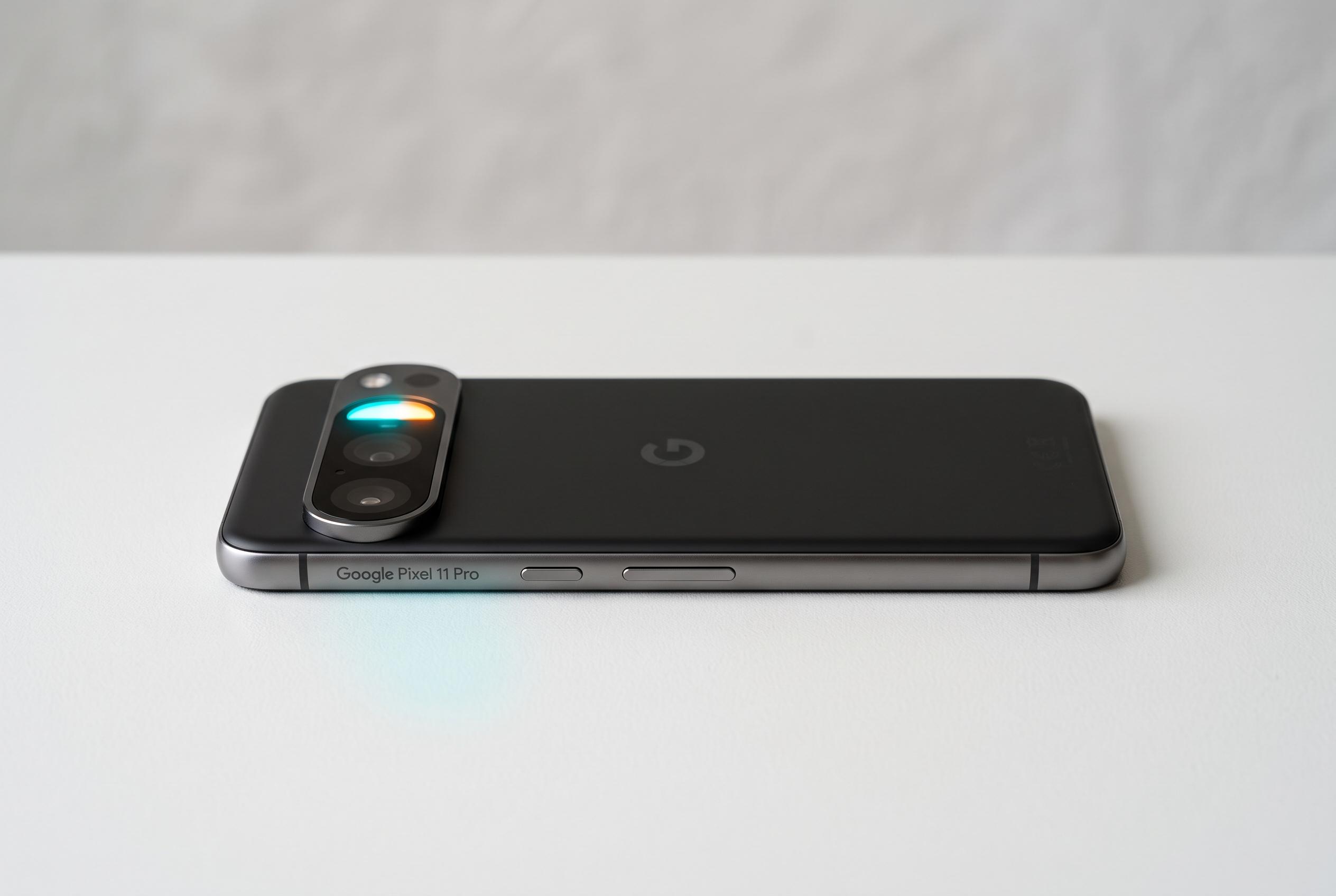

Google’s upcoming Pixel 11 Pro line features HiLight, a novel status indicator using camera flash colours to display Gemini AI activity, signalling a move towards more transparent and integrated AI features in smartphones.
Google’s next flagship appears designed to give Gemini users a more visible sense of what their phone is doing. According to Stuff, the Pixel 11 Pro and Pixel 11 Pro XL introduce HiLight, which turns the flash module in the rear camera bar into a status indicator: blue when Gemini is replying, purple when it is processing a request. The same system can also assign colours to selected callers, with messaging support promised later. It is a neat idea, but one that seems likely to matter most to people already using Gemini heavily on their phones.
That emphasis fits with Google’s wider approach to Gemini. The company’s support pages say the assistant is built into Pixel phones and can be activated by voice or the power button, with integration across services such as Gmail, Maps and YouTube. TechRadar has also reported that Google is restoring “Continued Conversation” in Gemini for Home, which suggests the company is still refining how its assistant handles longer, more natural exchanges. HiLight looks like the mobile-facing version of that same effort: a small interface change intended to make AI feel more present and less hidden.
Beyond the AI features, the Pixel 11 Pro line keeps the familiar two-size formula, with 6.3in and 6.8in models again on offer. Stuff says Google is claiming its brightest display yet for the class, although the comparison is limited to North America, and both handsets get edge-to-edge glass that is said to be twice as scratch resistant as before. Colour choices are expected to include Canyon, Fog, Olive and Obsidian, with the darker finish switching to a matte frame rather than the glossier metal used previously.
The hardware story is more substantial under the surface. Stuff reports that both Pro models run on Google’s Tensor G6 chip, with 16GB of RAM and 256GB of base storage, plus 512GB and 1TB options. Google is said to be claiming faster web browsing, quicker app launches and a sizeable lift in on-device AI performance. Battery capacities are listed at 4,850mAh for the Pro and 5,115mAh for the Pro XL, alongside 25W Qi2.2 wireless charging with integrated Pixelsnap magnets. The company’s own support material also makes clear that Gemini is central to the Android experience on Pixel, which helps explain why Google is leaning so hard into visible AI cues.
Camera changes appear to be the most meaningful upgrade. Stuff says the 5x telephoto now uses a much larger sensor, while Google is promising better low-light performance, faster Night Sight and a new range of editing and capture tools. Those include a Creator suite for video framing, an in-app teleprompter, automatically organised project folders and a Magic Capture feature that selects the best stills from a short clip. The standard Pixel 11, by contrast, looks more conservative: no HiLight, the same display size and camera setup as before, a slimmer all-glass camera bar and the same Tensor G6 platform. Pricing starts at £879 for the Pixel 11, £1,079 for the Pixel 11 Pro and £1,279 for the Pixel 11 Pro XL, with pre-orders open and shipping due on August 20.
Disclaimer: This content is intended for informational purposes only. Readers are advised to exercise their own judgement, conduct due diligence, or consult a qualified expert before acting on any information provided.