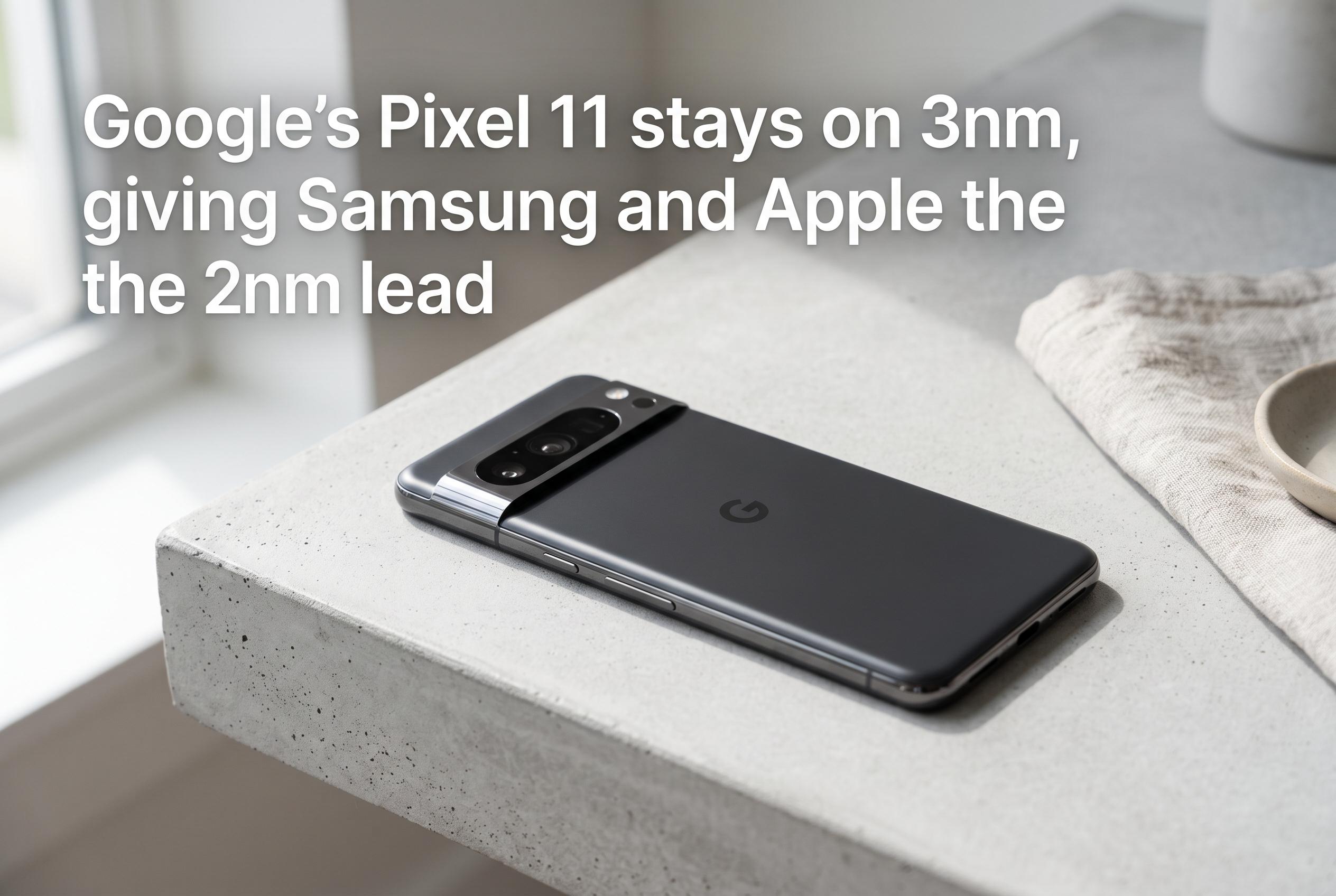

Google’s Tensor G6 chip remains on an improved 3nm process for the Pixel 11, allowing rivals like Samsung and Apple to maintain their lead in the race to 2nm milestones, highlighting ongoing industry shifts in chip manufacturing prowess.
Google has not beaten Apple to the next major chipmaking milestone after all. In the Pixel 11, the company’s Tensor G6 remains on an improved 3nm manufacturing process, rather than moving to 2nm as some early reports had suggested. According to comments attributed to Google vice-president Peng Yu Chun in Taiwan’s Central News Agency, the chip does not use the more advanced node.
That matters because the shift to 2nm is more than a technical footnote. It is a marker of supply-chain capability, efficiency and prestige in the smartphone market. Samsung has already moved first with the Exynos 2600, which it says is the first smartphone chipset built on its 2nm Gate-All-Around process. Apple is widely expected to follow with a 2nm-class chip in the iPhone 18 Pro, while Qualcomm has also been linked to future 2nm designs but has not yet made an official announcement.
Tom’s Guide reported that the Pixel 11 launch had fuelled hopes that Google might seize the 2nm lead, especially as the company has shifted Tensor development to TSMC. That route has already brought a step up in Google’s chip strategy, with Tensor G5 using TSMC’s 3nm class process and Tensor G6 now described as an enhanced 3nm part. Google has also highlighted performance gains in areas such as web browsing, app launches, TPU throughput and image processing, although leaked benchmark data still suggests the Pixel 11 may trail the fastest rivals in raw CPU performance.
The broader pattern is that Google is still following, rather than setting, the pace at the cutting edge of mobile silicon. Android Central noted that Google has historically lagged behind rivals on process nodes, and that a full jump to 2nm would have been a symbolic breakthrough as much as a practical one. For now, though, the company remains on 3nm, leaving Samsung with the first 2nm smartphone chip and Apple with the clearest chance to claim the next industry first.
Disclaimer: This content is intended for informational purposes only. Readers are advised to exercise their own judgement, conduct due diligence, or consult a qualified expert before acting on any information provided.