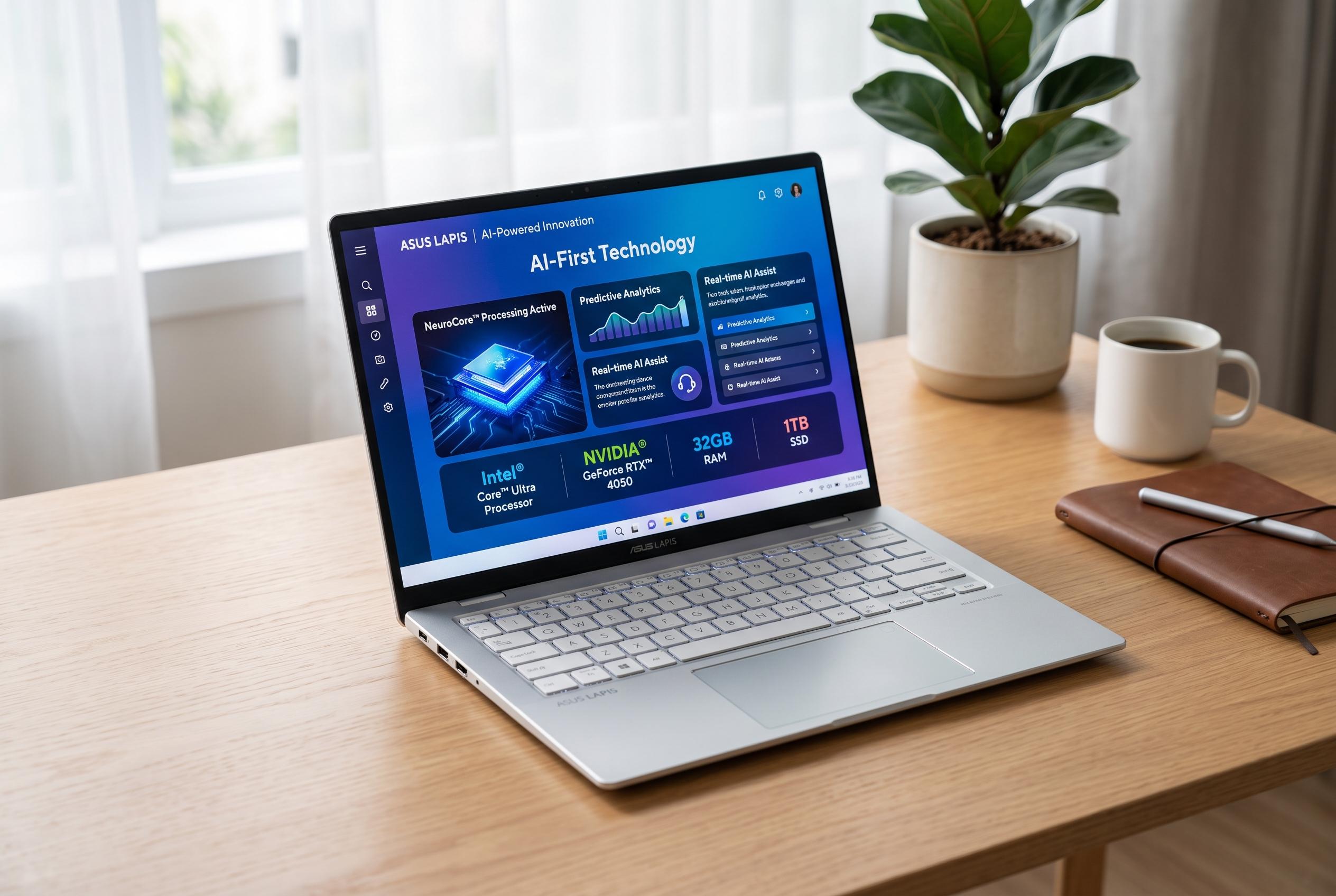

A new wave of Google-powered laptops, including ASUS’s ultra-light Lapis model, set to integrate advanced AI features and competitive hardware in a move to transform portable computing in 2023.
ASUS’s first Googlebook, said to carry the codename Lapis, appears to be aiming for an especially light design, with Clubic reporting that it could use a chassis weighing less than 1kg and made from an “ultra-ceramic lightweight alloy”. That description matches earlier design listings and would fit ASUS’s recent material strategy, as the company already uses a similar compound, Ceraluminum, in the Zenbook A16, which it says weighs 1.2kg and is built for portability as well as endurance. According to ASUS, that laptop pairs the material with a 16-inch 3K OLED panel, a Snapdragon X2 Elite Extreme processor and more than 21 hours of battery life.
The broader Googlebook effort is emerging as Google’s next move in AI-first laptops. Android Central reported that the company is working with ASUS, Acer, Dell, HP and Lenovo on a new line built around Gemini models, with launch plans targeted for the autumn. The devices are expected to bring features such as Magic Pointer, an AI-assisted cursor that can offer contextual suggestions based on what is on screen.
Lenovo’s first Googlebook range is also said to be close to a conventional Chromebook form factor, according to Android Central’s preview. The report described two laptops and a 2-in-1 tablet due later in 2026, with familiar hardware choices such as USB-A and USB-C ports, a stylus-enabled tablet option, a keyboard cover and a kickstand case. That suggests the first wave of Googlebooks may prioritise continuity as much as novelty, even as Google seeks to differentiate the category through software.
Acer’s contribution appears to be the clearest so far. Android Central said the company is working on a Googlebook 14 with a 14-inch 2.8K OLED display, Intel’s Core Ultra 5 325 processor and 16GB of memory. Taken together, the leaks point to a launch year in which the main PC makers will compete not just on specifications, but on how convincingly they can tie hardware to Google’s AI stack.
Disclaimer: This content is intended for informational purposes only. Readers are advised to exercise their own judgement, conduct due diligence, or consult a qualified expert before acting on any information provided.