
Google’s latest Wear OS 7 update for Pixel Watch models focuses on enhancing device interoperability and practical features, while delaying major AI functionalities to a later stage, signalling a strategic shift towards an interconnected device ecosystem.
Google’s Wear OS 7 update is less about a dramatic visual overhaul than a shift in how the Pixel Watch fits into Google’s wider device strategy. According to reports from Android Central, the update began reaching the Pixel Watch 2, Pixel Watch 3 and Pixel Watch 4 on June 16, 2026, while the original Pixel Watch is left out of the rollout. That makes the software notable not just for what it adds, but for the platform direction it signals.
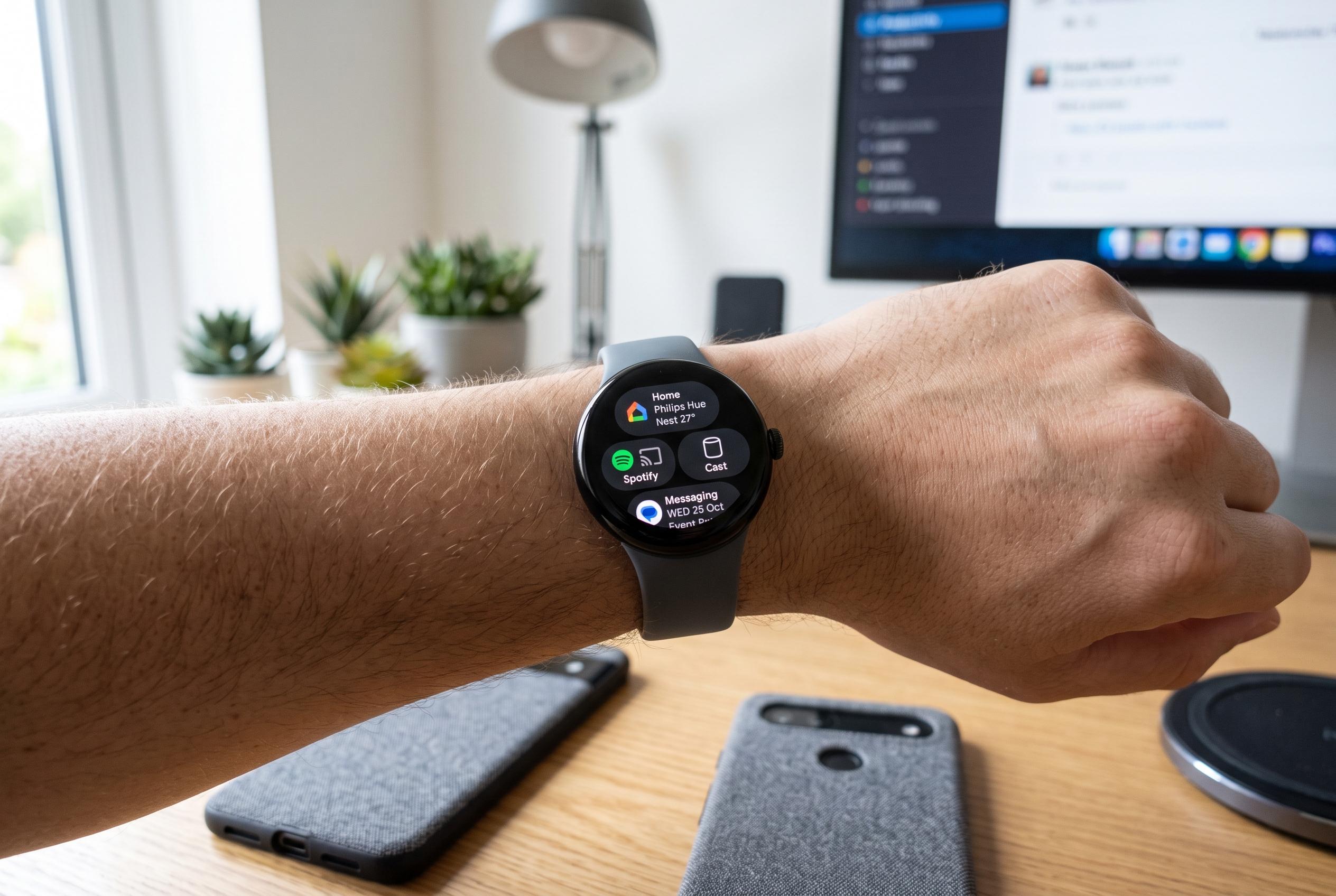
The most visible changes are practical. Wear OS 7 introduces Live Updates, which let supported apps surface constantly changing information such as delivery progress, transport status, workout data and sports scores without repeated app launches. Google is also replacing the older Tiles system with Wear Widgets, a more flexible card-based layout designed to make smartwatch screens more consistent with the rest of Android. Android Central reported that Google is also preparing standardised workout tracking tools for third-party apps.
Media handling is getting a useful upgrade as well. A new audio output switcher lets users change playback between a paired phone, earbuds and speakers from the watch itself. That may sound minor, but it turns the wrist into a quicker control point for everyday audio tasks. Google says the platform should also deliver up to 10% better battery life through back-end efficiency improvements, which matters more than headline features for many users.
The bigger change, however, is that Google is not making Gemini Intelligence the centrepiece of this release. Instead, Android Central and LiveMint report that the company is holding back the more ambitious AI functions until later in 2026. Those planned additions include natural-language widget creation, called Create My Widget, along with task automation and personalised suggestions. That staged approach suggests Wear OS 7 is being positioned as infrastructure first and AI experience second.
Google’s broader ambition appears to stretch beyond the watch itself. Reports from Android Central say Wear OS 7 is being built to work more closely with phones, earbuds, smart speakers and emerging Android XR eyewear. One example is the ability to surface photos captured on smart glasses directly on the watch for quick review. In that sense, Wear OS 7 looks less like a standalone smartwatch update and more like the foundation for a connected ecosystem.
Disclaimer: This content is intended for informational purposes only. Readers are advised to exercise their own judgement, conduct due diligence, or consult a qualified expert before acting on any information provided.