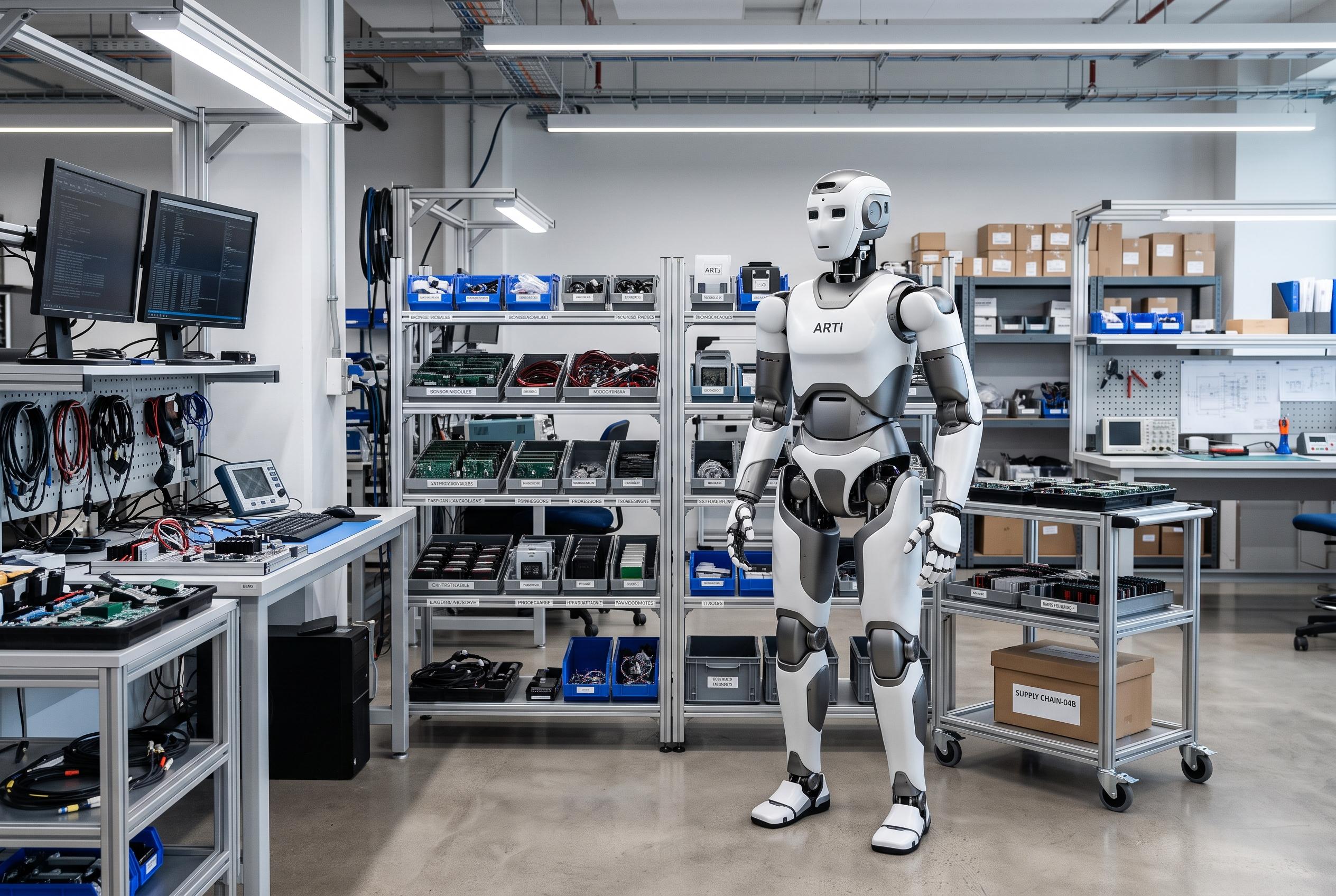

Barclays highlights that the race to develop humanoid robots hinges on hardware components, with supply chain dependencies and regional disparities shaping the future landscape of this rapidly expanding sector.
Barclays has set out a blunt conclusion: the race to build humanoid robots will be decided less by polished demonstrations than by the hardware underneath them. In a note cited by ZeroHedge, analyst William Thompson said the market is still small, but is moving towards rapid expansion, with forecasts ranging from about $10bn to $25bn by 2030 and much higher in more aggressive long-term scenarios. The central issue is not software alone, but the physical stack of motors, actuators, sensors, batteries and motion-control systems that makes a machine walk, balance and lift.
That stack is expensive and highly concentrated. Barclays said actuators are the largest prize, with a single humanoid potentially requiring 40 to 70 of them and consuming roughly 30% to 50% of the total bill of materials. Within that layer, reducers, the precision gearing systems inside actuators, remain a difficult business to enter, while rare earth magnets and high-performance motors create further dependency on tightly controlled supply chains. Bernstein has made a similar point, warning that humanoid robots can use more magnetic material than electric vehicle motors, which underlines how important rare earths have become to the sector.
The supply chain is already heavily tilted towards China. McKinsey has argued that China dominates rare earth processing and holds major positions in precision bearings, motors and power electronics, while DongA Science has reported that Chinese firms are leveraging their electric-vehicle manufacturing base to supply key humanoid parts at prices competitors elsewhere struggle to match. The result, according to those analyses, is a market in which China is not only a leading producer of robots, but also a critical source of the components needed to scale them.
That concentration is why several analysts expect the industry to split regionally over time. McKinsey has suggested China may remain the centre for hardware scale and cost compression, while the US and Europe concentrate on advanced artificial intelligence and system design. But the same reports also imply a strategic vulnerability: if governments tighten scrutiny of Chinese technology, procurement and localisation rules could reshape where humanoids are built and sold. Grand View Research estimates the market could rise from $2.4bn in 2025 to $40.5bn by 2033, while Smart Analytics Global has forecast shipments growing sharply through 2030. Those projections point to a fast-growing sector, but also one whose profits may flow first to the suppliers of gears, magnets, batteries and motors rather than to the robot brands that capture the public eye.
Disclaimer: This content is intended for informational purposes only. Readers are advised to exercise their own judgement, conduct due diligence, or consult a qualified expert before acting on any information provided.