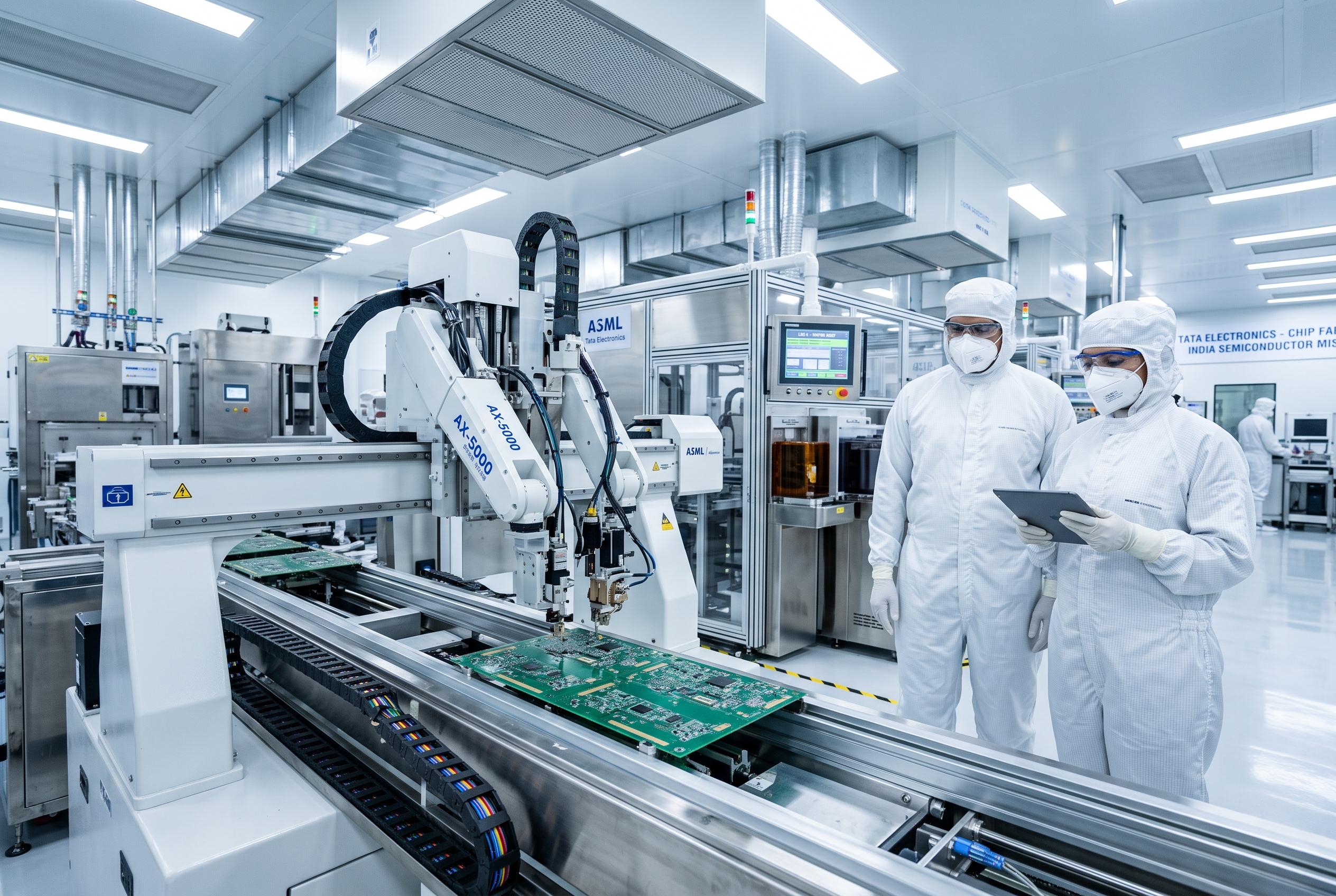

Prime Minister Narendra Modi announced India’s plans to establish five to eight new semiconductor plants over the next decade, signalling a major push towards technological self-reliance and reducing import dependence.
India is set for a further build-out of its semiconductor industry, with Prime Minister Narendra Modi saying on Saturday that five to eight additional chip plants are expected over the next seven to eight years. Speaking from the Red Fort on Independence Day, he said the country had already begun production at three semiconductor facilities and was now moving from planning to execution in a sector long viewed as strategically important.
Modi framed the expansion as part of India’s push for technological self-reliance, arguing that semiconductors are vital to electronics, healthcare, transport and most modern systems. He said the country had spent years discussing chip manufacturing without developing large-scale capacity, but has now taken what he described as decisive steps to change that.
The announcement builds on earlier moves under India’s semiconductor push, including the inauguration of a ₹3,300 crore plant that was presented as part of the India Semiconductor Mission. A government briefing released last year also said India was targeting domestically made semiconductor chips by the end of 2025 and had approved multiple units as part of a mission-mode approach to reduce import dependence and strengthen the wider electronics supply chain.
The expansion also fits into a broader industrial strategy that has gathered pace in 2026. According to an overview of India Semiconductor Mission 2.0, launched in February, the government has set aside a larger policy framework to support fabrication, assembly and testing, while addressing gaps in equipment and raw materials. Separately, reports on the Tata Electronics plant in Jagiroad, Assam, have highlighted the scale of private investment now moving into the sector, suggesting that India’s chip ambitions are beginning to draw both state backing and commercial capital.
Disclaimer: This content is intended for informational purposes only. Readers are advised to exercise their own judgement, conduct due diligence, or consult a qualified expert before acting on any information provided.