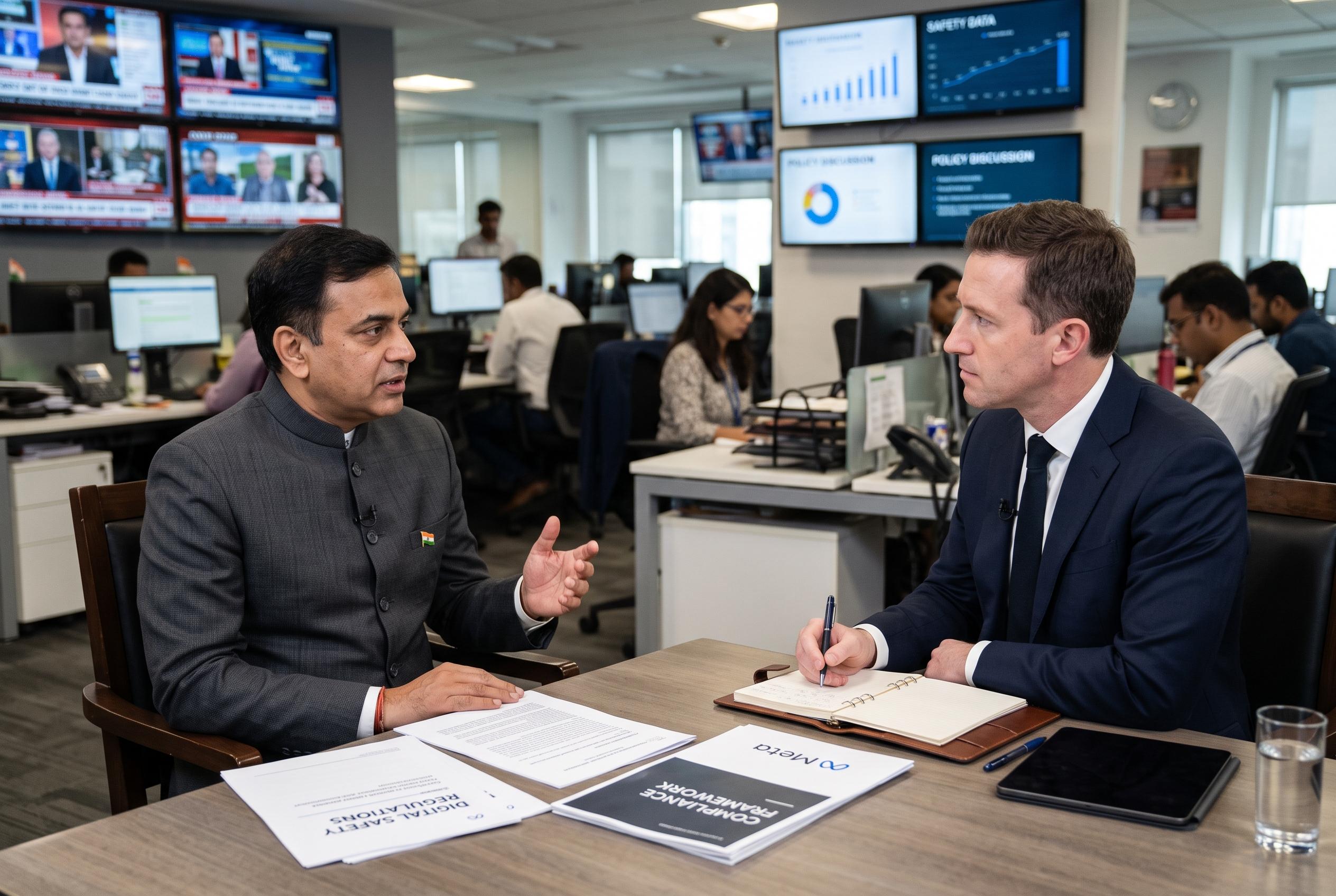

India’s government has asked Meta to strengthen measures against harmful AI-generated content amid scrutiny of its recommendation systems and legal status as an intermediary, highlighting global concerns over synthetic media safety.
India’s government has asked Meta to take stronger action against deepfakes and other harmful AI-generated material on its platforms, according to people familiar with the discussions. The move comes as officials examine whether Meta’s recommendation systems, which help decide what users see, still fit the legal definition of an intermediary under Indian law.
That question matters because intermediaries in India receive liability protection under section 79 of the Information Technology Act, provided they meet due diligence requirements set out in the IT Rules, 2021. According to the sources cited in the report, the government is assessing whether a platform that actively selects, promotes or sells content is acting more like a publisher than a neutral host, which could expose it to wider legal responsibility.
The scrutiny is not limited to India. Meta’s Oversight Board has also urged the company to tighten its rules on AI-generated content and deepfakes, saying current labelling and detection systems are inconsistent and often inadequate, particularly during conflicts or crises. The board has called for a dedicated standard for synthetic media, broader use of high-risk labels and better disclosure of digitally altered content.
Recent reporting has also shown the practical risks. CBS News said Meta removed a batch of fraudulent sexualised images of well-known women after an investigation found widespread AI-manipulated content on Facebook. Other reports have described similar concerns over manipulated media in politically sensitive situations, with the Oversight Board pressing Meta to improve transparency tools such as Content Credentials and, in some cases, invisible watermarks. Indian officials are now said to be extending that pressure beyond Meta to other platforms as they review whether their systems still qualify for intermediary protection.
Disclaimer: This content is intended for informational purposes only. Readers are advised to exercise their own judgement, conduct due diligence, or consult a qualified expert before acting on any information provided.