
Prime Minister Narendra Modi announces a significant expansion of India’s semiconductor industry, aiming to establish five to eight new chip manufacturing plants over the next decade as part of the Atmanirbhar Bharat drive and broader industrial ambitions.
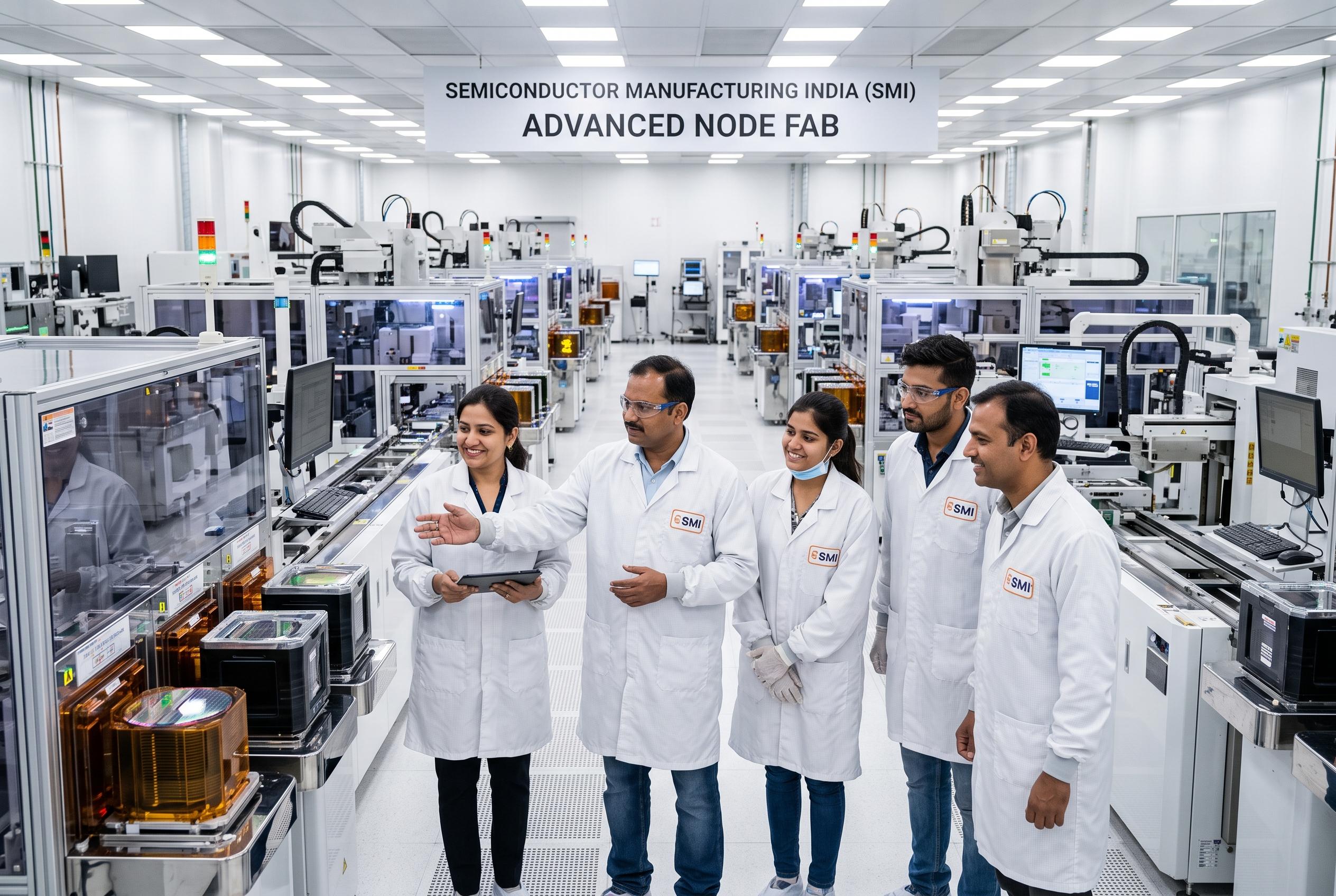
Prime Minister Narendra Modi has set out a fresh push for India’s semiconductor industry, saying the country could bring five to eight new chip plants into operation over the next seven to eight years. Speaking in his Independence Day address from the Red Fort, he cast the plan as part of the wider Atmanirbhar Bharat drive and the longer-term ambition of building a developed India. He said three major semiconductor facilities are already operating and that their output will also be exported.
Modi presented semiconductors as a strategic industrial priority rather than a niche technology. He said chips now sit at the core of modern electronics, medical equipment and transport systems, and argued that dependence on imports leaves critical sectors exposed. The broader message was that India must build domestic capacity in technologies that shape both economic competitiveness and national resilience.
The announcement comes as New Delhi is already expanding its chip policy framework. Business Standard reported in February that the Union Budget for 2026-27 introduced India Semiconductor Mission 2.0, with a focus on semiconductor equipment, materials, Indian intellectual property, supply-chain strength, chip design, fabrication, advanced packaging and skills. According to India Briefing and government statements in July, the Cabinet later approved Semicon 2.0 with a budgetary outlay of ₹1.275 trillion, extending the earlier programme launched in 2021 and broadening support across the full value chain. India Briefing also said that, as of mid-May, 13 semiconductor projects had been approved, including a new ATMP/OSAT facility in Bhiwadi, Rajasthan, the first unit outside the original mission framework.
In his speech, Modi also linked the semiconductor plan to a wider industrial and energy narrative. He said defence production has risen nearly fourfold in the past 12 years, electronic manufacturing almost sevenfold, and mobile phone production 33-fold. He added that India had moved beyond the “Fragile Five” label. On energy, he said the country is targeting 200 GW of nuclear power and is building five new reactors, while also expanding piped gas and solar coverage. The speech framed these steps as part of a larger effort to reduce dependence on external sources and strengthen India’s long-term industrial base.
Disclaimer: This content is intended for informational purposes only. Readers are advised to exercise their own judgement, conduct due diligence, or consult a qualified expert before acting on any information provided.