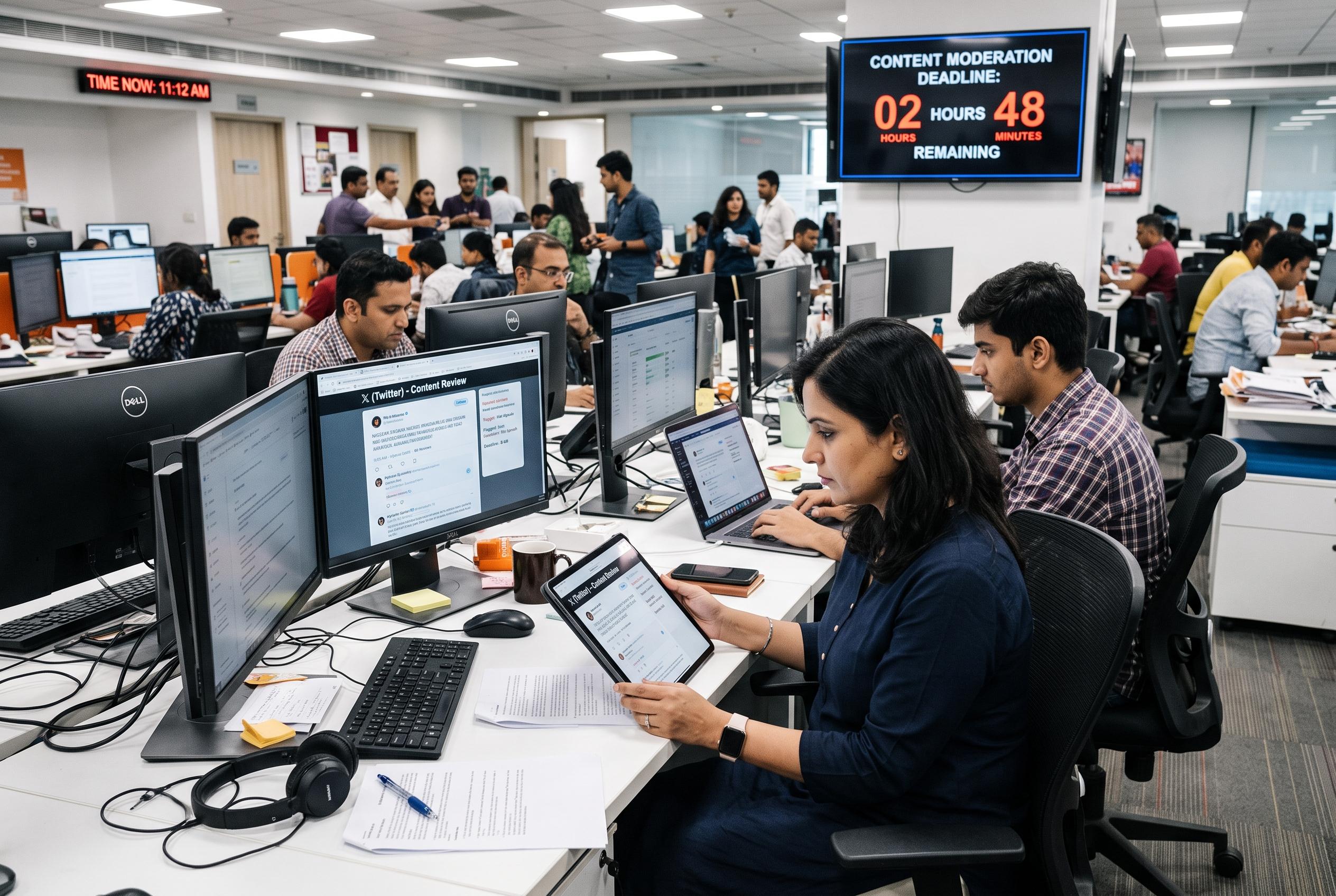

India has implemented a tighter three-hour deadline for social media platforms to remove unlawful online content, including deepfakes and sensitive AI-generated material, raising operational challenges and debates over accuracy.
India has tightened the rules governing how quickly social media platforms and other intermediaries must act on unlawful online content, cutting the takedown window to three hours after a valid government or court order. The change is aimed squarely at deepfakes, child sexual abuse material, non-consensual explicit images and material that could threaten public order, according to reporting by Adgully and other Indian outlets.
The move sharpens the compliance burden on technology companies, which until recently operated under a 24-to-36-hour response period for certain categories of content. Reuters-style reporting from Indian business publications indicates that the government has been under pressure to respond more quickly to synthetic media, particularly as generative AI makes fabricated audio, images and video easier to produce and spread.
Official material from the Ministry of Electronics and Information Technology shows that the latest amendments to the IT Rules, notified in February 2026, also introduced a separate two-hour deadline for especially sensitive cases. The same framework requires platforms to treat synthetically generated information as a regulated category and to add clear labelling and traceable metadata where AI-generated content is permitted.
The tougher timetable carries real legal and operational consequences. Under India’s intermediary framework, failure to comply promptly can put a platform’s “safe harbour” protection at risk, exposing companies and senior executives to liability for user-generated content. That has forced firms to invest in automated moderation systems, faster legal escalation processes and round-the-clock notice handling.
Industry reaction has not been uniformly positive. Business Standard reported earlier this year that Meta warned the three-hour standard could increase the chance of lawful posts being removed in error because requests would be difficult to assess fully in such a short period. That concern highlights the central tension in the new regime: faster enforcement against harmful content, but less room for careful review.
Disclaimer: This content is intended for informational purposes only. Readers are advised to exercise their own judgement, conduct due diligence, or consult a qualified expert before acting on any information provided.