

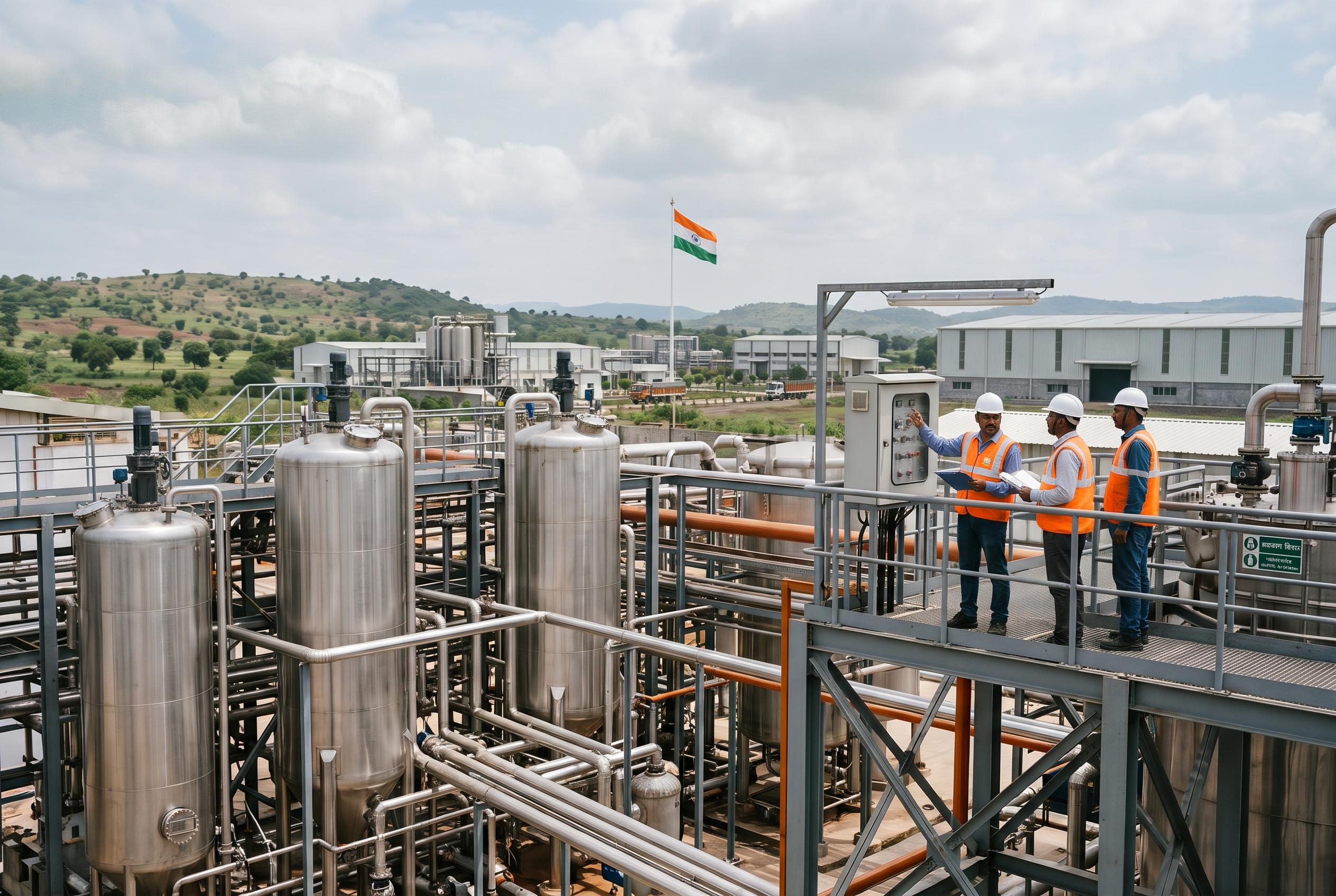

A proposed subsidy scheme would support four processing plants, while four states are being lined up for parks spanning minerals from rare earths to nickel.
The Union government is expected to take up a ₹2,800 crore plan aimed at expanding domestic processing of lithium and nickel, according to Business Today. The proposed framework would offer a capital subsidy of 30% on eligible investment for four plants: two lithium processing units, each with a minimum capacity of 30 kilotonnes, and two nickel processing units, each with a minimum capacity of 50 kilotonnes. The support would be capped at ₹500 crore per beneficiary for lithium facilities and ₹900 crore for nickel projects.
The same report says the government has identified Andhra Pradesh, Odisha, Gujarat and Maharashtra for critical mineral processing parks. Moneycontrol reported that each state is expected to anchor a different part of the broader industrial chain, with Andhra Pradesh linked to rare earth elements, titanium and zirconium, Gujarat to rare-earth permanent magnets, Maharashtra to lithium-related industries and Odisha to nickel. Officials quoted by that report said three states had already submitted detailed project reports, while locations such as Dahej, Dighi Port and Paradip were under consideration.
The policy push reflects a wider effort to build a domestic critical minerals value chain rather than relying only on access to raw ores. Business Standard reported earlier this year that the government was finalising a framework to retain more of the economic value of these materials within India, especially for electric-vehicle batteries and advanced manufacturing. The central logic is straightforward: mining alone does not secure supply if refining and processing continue overseas.
That concern is reinforced by policy and research material from NITI Aayog, the Council on Energy, Environment and Water and the International Energy Agency. NITI Aayog has flagged lithium, nickel and cobalt as minerals for which India faces heavy demand and near-total import dependence, while CEEW has argued that processing and refining remain a major global bottleneck in mineral supply chains. The IEA has also noted that battery-material production and processing remain concentrated, and that recycling will not meet a large share of demand in the near term because many batteries now in use are still far from end of life. Together, those findings explain why domestic processing capacity has become a strategic priority as India seeks to reduce import dependence and strengthen supply chains for electric mobility and clean energy.
Disclaimer: This content is intended for informational purposes only. Readers are advised to exercise their own judgement, conduct due diligence, or consult a qualified expert before acting on any information provided.



