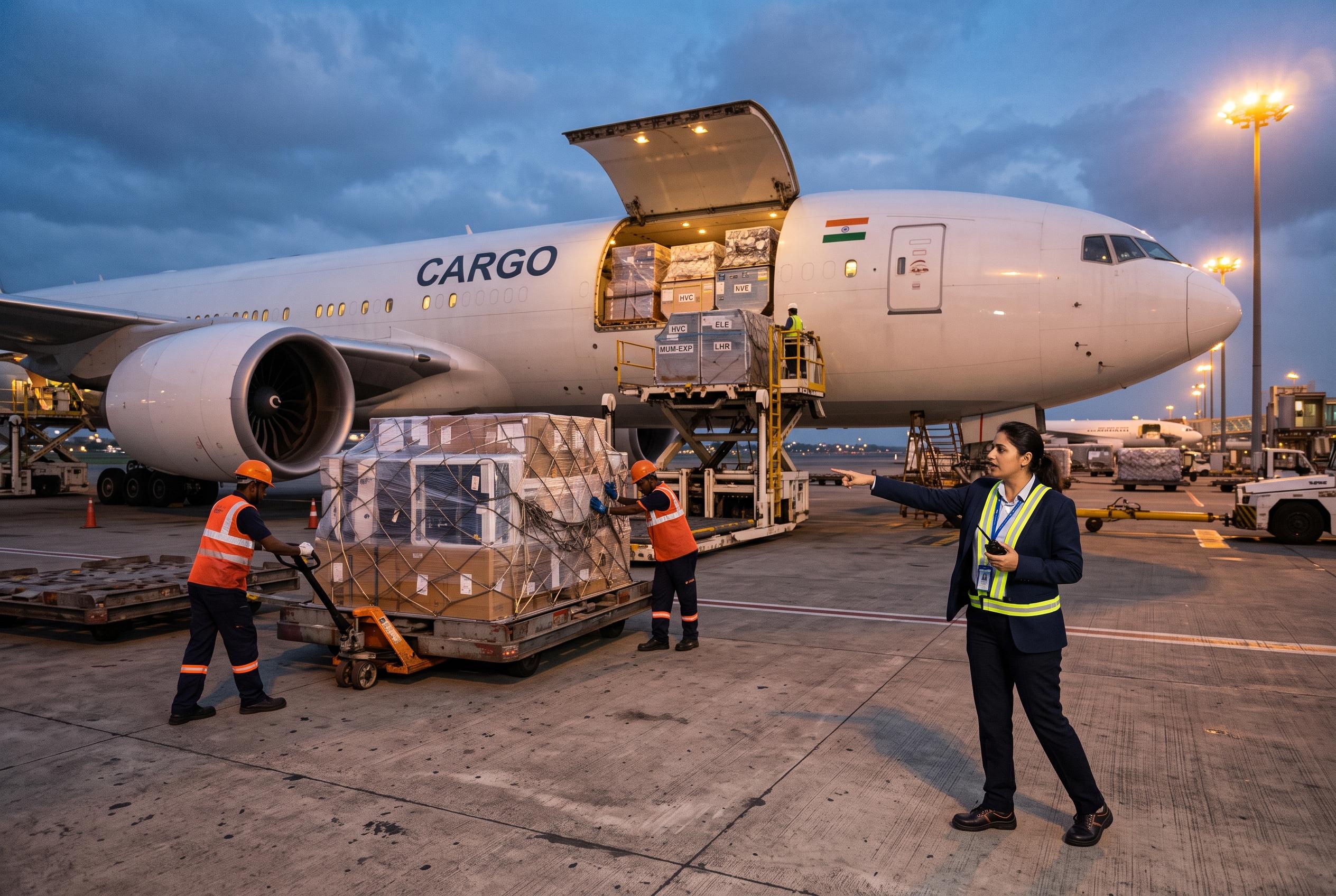

India’s air freight industry is experiencing rapid growth as carriers expand capacity to meet rising demand from high-value sectors, driven by stronger exports, regional disruptions, and a booming e-commerce market.
Air cargo into India is gaining pace as airlines and freight operators add capacity to serve demand from e-commerce, engineering, electronics and other high-value sectors. The shift has been reinforced by stronger exports and by disruption in West Asia, where conflict has tightened regional logistics and pushed up both air and sea freight rates, according to The Hindu BusinessLine.
In the past two months, EgyptAir, Hong Kong Air Cargo and Qatar Airways have all added cargo services into India from routes including Cairo, Doha, Hong Kong and Kuala Lumpur. Other foreign carriers have also flown extra ad hoc freight services to meet demand. Emirates SkyCargo, meanwhile, has announced two additional weekly freighters to India from March 2026, one each to Mumbai and Ahmedabad, while continuing to use trucking links to reach more inland markets.
Indian airports handled 10.8 lakh tonnes of freight in the April-June quarter, up 12% year on year, with international cargo rising 14% to 6.78 lakh tonnes, according to the airport data cited by The Hindu BusinessLine. Indian Infrastructure has separately said the country’s cargo market remains concentrated at a small number of large hubs, with nearly 90% of traffic handled by a few airports and New Delhi accounting for almost a third of total air cargo throughput.
Cathay Cargo said revenue from India rose more than 18% in the first half of the year, as demand strengthened for pharmaceuticals, automotive components, semiconductors, electric vehicle parts and aerospace items. Lufthansa Cargo has also expanded freighter capacity to India on a flexible basis, saying demand is being driven by electronics and technology-related shipments linked to India’s manufacturing base.
Cross-border e-commerce has become another major engine for the sector. Vijay Kumar of the Express Industry Council of India said e-commerce now makes up 70% of international shipments in the express industry, adding that trade agreements have provided an extra lift. Blue Dart Express is preparing to launch its first international e-commerce delivery product in the coming weeks, according to the report.
Semiconductor and data-centre equipment is also adding to volumes. Korean Air reported a 46% rise in cargo revenue in the June quarter, helped by AI chips and server racks, while NITI Aayog said in May that India’s semiconductor market could reach $200 billion by 2035. Air India said stronger Europe-bound cargo demand and a new transshipment programme are supporting volumes, with the Civil Aviation Ministry saying the expanded network could lift monthly carriage on those lanes by nearly 80%.
Disclaimer: This content is intended for informational purposes only. Readers are advised to exercise their own judgement, conduct due diligence, or consult a qualified expert before acting on any information provided.