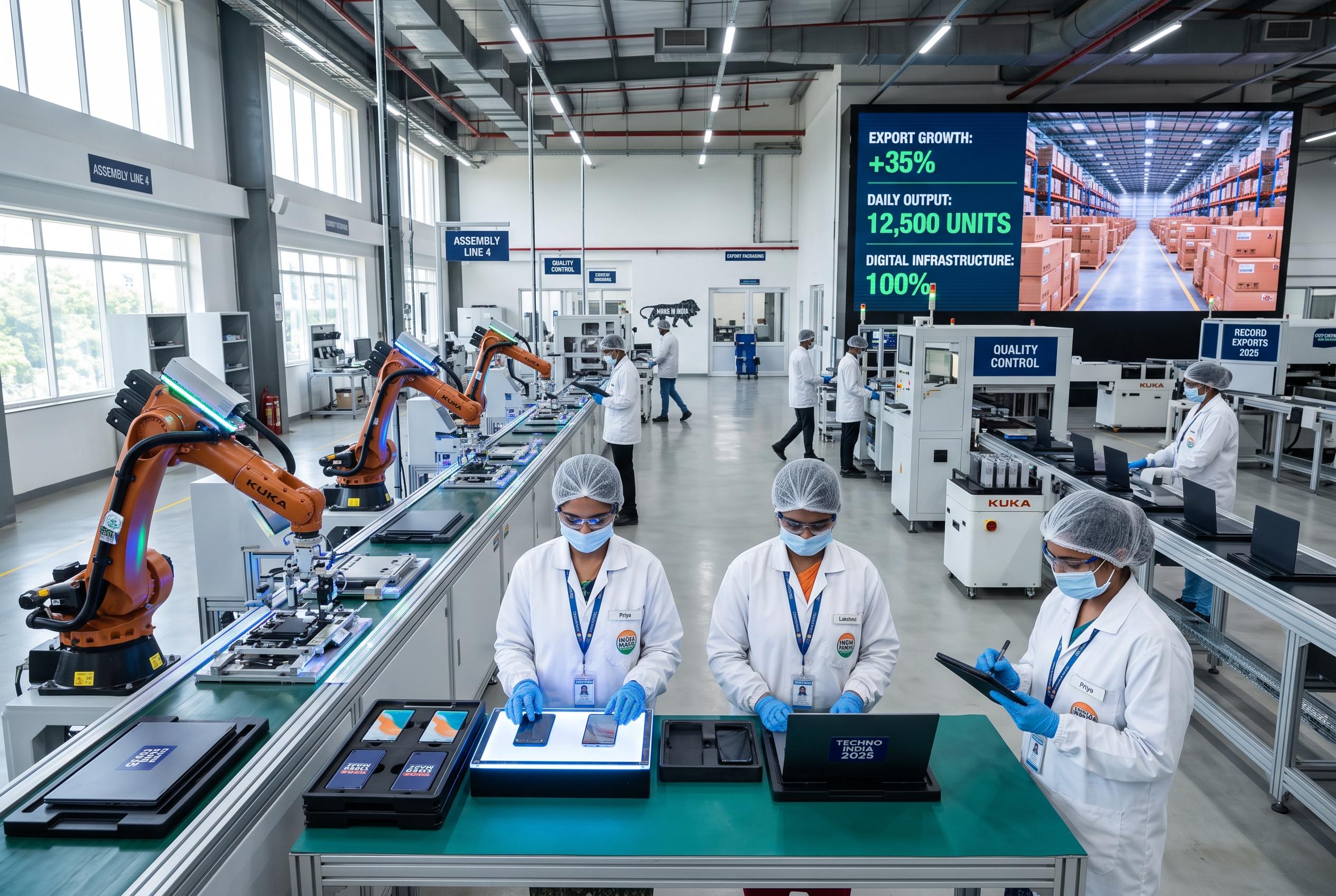

India’s electronics exports have soared to over ₹4.24 lakh crore in FY2025-26, transforming the sector into a vital part of the country’s economy with record growth in manufacturing, employment, and digital infrastructure.
India’s electronics exports have expanded at a pace that now places the sector among the country’s most important manufacturing stories. Government figures cited by The Economic Times and Times of India indicate that overseas shipments of electronics crossed ₹4 lakh crore in 2025 and have now risen to ₹4.24 lakh crore in FY2025-26, up from ₹38,000 crore in FY2014-15. That increase has helped push electronic goods into India’s third-largest export category, reflecting a broader shift in the country’s industrial base.
Mobile phones have been the clearest driver of that change. According to the same reports, phone exports have climbed from about ₹1,500 crore in FY2014-15 to ₹2.59 lakh crore in FY2025-26, turning the category into India’s largest export item. The country is now the world’s second-largest mobile phone manufacturer, a position built on large-scale assembly, rising local value addition and sustained policy support.
The expansion has not been limited to exports alone. India’s electronics production is reported to have risen to ₹6.27 lakh crore, up sharply from ₹18,000 crore in FY2014-15. The government has credited schemes such as the Production Linked Incentive programme, the Electronics Components Manufacturing Scheme, the India Semiconductor Mission and electronics manufacturing clusters with helping to draw in investment and increase domestic output. The challenge now, as Livemint has noted, is to move beyond assembly-led growth and deepen component manufacturing so the sector can integrate more fully into global supply chains.
Employment and digital infrastructure have grown alongside the manufacturing push. The sector has created about 12 lakh jobs, with women making up nearly 30% of the wider electronics workforce and around 70% in mobile phone manufacturing, according to the material cited in the lead report and related summaries. At the same time, India’s digital economy is now said to contribute up to 14% of GDP, internet subscriptions have passed 109.2 crore, and 5G services are available across 99.9% of districts. The result is a stronger ecosystem for both production and demand, although sustaining the momentum will depend on whether India can build more of the components and semiconductors that underpin modern electronics.
Disclaimer: This content is intended for informational purposes only. Readers are advised to exercise their own judgement, conduct due diligence, or consult a qualified expert before acting on any information provided.