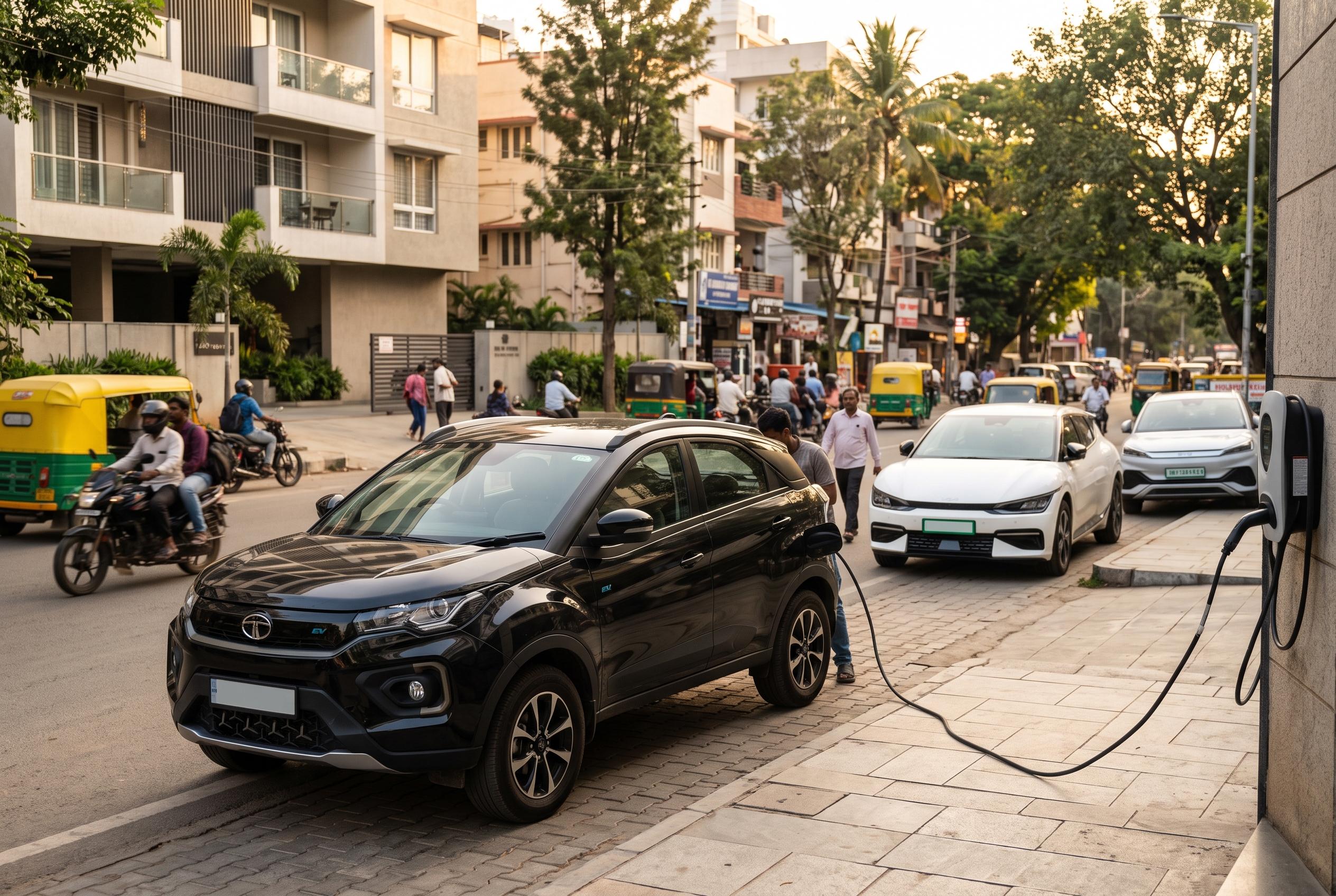

In August, India’s electric car registrations declined, but the real story lies in the contrasting performances of Tata, Kia, and BYD, highlighting evolving dynamics in the country’s EV industry.
India’s electric car market lost momentum in August, but the more revealing story was not the decline in overall registrations. It was the split in fortunes among three closely watched manufacturers. Tata Passenger Electric Mobility remained the clear leader, Kia gained ground from a small base, and BYD India suffered a sharp setback. According to All India EV’s registration analysis, total electric car registrations fell to 29,125 in August from 33,050 in July, a monthly drop of nearly 12%.
Tata’s own registrations eased from 13,917 to 12,971, yet its market share rose from 42.11% to 44.54% because the wider market shrank more quickly. The company retained the top spot in 22 of the 23 states and union territories with at least 100 EV registrations in August, losing only in Chandigarh, where Mahindra Electric Automobile edged it by a narrow margin. That spread suggests Tata’s position rests on broad distribution, service reach and a presence across multiple price bands, rather than on one strong region alone.
Kia moved in the opposite direction. Its registrations climbed from 421 to 553, lifting market share from 1.27% to 1.90% and improving its national ranking from ninth to seventh. The gains were not limited to one market: Kerala more than doubled, while Haryana also showed a clear jump. For a comparatively small player, the fact that it expanded while the market contracted points to demand that is more than a statistical fluke.
BYD’s month was weaker still. Registrations fell from 796 to 550, cutting market share from 2.41% to 1.89% and dropping the brand from sixth to eighth place. Weakness was visible across several major urban markets, including Maharashtra, Delhi, Kerala and Karnataka. Chandigarh was one of the few exceptions, but the broader pattern was negative enough to suggest that BYD lost ground for reasons beyond the industry-wide slowdown.
The contrast matters because it shows why unit sales alone can mislead in a cooling market. Tata lost volume but strengthened its competitive position. Kia grew in both absolute and relative terms. BYD declined on both counts. In a month when demand softened, the crucial question was not simply who sold more cars, but who held share, who gained it, and whose recent momentum could not be sustained.
Disclaimer: This content is intended for informational purposes only. Readers are advised to exercise their own judgement, conduct due diligence, or consult a qualified expert before acting on any information provided.