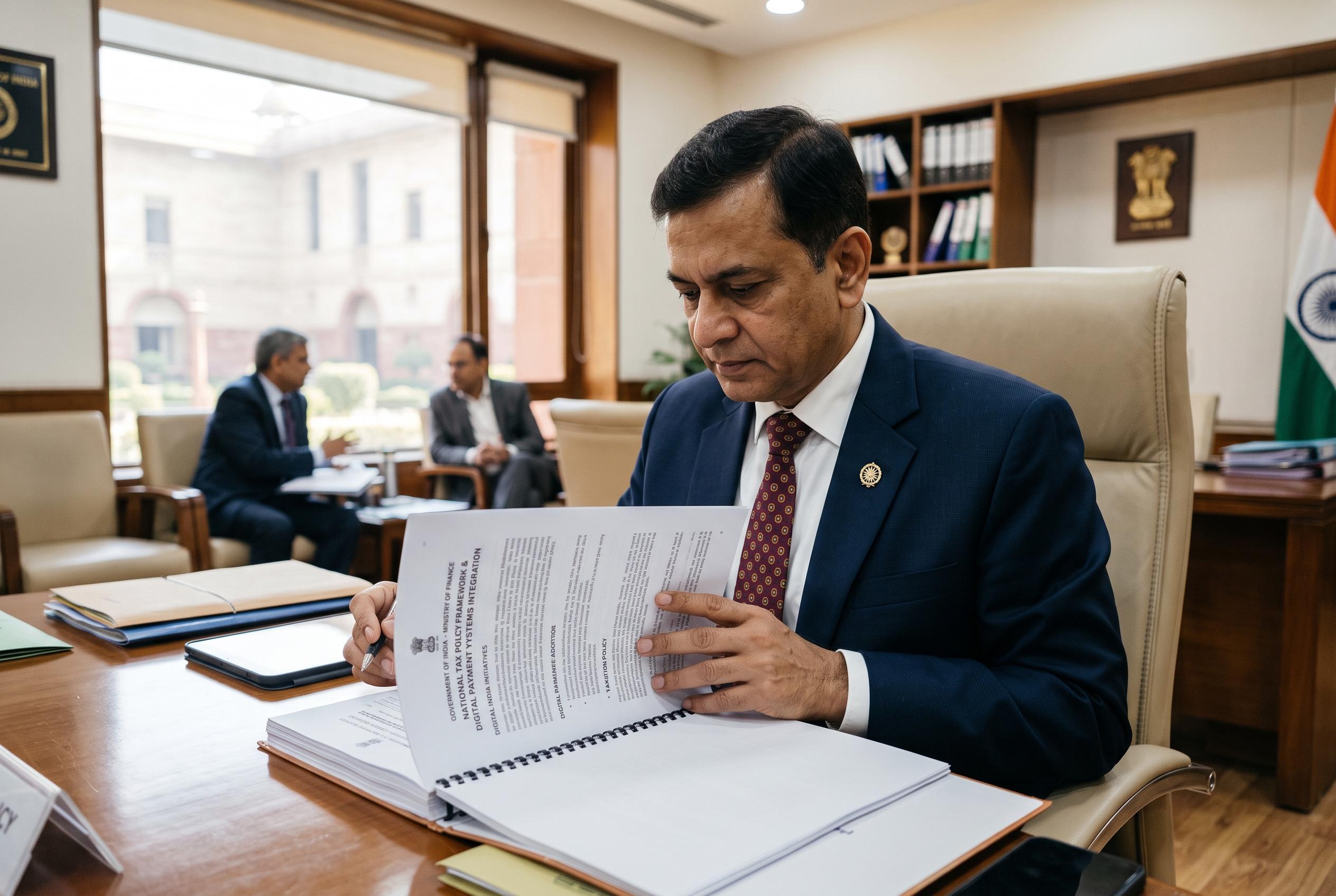

India’s Parliament has approved a comprehensive tax amendment that not only refines the legal framework but also signals a strategic shift, giving the government control over UPI fee policies and offering long-term incentives to foreign investors, raising questions about future costs for domestic merchants.
India’s Lok Sabha has approved a wide-ranging tax amendment that does far more than tidy up the statute book. Passed on a voice vote on August 6 without debate, the Taxation and Other Laws (Amendment) Bill, 2026 replaces an ordinance from June and touches three separate laws at once: the Income-tax Act, 2025, the Finance Act, 2026 and the Payment and Settlement Systems Act, 2007. While the government has presented it as a step towards compliance simplification and greater tax certainty, the legislation also reveals two very different policy priorities: protecting the payments system that has made UPI central to everyday commerce and making India more attractive to foreign capital.
The most politically sensitive change concerns UPI. Since 2020, the law has effectively locked in zero merchant discount rate, or MDR, for UPI and RuPay debit transactions, meaning merchants have not paid a fee on those digital payments. The new Bill does not directly impose a charge, but it gives the central government power to decide by notification which payment methods remain free and which may attract fees later. In practice, that moves a major policy question out of statute and into executive discretion. With UPI now handling tens of billions of transactions and underpinning retail payments across the country, the change is unlikely to remain a technical footnote.
The scale of the system helps explain why the issue matters. The article in The Indian Express said UPI processed 24,161.69 crore transactions worth Rs 314.23 lakh crore in FY26, up sharply from Rs 84.16 lakh crore four years earlier, and had 55.49 crore users by June 2026. The government has also been subsidising the ecosystem, with incentive payments to banks and the National Payments Corporation of India rising from Rs 1,389 crore in 2021-22 to Rs 3,631 crore in 2023-24. Industry groups have argued for years that the current model is costly to sustain, but any shift towards MDR would almost certainly fall hardest on small merchants, who make up the bulk of digital acceptance points and operate on thin margins.
Finance Minister Nirmala Sitharaman has rejected the claim that the Bill opens the door to charging ordinary users, saying MDR applies to merchants rather than consumers. She has also said any rate would be set later by an NPCI-led steering committee, not by the Bill itself. That distinction is technically correct, but it does not remove the broader concern: merchant fees often reappear indirectly through higher prices, minimum-value thresholds or a quiet preference for cash. Reports from Moneycontrol and other outlets have said the government is considering a limited MDR for large merchants and higher-value transactions, possibly above ₹2,000 and below 0.5 per cent, which suggests the policy debate is now about how to segment the market rather than whether fees will return at all.
The Bill is much more generous on foreign capital. It cuts the conditions for fund managers relocating to GIFT City from 13 to five, removes certain notification requirements for foreign companies using Indian-owned data centres and extends exemptions to foreign electronics and diamond-trade firms. It also follows the June ordinance that exempted foreign institutional investors and the Bank for International Settlements from tax on interest and capital gains from government securities, effective from April 1, 2026. Those measures are designed to deepen India’s sovereign bond market and make the country more competitive as a destination for global capital.
The most striking concession is a 15-year tax exemption, running to 2041, for foreign companies storing electronic components in customs-bonded warehouses before supplying Indian contract manufacturers. That is a clear signal that the government wants to anchor more of the electronics supply chain in India and offer the long policy horizon that manufacturers often demand before shifting production. Yet the contrast is hard to miss. Foreign investors and manufacturers receive long-term certainty and lighter compliance, while millions of domestic merchants are left with a payments regime whose future cost structure can be changed later by notification. The legislation may still make economic sense, but passing it without a proper debate leaves the impression that the country’s biggest digital payments system was treated as a detail, not a public policy choice.
Disclaimer: This content is intended for informational purposes only. Readers are advised to exercise their own judgement, conduct due diligence, or consult a qualified expert before acting on any information provided.