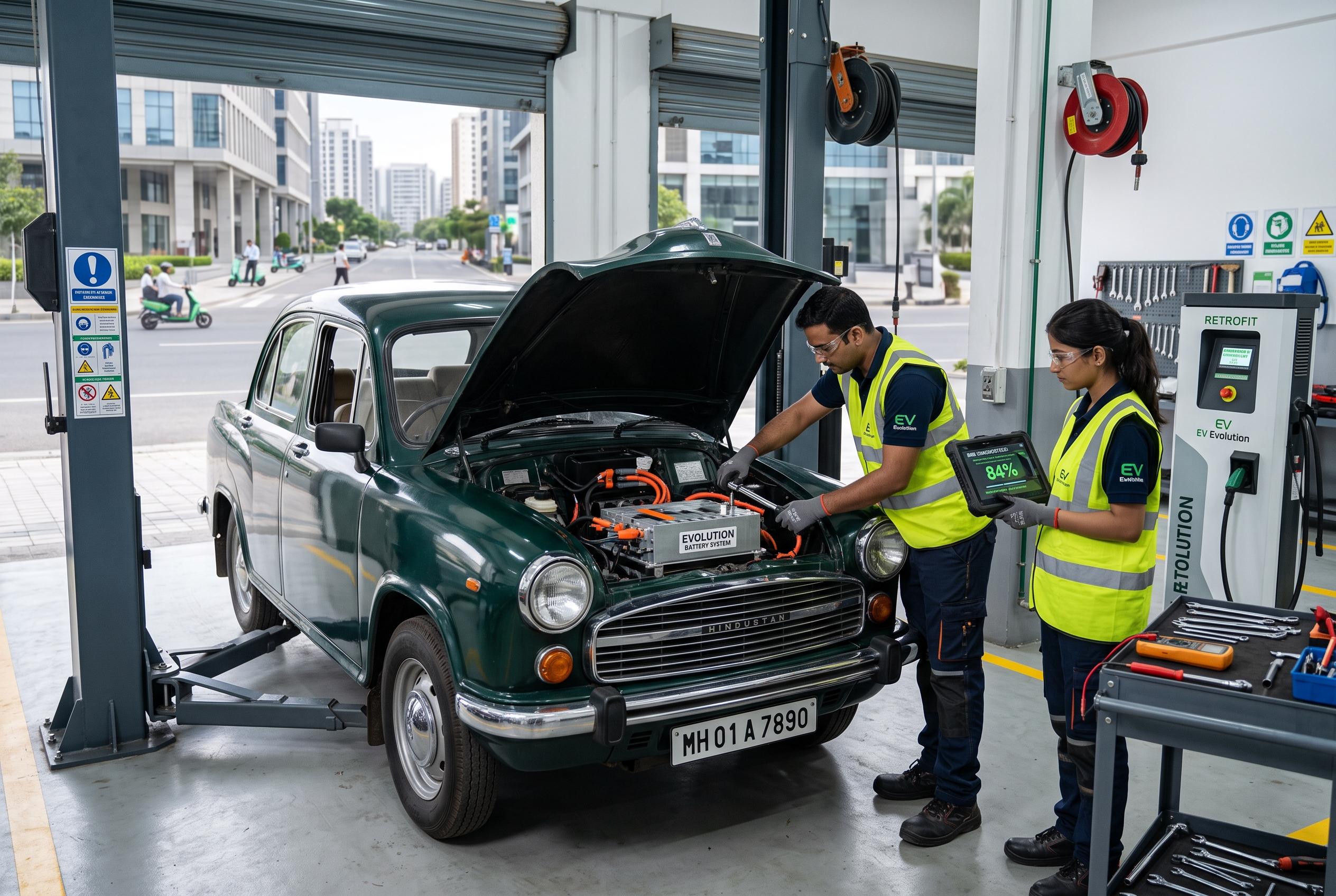

India’s electric mobility sector is shifting focus from new vehicle sales to retrofitting existing vehicles, with a burgeoning ecosystem that could redefine its EV transition and reduce urban emissions.
India’s electric mobility sector may be entering a second phase, one centred not just on new vehicle sales but on converting the vast stock already on the road. A series of recent launches and state-backed programmes suggests retrofit electrification is moving from an isolated idea to a more structured market, with certification, financing, charging, swapping and public procurement starting to line up at the same time. According to All India EV, that shift became more visible after NATRAX issued its first type-approval certificate for a retrofitted electric three-wheeler in September 2025, opening a legal path that had long been a major constraint on the sector.
The most active segment is commercial three-wheelers. Exponent Energy has launched Exponent Oto, a retrofit system that converts existing CNG and LPG autorickshaws to battery-electric vehicles. Livemint reported that the company is investing about $40 million over two years to expand manufacturing, with the kit priced at around ₹1.7 lakh, a conversion time of roughly 24 hours and a claimed range of 140 km to 150 km per charge. The company says operators can save up to ₹5,000 a month, helped by lower fuel and maintenance costs and financing tied to the vehicle’s existing collateral.
Other firms are targeting different parts of the installed base. Green Tiger Mobility has partnered with Indofast Energy to retrofit popular petrol scooters, with support for 11 high-volume models across Honda, Hero, Suzuki, TVS and Yamaha, and with battery swapping built into the offer. Compage Automation Systems has also entered the three-wheeler retrofit market with Indofast, while E-Vidyut has begun commercial operations in Maharashtra. Konexio Network and Motown India said E-Vidyut recorded 30 registrations on its first day and is among the few Indian firms with Automotive Research Association of India certification for this kind of conversion.
The broader trend is not just about hardware. It is about assembling an operating system for conversion, including registration support, warranties, battery access and servicing. ThunderPlus and Indofast have also announced integrated charging and battery-swapping hubs, beginning in Hyderabad, Bengaluru and Delhi NCR, with plans to expand to more than 250 locations. That matters because retrofit is harder to scale when energy access is fragmented.
The strongest economics are likely in vehicles that work hard every day. That is why fleet three-wheelers, delivery vehicles and buses are drawing the most attention. Telangana is pushing this logic furthest. All India EV reported that the Telangana State Road Transport Corporation is converting 240 ageing diesel buses to electric power, while Chief Minister A. Revanth Reddy has said the state is preparing an action plan to retrofit around two lakh diesel and other autos. The same report said the state aims to remove diesel buses from Hyderabad by December 2026.
Even so, the bus programme shows how much friction remains. The conversion process still depends on fresh prototype approvals and safety testing, and costs can be substantial. All India EV noted reported kit prices of roughly ₹65 lakh to ₹70 lakh per bus in one procurement, with concerns about battery weight and chassis life. Those figures are specific to that case, but they underline a wider point: retrofit works best when the vehicle has enough remaining service life to justify the investment.
Policy is beginning to catch up, though unevenly. All India EV said several states have already offered retrofit incentives at different times, including Assam, Rajasthan, Chandigarh and Tamil Nadu, while Delhi has used retrofit as a regulatory tool for older diesel vehicles and may yet extend support further through its draft EV Policy 2.0. The central government’s incentive architecture, however, still favours new EV purchases, which leaves retrofit somewhat outside the main subsidy stream. That gap could limit growth unless financing, certification and resale values become easier to manage.
For now, the clearest sign of change is not a sales boom but the emergence of an ecosystem. Retrofit is shifting from a technical possibility to a commercial model, especially where vehicle utilisation is high and energy infrastructure is attached to the conversion package. If approvals, installer networks and lending products continue to develop together, India’s EV transition may soon include a second route: not replacing old vehicles outright, but electrifying them in place.
Disclaimer: This content is intended for informational purposes only. Readers are advised to exercise their own judgement, conduct due diligence, or consult a qualified expert before acting on any information provided.