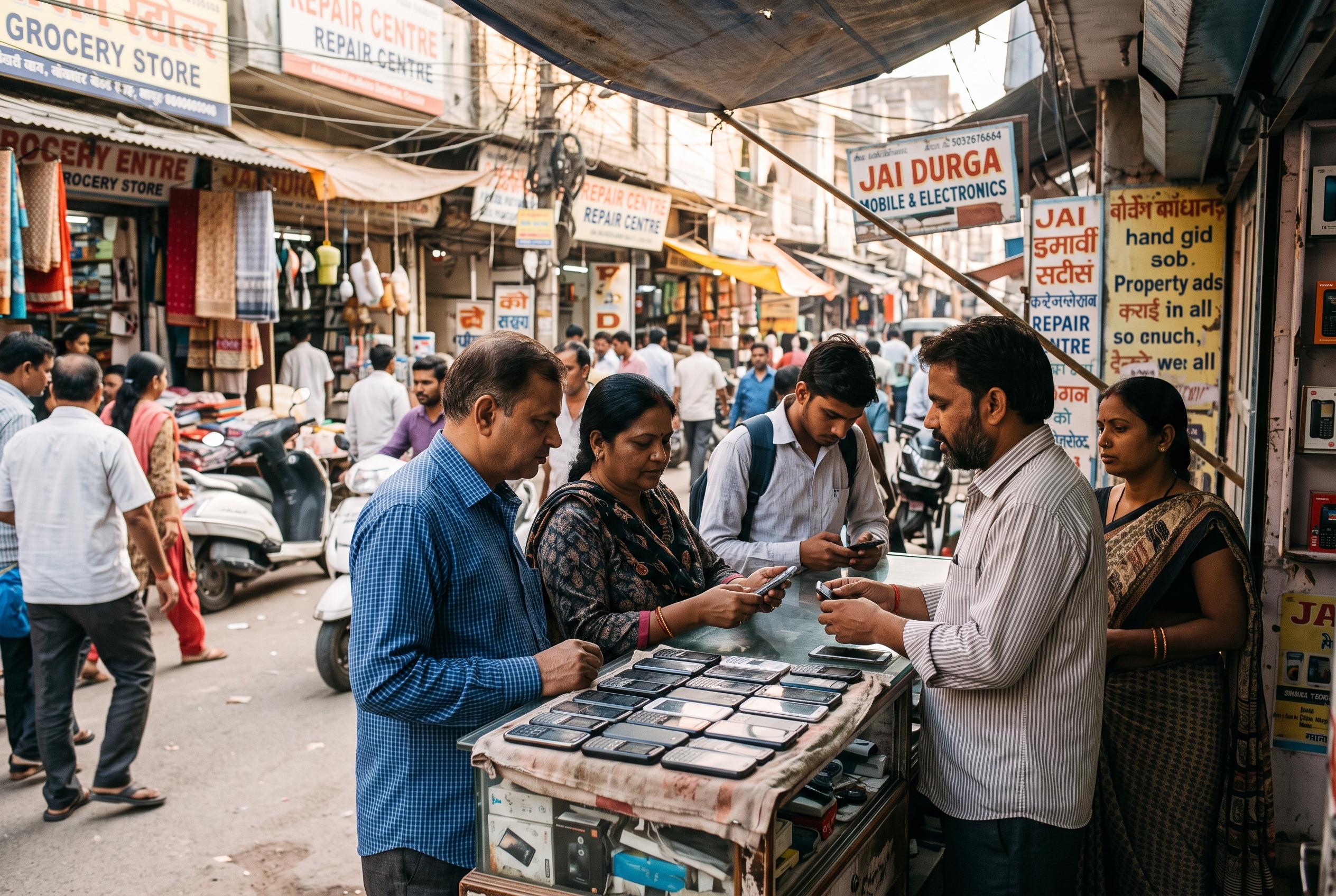

Shipments fell 20% in the latest quarter as rising handset and component costs push budget-conscious consumers to delay upgrades.
India’s smartphone market has entered a sharper downturn just as the festive shopping season begins. Counterpoint Research said shipments in the July-to-September quarter fell 20% year on year, extending a run of declines that has now lasted three consecutive quarters. The slide has accelerated each quarter, after a 6% fall in the first quarter and an 11% drop in the second, which was the weakest April-to-June period since 2013.
The immediate pressure point is price. According to Counterpoint, handset costs have climbed steadily across the year, with the average selling price rising by about 21%. The impact has been most severe in the entry-level category, where prices are said to have jumped by roughly 32%. That has strained budgets at the lower end of the market, where demand is typically most sensitive to price increases.
The research firm expects the festive season to bring only limited relief. It forecasts that unit sales in India could fall 12% during the period, even if the total value of sales rises by 5%. That would mean consumers are buying fewer phones but paying more for each one, a pattern that reflects the shift towards costlier models and weaker appetite for low-cost upgrades.
The Indian slowdown mirrors a broader global pattern. Counterpoint said worldwide smartphone shipments fell 20% in the third quarter to 255.3 million units, the largest quarterly decline on record. Rival market coverage from IDC described the drop as even steeper at 22% and linked it to surging memory costs, which have been driven higher by demand from artificial intelligence data centres. Both accounts point to the same underlying problem: component inflation is squeezing manufacturers and pushing retail prices higher.
The pressure is not only coming from supply. Analysts also say consumers are keeping devices for longer, partly because replacement phones offer smaller upgrades than in past cycles. That trend is affecting flagship as well as budget models. Counterpoint’s figures show shipments falling across major brands, with Samsung down 5.8%, Apple down 4%, Xiaomi down close to 30%, Oppo down about 35%, and Vivo down by roughly a third. The combination of weaker demand, costlier memory chips, expensive logistics and currency weakness has left the market facing an uncertain second half, with little sign that pricing will ease soon.
Disclaimer: This content is intended for informational purposes only. Readers are advised to exercise their own judgement, conduct due diligence, or consult a qualified expert before acting on any information provided.