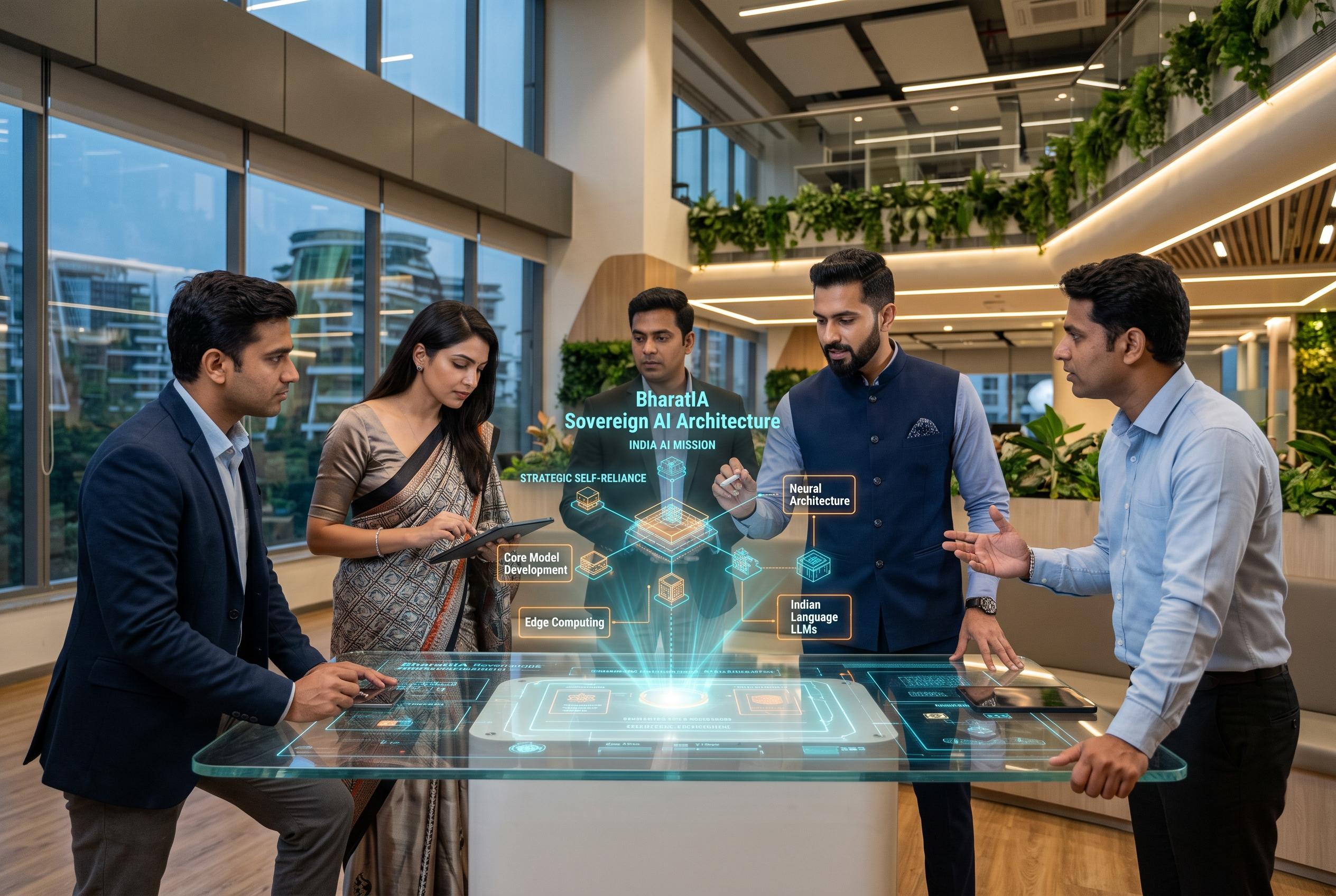

Leading Indian industry figures emphasise the need for self-reliance in core technologies, AI and data infrastructure ahead of India’s 2026 Independence Day, signalling a strategic shift from consumption to creation in India’s tech future.
India’s debate on technological self-reliance is widening beyond factories and import substitution to include software, data and artificial intelligence. In a discussion published by Free Press Journal ahead of Independence Day 2026, industry leaders argued that the next phase of self-rule must include the ability to design core technologies at home rather than depend mainly on foreign platforms and systems.
Faisal Kawoosa, founder of TechArc, said India has advanced sharply in digital adoption but still needs to close a basic gap: the creation of core technologies within the country. Tarun Pathak, research director at Counterpoint Research, took that further, saying India must shift from being a large consumer of global technology to a creator of it. He argued that digital infrastructure should include more native intellectual property to protect user data and that the clearest expression of future independence will be sovereign AI models built for Indian needs and preferences.
The same theme is appearing elsewhere in India’s technology conversation. Business Standard reported earlier this year that Infosys co-founder Kris Gopalakrishnan sees deep technology and advanced manufacturing as central to the next wave of billion-dollar companies, often described as “Unicorn 2.0”. His view points to a broader industry shift: strategic autonomy is increasingly linked to proprietary technology, not only scale or market share. At the same time, the India AI Impact Summit 2026 has been presented by the government as a platform for responsible and inclusive AI development, signalling that policy makers also see domestic capability as a national priority.
Ashok Rajpal, managing director of Ambrane India, tied tech independence to India’s semiconductor ambitions, saying stronger chipmaking capability would give the country more freedom to innovate. Ipshita Chowdhury, marketing head at Motorola, framed the issue through demographics, noting that most of India’s population is under 35 and should have broad access to secure, useful digital tools. Taken together, the comments suggest that Indian tech freedom in 2026 is no longer just about reducing imports. It now means building core systems, controlling key layers of infrastructure and ensuring that new tools reach a young population at scale.
Disclaimer: This content is intended for informational purposes only. Readers are advised to exercise their own judgement, conduct due diligence, or consult a qualified expert before acting on any information provided.