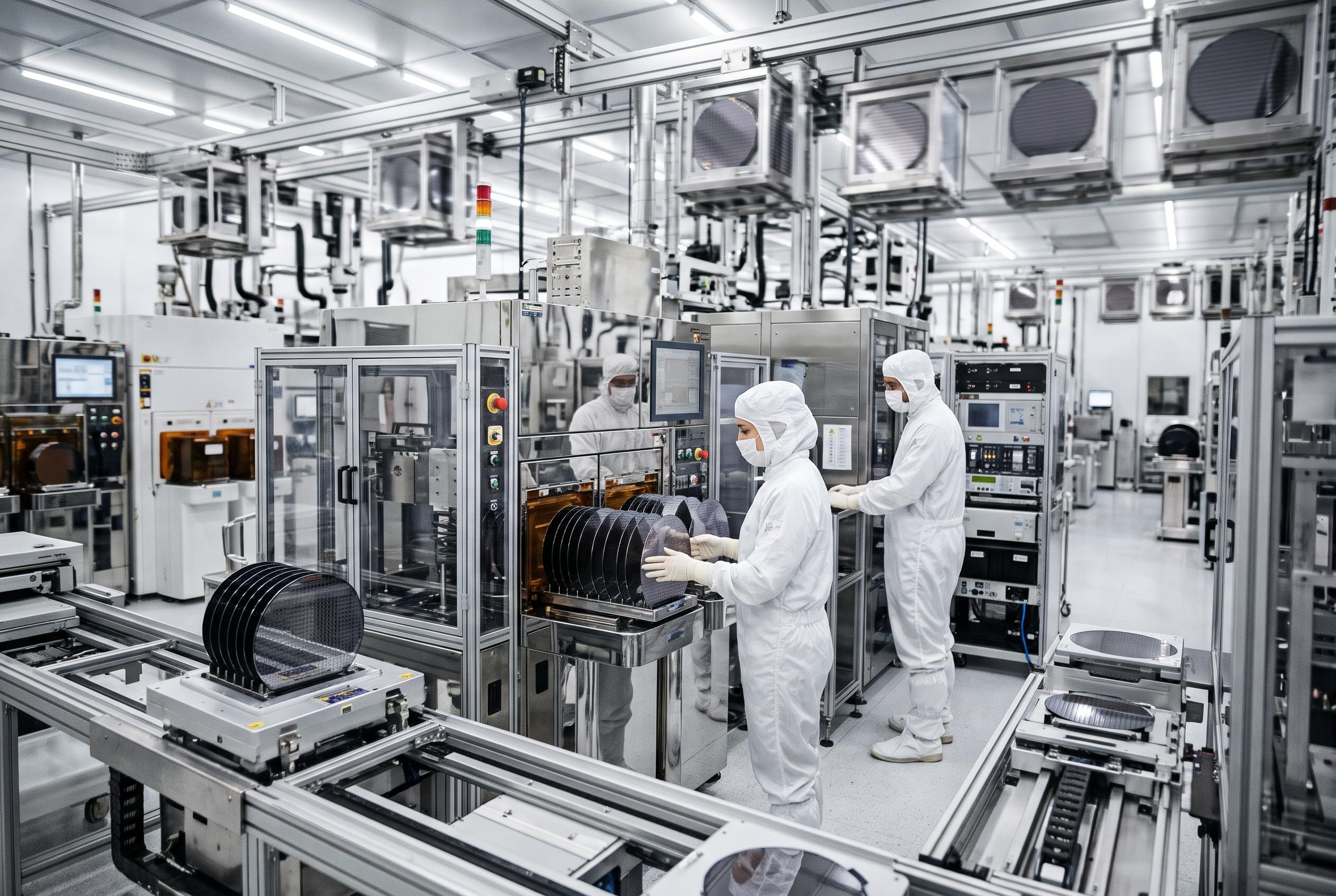

The German chipmaker will build a high-volume gallium nitride manufacturing line at Villach, with production expected to begin in late 2027.
Infineon Technologies is moving its gallium nitride strategy from pilot production into full industrial scale, with a new high-volume manufacturing line planned for its site in Villach, Austria. The German chipmaker said it will invest about €1.1 billion by 2034 to build what it describes as the world’s first large-scale 300-millimetre GaN power semiconductor facility, with production due to begin at the end of 2027.
The company says the project is designed to meet rising demand for efficient power components used in AI data centres, energy infrastructure, electric vehicles, robotics and consumer electronics. GaN devices can switch and convert electricity more efficiently than many conventional alternatives, which helps reduce energy losses, heat output and the size of power systems. Infineon also argues that moving GaN production to 300-millimetre wafers should improve manufacturing efficiency because larger wafers can yield more chips per run.
The announcement builds on a series of technical milestones. In September 2024, Infineon said it had developed the world’s first 300-millimetre power GaN wafer technology, highlighting its ability to use much of the equipment already employed in 300-millimetre silicon manufacturing. In July 2025, the company said its roadmap for scalable 300-millimetre GaN production remained on track and that initial customer samples were expected in the fourth quarter of 2025.
Infineon said the Villach expansion will make use of existing clean-room space alongside upgraded infrastructure, which it says should make the build-out more capital-efficient than a greenfield factory. The company is presenting the site as a global competence centre for power electronics and new semiconductor materials, reinforcing its position in a market that analysts expect to expand rapidly over the rest of the decade.
Austria’s government has welcomed the project as a major industrial investment. Chancellor Christian Stocker described it as one of the largest single investments in the country’s high-tech sector, while Economy Minister Wolfgang Hattmannsdorfer said chips are becoming as strategically important to the modern economy as oil once was. The Austrian authorities say the project is expected to receive up to €319 million in public support under the European Chips Act, subject to final approval by the relevant ministry.
The planned expansion also underlines Villach’s role in a wider regional semiconductor cluster. Infineon Austria employs about 5,800 people, including roughly 4,800 at Villach, and works with universities, research bodies, start-ups and industrial partners in southern Austria. The company says the new GaN line should strengthen those links further and support broader European ambitions for technological sovereignty in microelectronics.
Infineon’s push comes as the market for GaN power semiconductors is projected to grow strongly. Industry research cited by the company suggests the market could reach about $3.5 billion by 2031, implying annual growth of roughly 35% between 2025 and 2031. That outlook helps explain why chipmakers are racing to scale production of a material that is increasingly seen as important for energy efficiency across both consumer and industrial systems.
Disclaimer: This content is intended for informational purposes only. Readers are advised to exercise their own judgement, conduct due diligence, or consult a qualified expert before acting on any information provided.