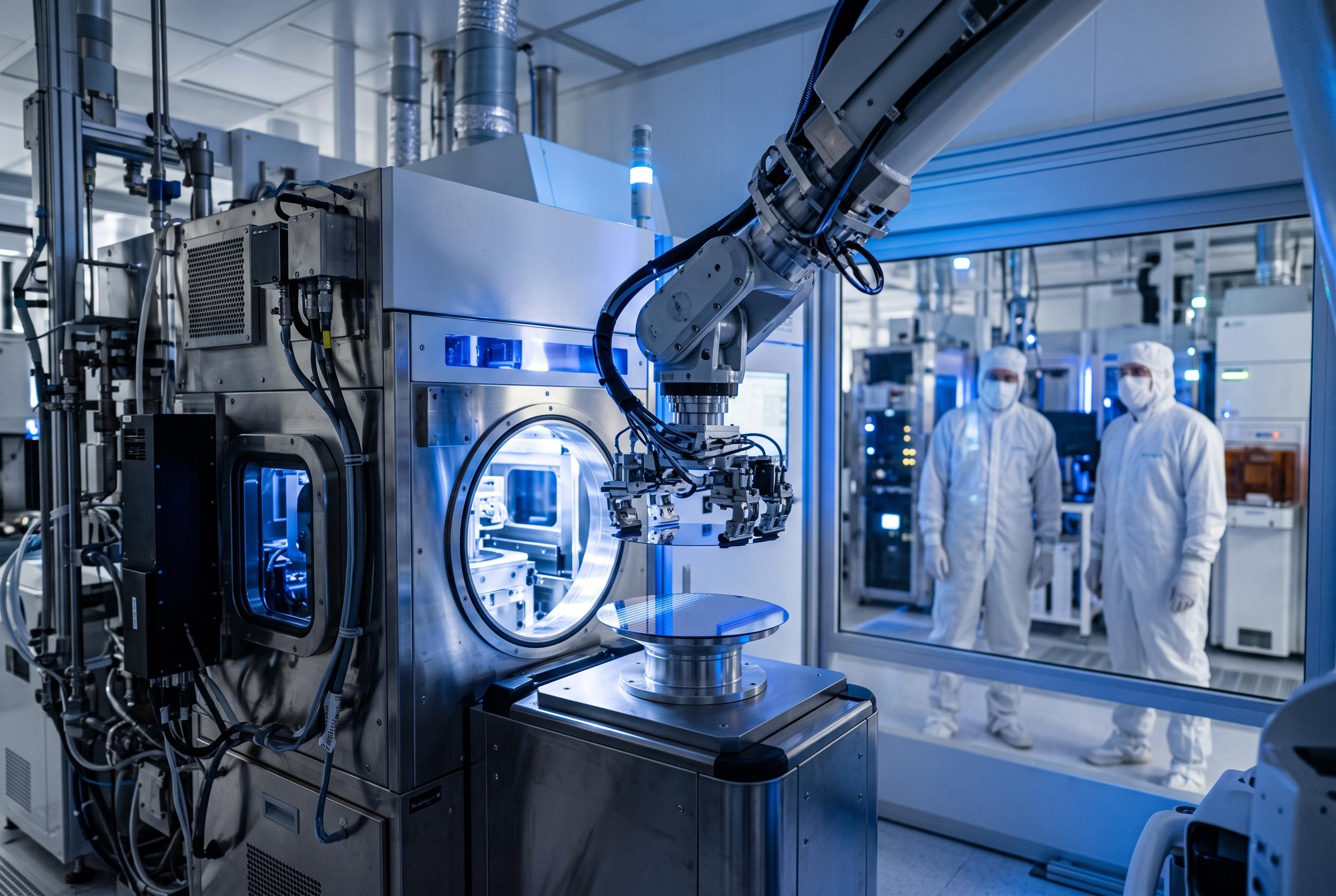

Lam Research is investing over $3 billion in a new state-of-the-art research laboratory in Oregon, aiming to accelerate development of advanced chipmaking technologies crucial for AI applications amid industry shifts towards increased research investment.
Lam Research has begun building a new research laboratory at its Tualatin campus in Oregon, a move that deepens its bet on advanced chipmaking tools at a time when artificial intelligence is driving demand for more complex semiconductors. The company said the facility will support faster development of deposition, etch and validation technologies used in chip manufacturing, while also allowing customers to work directly with its engineers on site.
The project will add about 120,000 square feet of laboratory space and lift cleanroom capacity at the centre by more than half, according to Lam Research. The company said the new site will be among its most advanced and will be tied into its wider global lab network, allowing work to be carried out in parallel across multiple locations. It plans to open the building in 2028.
Axios reported that Lam is treating the expansion as part of a $1.5 billion investment over 15 years, while Lam’s own announcement describes a broader commitment of more than $3 billion to its global lab network over the next five years. The company said the Oregon project is intended to shorten development cycles and bring new process technologies to market faster, particularly for AI-related chips. Axios also noted that Lam employs about 4,000 people, mainly in Washington County, and has had to navigate a softer demand environment in recent years.
The groundbreaking drew political and industry support, with Oregon Senator Jeff Merkley, Congresswoman Suzanne Bonamici, state officials and executives from Intel and Micron attending. Micron’s own recent plans underline how sharply the sector is shifting towards heavier research investment: Tom’s Hardware reported that Micron has committed $10 billion over the next decade to a new research lab in Boise, Idaho, designed to develop next-generation memory, packaging and manufacturing technologies. Together, the projects point to a wider industry push to keep critical semiconductor research closer to production and to the customers that will use it.
Disclaimer: This content is intended for informational purposes only. Readers are advised to exercise their own judgement, conduct due diligence, or consult a qualified expert before acting on any information provided.