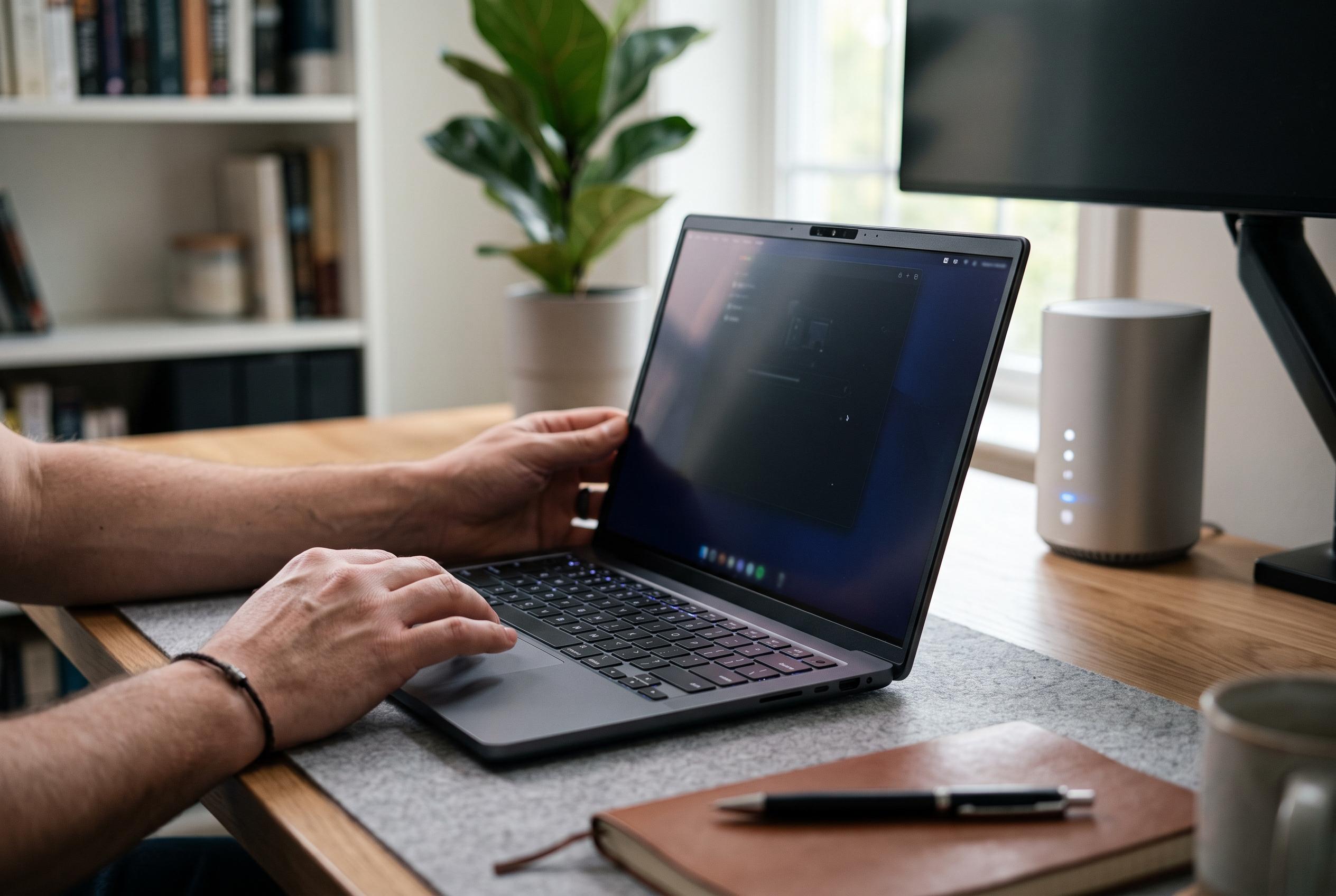

MediaTek unveils a cutting-edge laptop platform featuring Wi‑Fi 7 and Bluetooth 6.0, designed for AI-driven, lightweight notebooks and live broadband services, signalling a shift towards more connected, efficient, on-device AI experiences.
MediaTek has added Wi‑Fi 7 and Bluetooth 6.0 to a new laptop platform aimed at premium, AI-led notebooks, extending its reach beyond phones and Chromebooks. The Dimensity CX C10 Max is built on TSMC’s 3 nm process and pairs eight CPU cores with an 11-core GPU and MediaTek’s NPU 890, which the company says delivers up to 55 TOPS of AI performance. Published specifications also point to Wi‑Fi 7 speeds of up to 7.3 Gbps, underscoring how wireless connectivity is now being designed into the core of next-generation client silicon rather than treated as an add-on. According to Tom’s Hardware and Android Central, the chip is intended for thin, lightweight, fanless systems that rely on local AI processing and long battery life.
The launch also reflects a wider shift in the PC market, where vendors are competing to make on-device AI feel fast enough for everyday use while keeping devices quiet and power efficient. Android Central reported that MediaTek is positioning the platform for future Googlebook-style hardware, with support for imaging and video features that can better serve AI-assisted workloads. That places the chip in direct competition with other Arm-based laptop platforms now chasing the same mix of mobility, efficiency and integrated connectivity.
In broadband hardware, Zyxel and DNA Finland have taken a different but equally significant step by putting a full-stack prplWare Wi‑Fi 7 gateway into live service. Zyxel said the deployment has been active since May and uses its EE3110 BE5000 dual-band gateway and EE4600 BE19000 tri-band gateway, both based on MediaTek Filogic platforms. The move matters because it gives operators a real commercial reference for open, software-defined Wi‑Fi 7 customer-premises equipment rather than a laboratory demonstration. Zyxel said the installation shows that prplWare can support a live service-provider network and a more flexible delivery model for operators.
The broader hardware ecosystem is also becoming more modular. Zyxel said its prplWare implementation has been certified by the prpl Foundation, while Ubee Interactive’s EG700 tri-band Wi‑Fi 7 gateway has now secured full certification for OpenSync 6.6 across Plume’s HomePass, WorkPass and Uprise service portfolios. In practical terms, that allows providers to keep the same cloud-managed subscriber experience while sourcing hardware from different vendors. The EG700 is built on MediaTek’s Filogic 880 platform and includes 10 GbE WAN and LAN ports, showing how high-end gateways are increasingly defined by both radio capability and software compatibility.
Another sign of how connectivity is expanding beyond conventional Wi‑Fi came from SPARK Microsystems, which has moved its low-energy UWB technology into professional audio through LEWITT’s LW6 wireless studio headphones. The company says the system is designed for recording, monitoring and mixing, where predictable latency matters as much as raw throughput. Independent product details released with the launch indicate uncompressed wireless audio and latency below 6 milliseconds. Separately, the FCC has given service providers, suppliers and manufacturers a one-year partial waiver allowing certain hardware changes to routers and broadband gateways already affected by Covered List restrictions, but not major upgrades such as new radios or extra bands. The decision suggests regulators are beginning to adapt security rules to the realities of long product lifecycles in broadband equipment.
Disclaimer: This content is intended for informational purposes only. Readers are advised to exercise their own judgement, conduct due diligence, or consult a qualified expert before acting on any information provided.