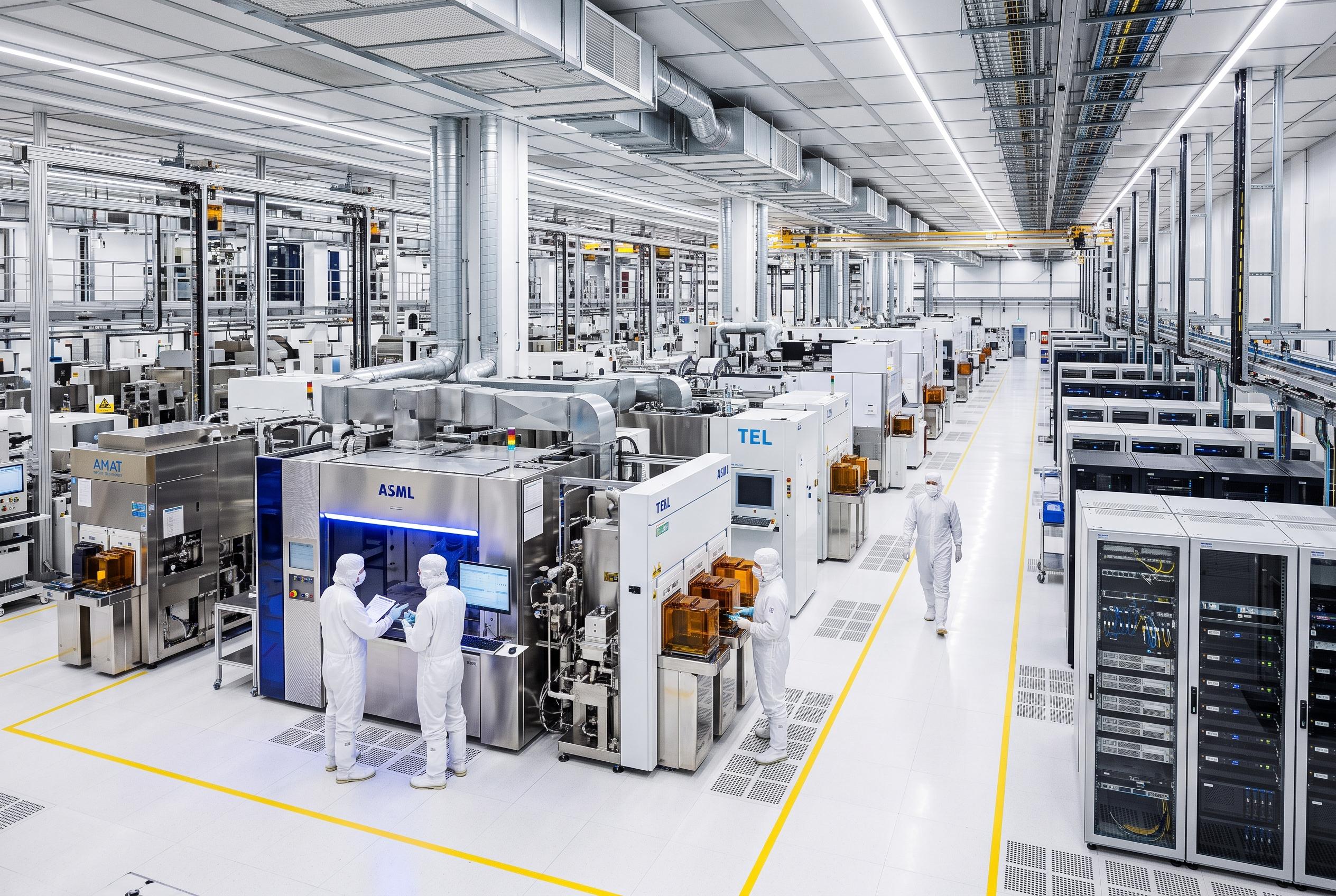

Sara Awad warns that the current chip shortage driven by supply chain constraints and rising AI investment could lead to a market correction, with a shift towards more cost-efficient and customised chip architectures reshaping the industry landscape.
Sara Awad, founder of Tech Contrarians, said investors are moving through a more selective phase in the technology trade after a sharp second-quarter rally gave way to a choppier third quarter. Speaking on Seeking Alpha, she argued that the market has shifted from broad enthusiasm to a tougher test of earnings, with even strong results from Taiwan Semiconductor Manufacturing, ASML and Samsung failing to prevent share-price weakness. That, she said, reflects a market that had already priced in much of the good news and is now more focused on what could go wrong.
The centre of that reset is semiconductors, especially memory. Awad said the recent rise in chip prices has been driven less by true end-demand strength than by a supply-chain squeeze, with customers pulling forward orders and double ordering to secure components. That view aligns with reporting from Axios, which described “chipflation” as a broader inflationary force now reaching electronics, cloud storage and consumer devices, while also noting that hyperscalers have been locking up long-term supply. Industry analysts cited by Tom’s Hardware have said memory could absorb as much as 30% of hyperscaler AI capital expenditure this year, up sharply from about 8% in 2023 and 2024.
Awad’s most pointed warning was on memory makers such as Micron. She said the recent boom in DRAM pricing has been misunderstood as a structural change in the business, when it is still behaving like a cyclical market with unusually tight supply. She pointed to SK hynix’s decision to shift some capacity from high-bandwidth memory to general-purpose DRAM as evidence that producers are chasing the highest immediate returns. Separate reporting has said SK Group Chairman Chey Tae-won has acknowledged RAM prices are “abnormally high” and warned that prolonged margins could invite more competition, including from Chinese chipmakers.
The same supply squeeze is now shaping the economics of the wider AI build-out. TechRadar has reported that large cloud providers are absorbing a growing share of global DRAM and HBM output, creating a two-tier market in which AI infrastructure gets priority and everyone else pays more. Awad said that as more capacity comes online, pricing power should ease and the earnings boost from memory could fade. She added that this is one reason she sees the semiconductor correction as still incomplete, with more downside possible before the market normalises.
Looking further ahead, Awad said the next phase of AI will be defined less by raw token use and more by token efficiency, as enterprises become more cost conscious. In her view, that shift favours lower-cost compute architectures and could accelerate demand for ASICs, custom chips built for specific workloads. She argued that this would pressure Nvidia’s dominant position over time, even if the company still benefits from strong near-term demand for its next-generation systems. She said Google remains the furthest ahead in this transition, with Amazon close behind, while Broadcom, Marvell, Qualcomm and others are likely to play larger roles as hyperscalers diversify their supply chains.
That argument also makes ARM one of her preferred names in the sector. Awad said ARM-based processors are well suited to a lower-power AI infrastructure build-out and should benefit from the shift towards custom silicon. She was more cautious on Intel, saying its foundry story still appears to depend more on headlines than on proof of durable customer wins. She also said the company’s use of high-NA lithography tools on its 18A node raised questions about yields, which in turn may make external customers wary.
On the bubble question, Awad said the answer is yes, but not in a simple single-line sense. In her view, the immediate risk is a correction in semis, while the bigger bubble is building around AI capital expenditure, circular financing and the growing use of debt to fund infrastructure. She said recent moves by Nvidia and major lenders to support compute financing highlight how creative the market has become in trying to sustain the boom. The more serious test, she argued, will come when investors demand clearer evidence that the spending is generating real returns.
Disclaimer: This content is intended for informational purposes only. Readers are advised to exercise their own judgement, conduct due diligence, or consult a qualified expert before acting on any information provided.