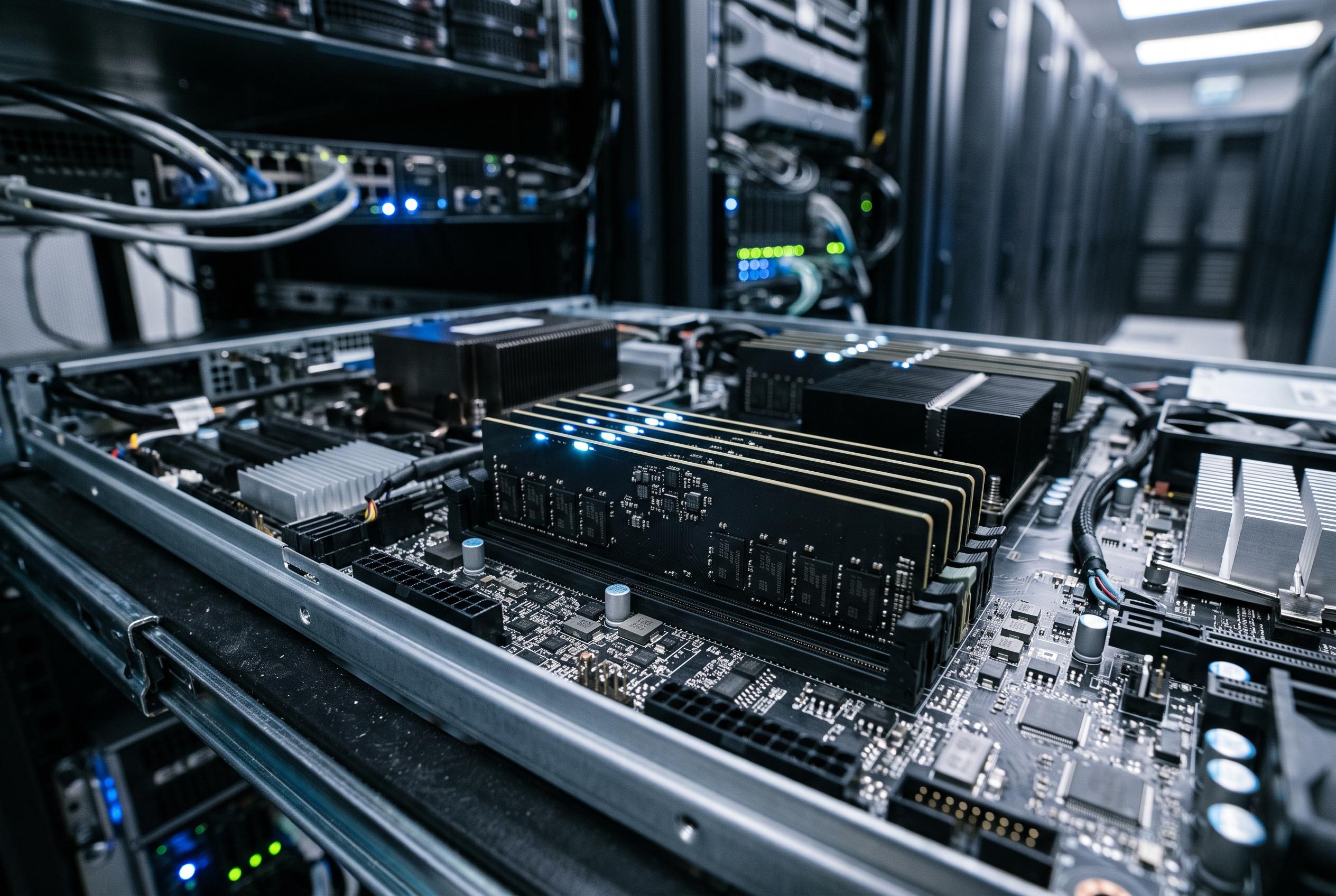

Micron has unveiled a record-capacity 512GB DDR5 RDIMM and appointed Deirdre Hanford to lead a new research organisation as it seeks a larger role in AI infrastructure.
Micron Technology is stepping up its pitch as a long-term supplier to artificial intelligence and high-performance computing, combining a senior research appointment with a record-capacity server memory launch. According to company announcements, Deirdre Hanford has been named corporate vice president and president of Micron Research Labs, a new research organisation intended to link Micron more closely with academia, government, startups and other industry partners. The move gives the company a dedicated research leader at a time when memory demand is increasingly shaped by AI training, inference and data-heavy enterprise workloads.
That appointment came alongside the unveiling of Micron’s first 512GB DDR5 RDIMM, which the company says is the world’s first module at that capacity. Industry reports say the part runs at up to 9,200 MT/s and is aimed at servers carrying AI, analytics, database and simulation workloads. Micron claims the higher-density module can help dual-socket servers reach as much as 12TB of memory, while also reducing energy use by more than 60% compared with four 128GB modules.
The technical significance is less about a single component than about system design. By stacking DRAM dies vertically and linking them with through-silicon vias, Micron is trying to cram more memory into the same footprint without pushing power consumption sharply higher. Tom’s Hardware reported that the module draws 16W, compared with 44.2W for the equivalent four-module configuration, and that AMD and Intel are validating the part for upcoming server platforms. Volume production is expected in the second half of 2027, which means the commercial impact will arrive later than the announcement suggests.
For investors, the launch and the research-lab appointment reinforce the same thesis: Micron wants to be viewed not merely as a cyclical memory seller, but as a core enabler of AI infrastructure. That fits with the company’s recent long-term supply agreements, which it says include 16 strategic customer deals backed by about US$22 billion in deposits and commitments. Still, the near-term debate remains familiar. Demand tied to data centres and AI may support pricing, but Micron still faces the risk that supply growth, including from Chinese competitors, could pressure margins if capacity expands faster than expected.
Disclaimer: This content is intended for informational purposes only. Readers are advised to exercise their own judgement, conduct due diligence, or consult a qualified expert before acting on any information provided.