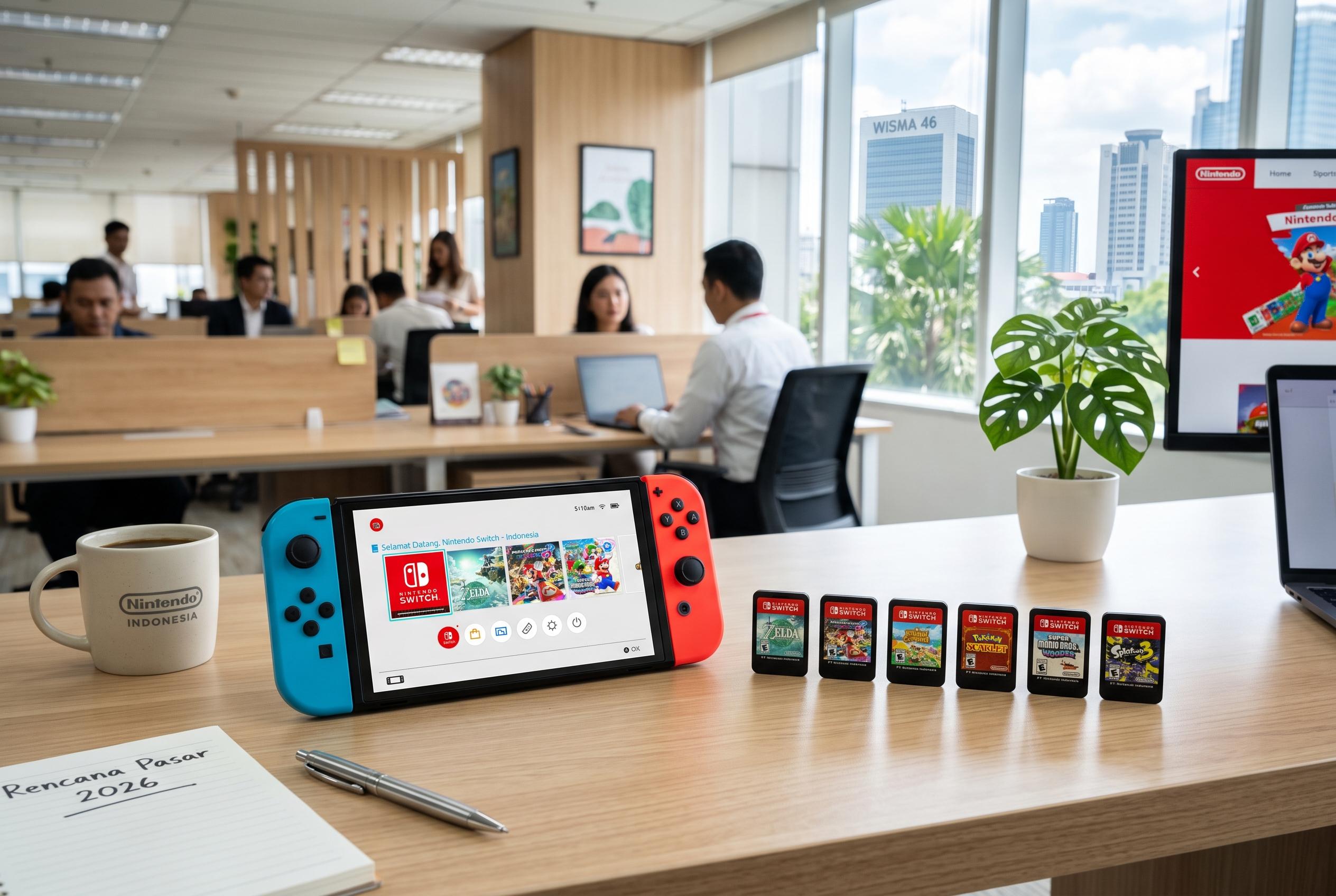

Nintendo plans to establish a direct presence in Indonesia by December 2026, ending reliance on third-party distributors and potentially transforming access, pricing, and service for local gamers amid a rising worldwide sales record of the Switch.
Nintendo is reportedly preparing to enter Indonesia directly in December 2026, a move that would end years of reliance on third-party distributors and grey-market imports. If confirmed, the shift would give the Japanese gaming group a formal foothold in one of south-east Asia’s largest consumer markets and could reshape pricing, servicing and access to digital content for local players.
The most immediate change would be practical rather than symbolic. Indonesian users have long faced uneven warranty coverage, limited repair options and complications around regional access to Nintendo’s online storefront. A direct presence could bring official after-sales support, more predictable retail pricing and a locally tailored eShop that supports rupiah payments and domestic methods such as e-wallets or bank transfers, according to the report.
That prospect comes at a time when Nintendo’s hardware business remains unusually strong. Media Indonesia reported in December 2025 that the Nintendo Switch had sold 155.37 million units worldwide, moving ahead of the Nintendo DS and edging close to the PlayStation 2’s long-held record. The platform’s hybrid design has helped sustain demand across handheld and living-room play, giving Nintendo fresh leverage as it expands distribution in new markets.
The timing also fits a broader cadence of product activity. Nintendo has continued to use digital services and recurring announcements to keep interest high, including the release of classic Pokémon titles on Switch in February 2026 and further software plans highlighted at its June 2026 presentation. For Indonesia, official market entry could improve access to that ecosystem while also opening the door to stronger local collaboration, especially if Nintendo chooses to work more closely with Indonesian studios and publishers.
There are still clear challenges. Sony’s PlayStation business already has an established formal presence in Indonesia, and Nintendo would need to prove that it can support online play, customer service and localisation at scale. For now, the reported December 2026 timetable remains the key marker to watch, along with any announcement on local partners, service centres and pre-order plans.
Disclaimer: This content is intended for informational purposes only. Readers are advised to exercise their own judgement, conduct due diligence, or consult a qualified expert before acting on any information provided.