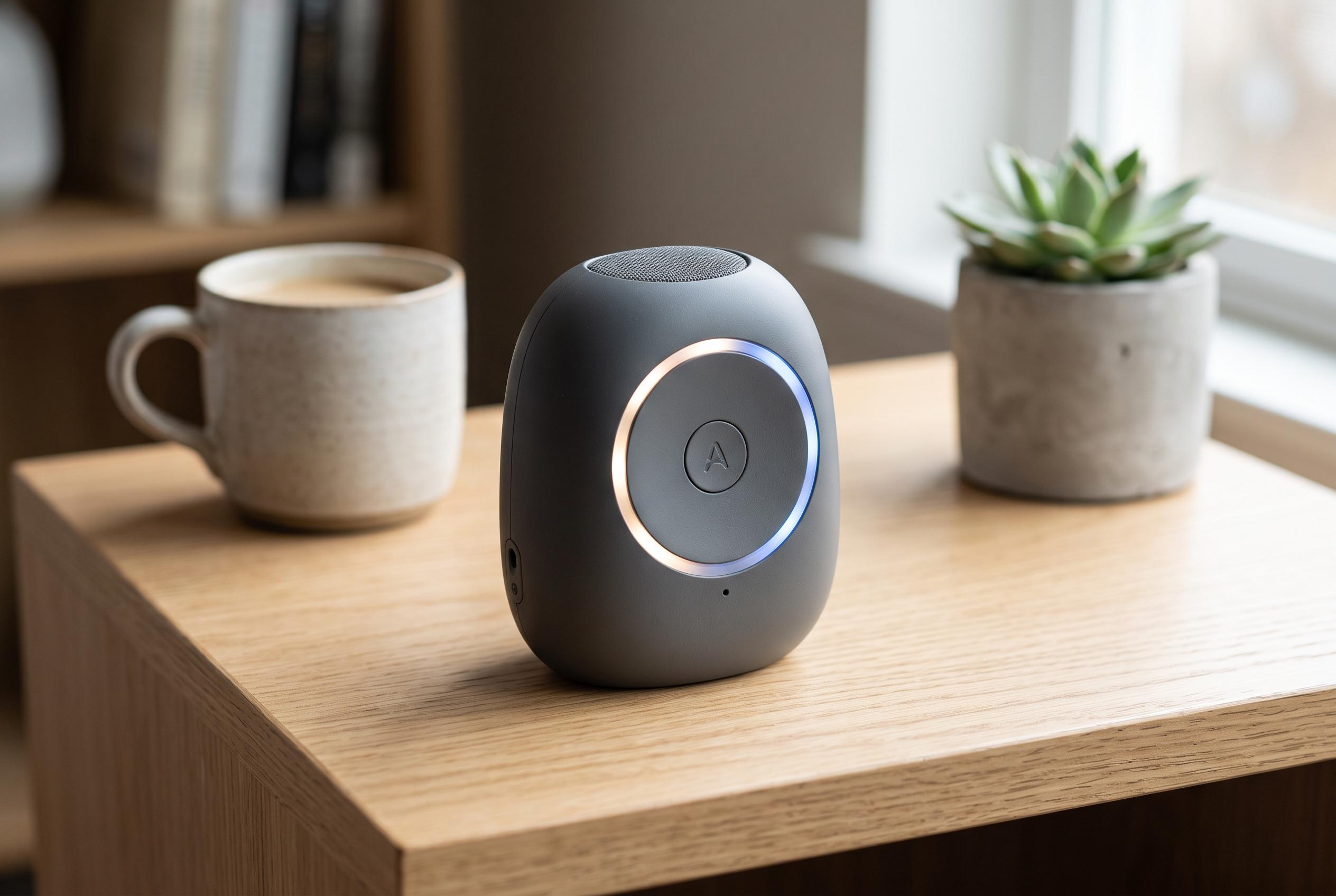

OpenAI is developing a pocket-sized, screen-free AI device designed for the home, featuring voice interaction, environmental awareness, and personalisation, set to launch in 2027 amid delays and competitive challenges.
OpenAI’s first dedicated hardware product is taking shape as something closer to a domestic AI companion than a conventional smartphone, according to Bloomberg and later reporting cited by MacRumors and TechCrunch. The device is expected to be screen-free, pocket-sized and designed to sit in the home, where it would answer questions, manage media and interact with smart devices through ChatGPT.
The most striking detail is what it is not. OpenAI does not appear to be building another glass rectangle to compete directly with the iPhone. Instead, the company is said to be pursuing a form factor that relies on voice, context and environmental awareness rather than taps and swipes. Bloomberg’s reporting described an object roughly the size of a hockey puck, with a camera, microphones, speakers, a rechargeable battery and moving mechanical parts.
Those physical elements are intended to make the device feel less static than a typical smart speaker. According to the reports, it would use lights and motion to show when it is listening or responding, and the system is meant to learn from conversation over time so it can become more personalised and proactive. That approach fits OpenAI’s broader bet that advanced AI can replace much of the graphical interface that has defined consumer technology for more than a decade.
The product is also emerging against a difficult backdrop. OpenAI’s hardware plans have already been delayed, with court filings and subsequent coverage indicating that the device slipped from a target of late 2026 to a likely launch in 2027, with shipment to customers now expected by February that year. The delay has been linked to a trademark dispute involving audio startup iyO, which has accused OpenAI of misappropriating trade secrets.
OpenAI’s acquisition of Jony Ive’s hardware venture, io, last year gave the company a dedicated design team and one of the most influential figures from Apple’s product history. Yet the challenge ahead is substantial. Amazon and Google spent years trying to persuade consumers that smart speakers could become central household computers, only for many users to treat them as glorified query boxes. OpenAI’s task is harder still: it must convince buyers that a screenless, always-listening device is useful enough to justify its presence, while also persuading them that it is private enough to trust.
Disclaimer: This content is intended for informational purposes only. Readers are advised to exercise their own judgement, conduct due diligence, or consult a qualified expert before acting on any information provided.