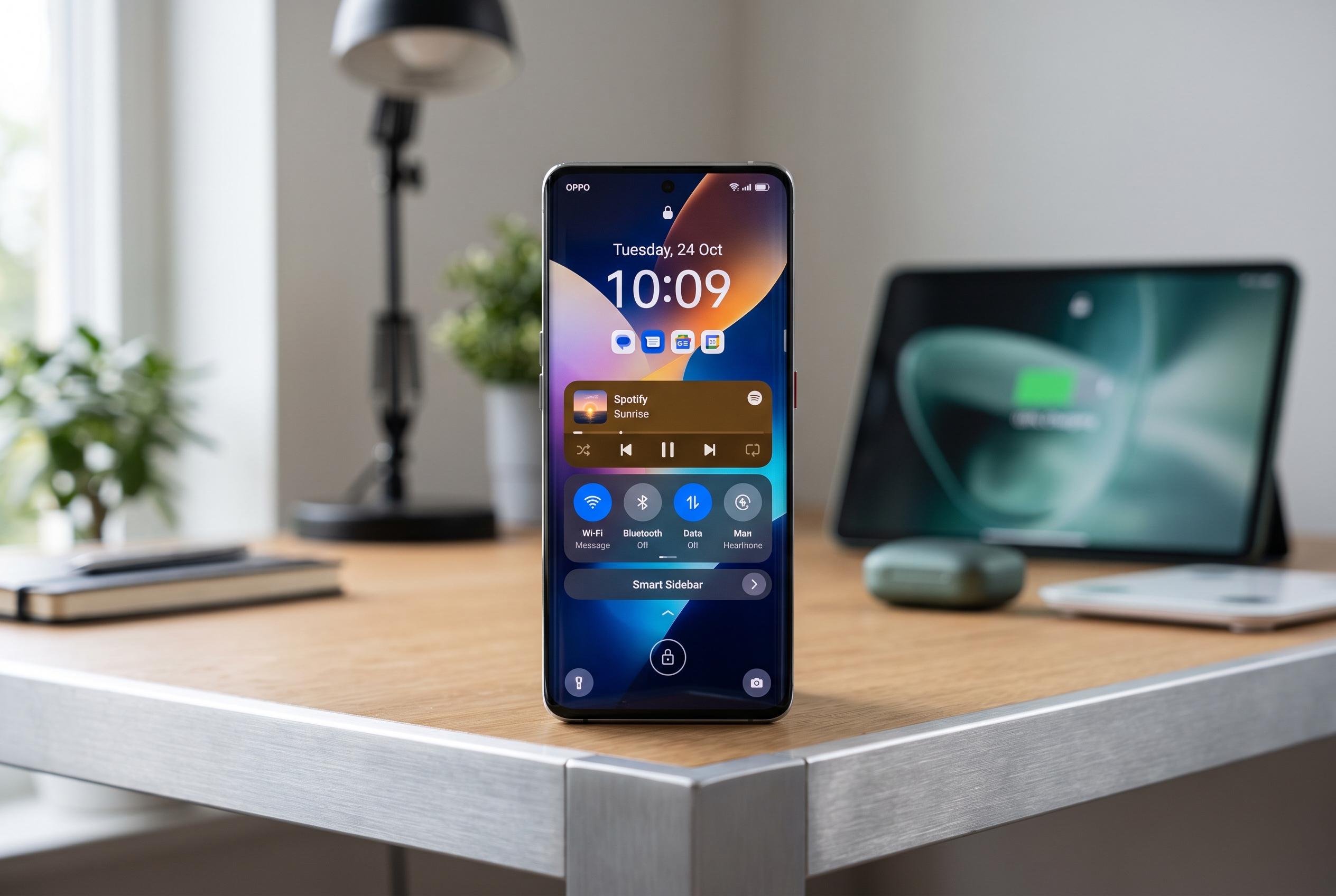

OPPO has begun closed beta testing for ColourOS 17 across multiple markets, marking a major shift as OnePlus and Realme prepare to adopt a shared Android skin, streamlining their software ecosystems.
OPPO has begun closed beta testing for ColorOS 17 across China, India and international markets, in a move that marks a major software shift for OnePlus and Realme as well as OPPO itself. The programme is tightly limited, with only 300 testers allowed per device, and the early builds are being issued in staged waves rather than all at once. According to reports from PhoneArena, Gizmochina and other industry outlets, the broader significance is that OnePlus and Realme are now expected to move on to OPPO’s shared software platform rather than maintain separate Android skins.
The current recruitment list is heavily weighted towards premium phones and tablets. In China, the eligible devices include the Find N6 foldables, the Find X9 family, the Pad 5 Pro, the OnePlus 15 and 15T, the OnePlus Pad 3 Pro, and Realme’s GT 8 Pro variants. India’s batch is smaller, covering the OnePlus 15, the Find X9 Pro and the Reno 15 Pro. The global window, which opened on August 6 and closed on August 7, includes the OnePlus 15R, the Find X9 Pro, the Reno 15 Pro, the Reno 15 Pro Mini and Realme’s GT 8 Pro models. OPPO says more devices will be added later as testing expands.
The rollout itself is split into two waves. The first is due on August 11, 2026, for the Find X9 Pro series, followed by a second wave on August 13 for the remaining eligible phones and tablets. Review periods vary by model and region, running from August 7 to August 12. Users can apply through the beta section in system settings, but approval is not automatic. OPPO is understood to require a qualification quiz and a non-disclosure agreement before granting access to the firmware.
Although OPPO has not published a full changelog, early information points to a substantial visual refresh and a stronger emphasis on efficiency. The company is said to be adopting a “liquid acrylic” look, with softer lighting effects, more blur, rounded interface elements and smoother transitions. Chen Xi, OPPO’s design director, has said the company is placing stability and performance ahead of dramatic visual effects, apparently to reduce power draw and preserve readability. The update is also expected to introduce a redesigned Xiaobu AI assistant, along with tools such as AI photo unblur, reflection removal and automated voice summaries for meetings and calls.
ColorOS 17 is built on Android 17, which brings its own system-level changes, including privacy updates, memory management improvements and better background performance. The early beta is also being framed as part of OPPO’s larger plan to consolidate software development across its brands. Reports from 91mobiles and other outlets say OnePlus and Realme have already confirmed the retirement of OxygenOS and Realme UI for future Android 17 devices, with ColorOS becoming the common platform. That should, in theory, cut duplication, speed up updates and concentrate engineering resources, though it also means a more opinionated software experience for users who preferred OnePlus’s lighter interface.
For current owners, the change is not entirely irreversible. OnePlus has said there will be a limited rollback window for users who want to return to OxygenOS after switching. Devices that do not qualify for Android 17 are expected to keep receiving maintenance and security updates on their existing software. Stable release timing has not been confirmed, but industry reporting suggests a wider launch could arrive with the Find X10 series in the final quarter of 2026, with broader distribution into early 2027. For now, the closed beta is the clearest sign yet that the transition from three separate Android skins to one shared platform has already started.
Disclaimer: This content is intended for informational purposes only. Readers are advised to exercise their own judgement, conduct due diligence, or consult a qualified expert before acting on any information provided.