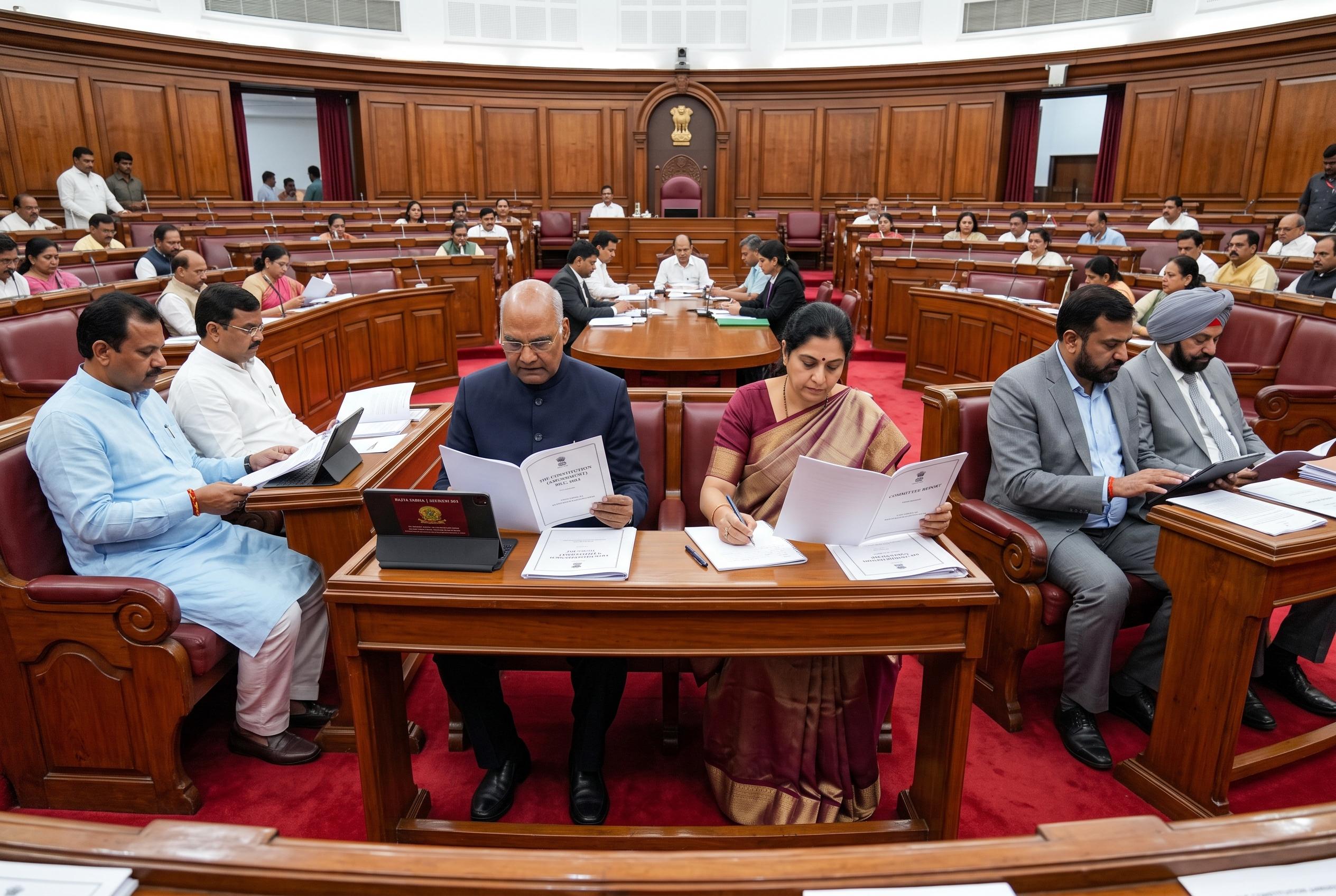

The Rajya Sabha is set to consider two key bills aimed at revitalising India’s tax system and modernising bank record laws in a digital age, signalling significant reforms ahead.
Rajya Sabha is set to take up two finance-related bills on Monday, with Finance Minister Nirmala Sitharaman expected to move both measures for consideration and passage after their approval in the Lok Sabha. The agenda comes as Parliament continues to reshape India’s direct tax framework and update evidence law for a digital banking era.
The Taxation and Other Laws (Amendment) Bill, 2026, is designed to amend the Payment and Settlement Systems Act, 2007, the Income-tax Act, 2025 and the Finance Act, 2026. According to the government, the package is intended to support investment and manufacturing, improve tax certainty and replace the Income-tax (Amendment) Ordinance, 2026. The bill has been framed against the backdrop of disrupted trade and supply chains, with the stated aim of cushioning domestic industry from external shocks and making compliance less burdensome.
Among its main provisions, the bill would simplify rules for eligible offshore investment funds and fund managers, extend incentives for electronics manufacturing and broaden the definition of specified electronic goods to include laptops, tablets, servers, hearables and wearables. It also proposes fresh exemptions for certain foreign investors in government securities and a longer tax break for eligible foreign diamond businesses trading rough stones through notified special zones. In addition, the bill would remove a restriction affecting dividend tax relief for business trust unit holders where the special purpose vehicle has chosen the new tax regime.
The second measure, the Bankers’ Books Evidence Bill, aims to modernise the rules on bank records used in court and before authorities. It would replace a legal framework dating to 1891 with a technology-neutral system that recognises physical, electronic, digital, virtual and cloud-based records as bankers’ books, subject to certification requirements. The move reflects the shift towards digital banking and the need for clearer rules on authenticity and admissibility. Both bills were passed in the Lok Sabha by voice vote without debate, after opposition protests linked to demands over police action in the national capital on July 20.
Disclaimer: This content is intended for informational purposes only. Readers are advised to exercise their own judgement, conduct due diligence, or consult a qualified expert before acting on any information provided.