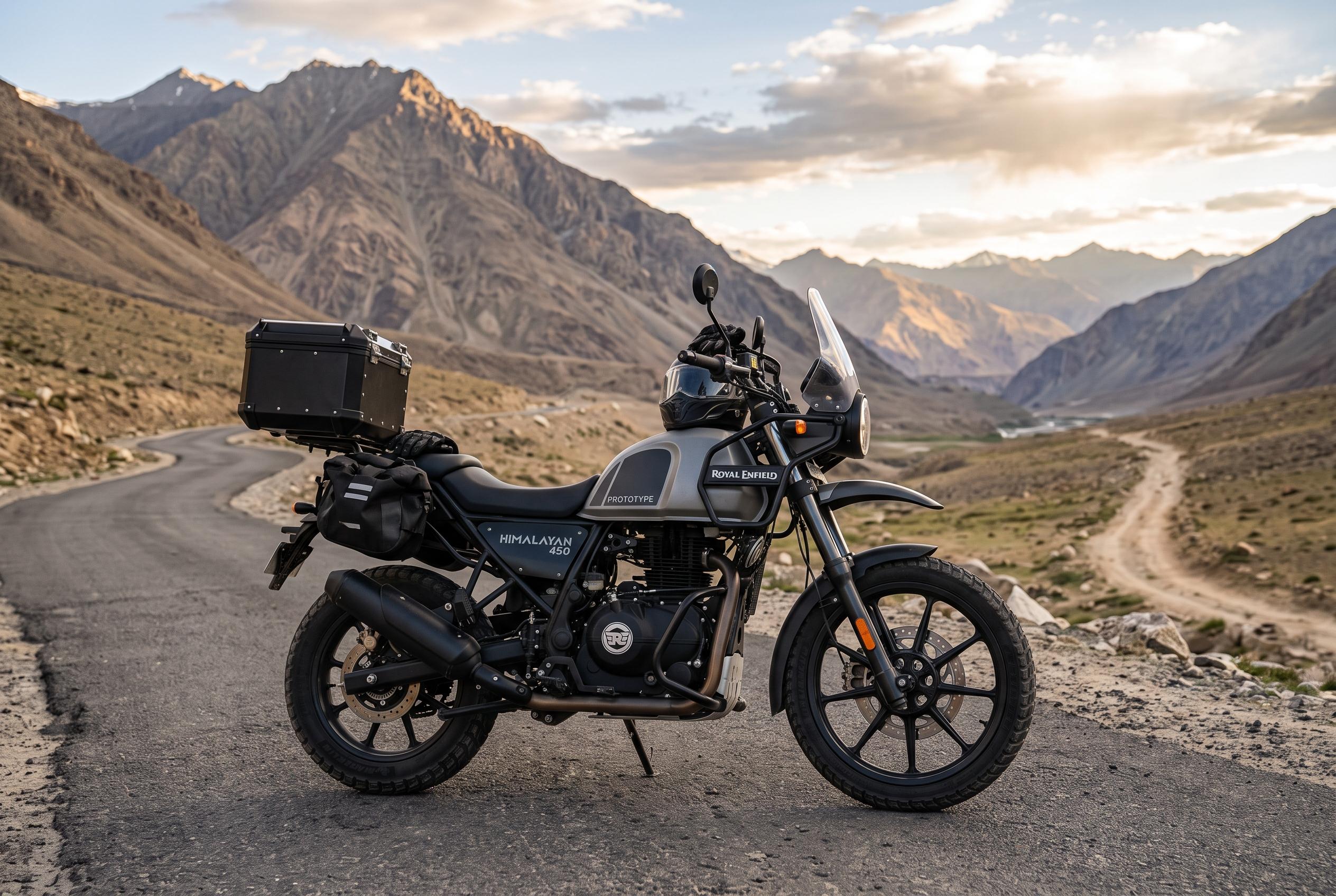

Royal Enfield’s next-generation Himalayan nears production, with spy shots revealing a more road-biased version and a 2026 launch window, alongside broader updates to the line, while competitors expand their ranges in India’s growing electric and mid-range motorcycle markets.
Royal Enfield’s next-generation Himalayan is moving closer to production, with recent spy shots from the UK showing a near-final test mule. According to Bikewale, the bike appears to use a 19-inch front and 17-inch rear spoke-wheel combination, along with upside-down front forks and what may be an adjustable rear monoshock. Other reports suggest the twin-cylinder adventure bike is likely to use a 750cc air/oil-cooled engine and could deliver about 55bhp and 60-65Nm, although those figures remain unofficial. The clearest images also point to a more road-biased version with alloy wheels, while the broader launch window now appears to stretch into 2026, with EICMA emerging as a likely venue for a formal unveiling.
Royal Enfield is also preparing to rework the Himalayan line more broadly. The company has announced a launch date for the Himalayan 440, which points to a revival of the nameplate with a larger engine than the outgoing Himalayan 411. Together, the developments suggest Royal Enfield is building a wider dual-purpose range, with one model aimed at serious touring and another positioned as a more accessible middleweight option.
Bajaj Auto, meanwhile, has expanded the Pulsar N160 line with two new variants, the N160 S and N160 SS. The new versions start at Rs 1,33,511 before tax, and bring a more powerful engine, revised underpinnings and additional equipment. The move strengthens one of Bajaj’s core commuter-sport models at a time when manufacturers are trying to balance performance, value and everyday usability in the 150cc to 160cc class.
The electric two-wheeler segment also had a busy week. Bengaluru-based E3 Electric has launched a new scooter range in India with three models, and the company says the line-up includes more than 100 AI-based features. If those claims hold up in real-world use, the range would mark one of the more technology-heavy entries in the category, though buyers will still judge it on range, reliability and service support rather than software alone.
Hero MotoCorp added another update to its electric portfolio by launching the Vida VX2 Go FB at Rs 1,13,000 before tax. Unlike the other VX2 variants, this version uses a fixed battery pack rather than removable units. Hero is also expected to widen the Hero Xoom 160 range with two additional variants, one cheaper and one more expensive, which would give buyers more choice in a segment that is still taking shape.
Disclaimer: This content is intended for informational purposes only. Readers are advised to exercise their own judgement, conduct due diligence, or consult a qualified expert before acting on any information provided.