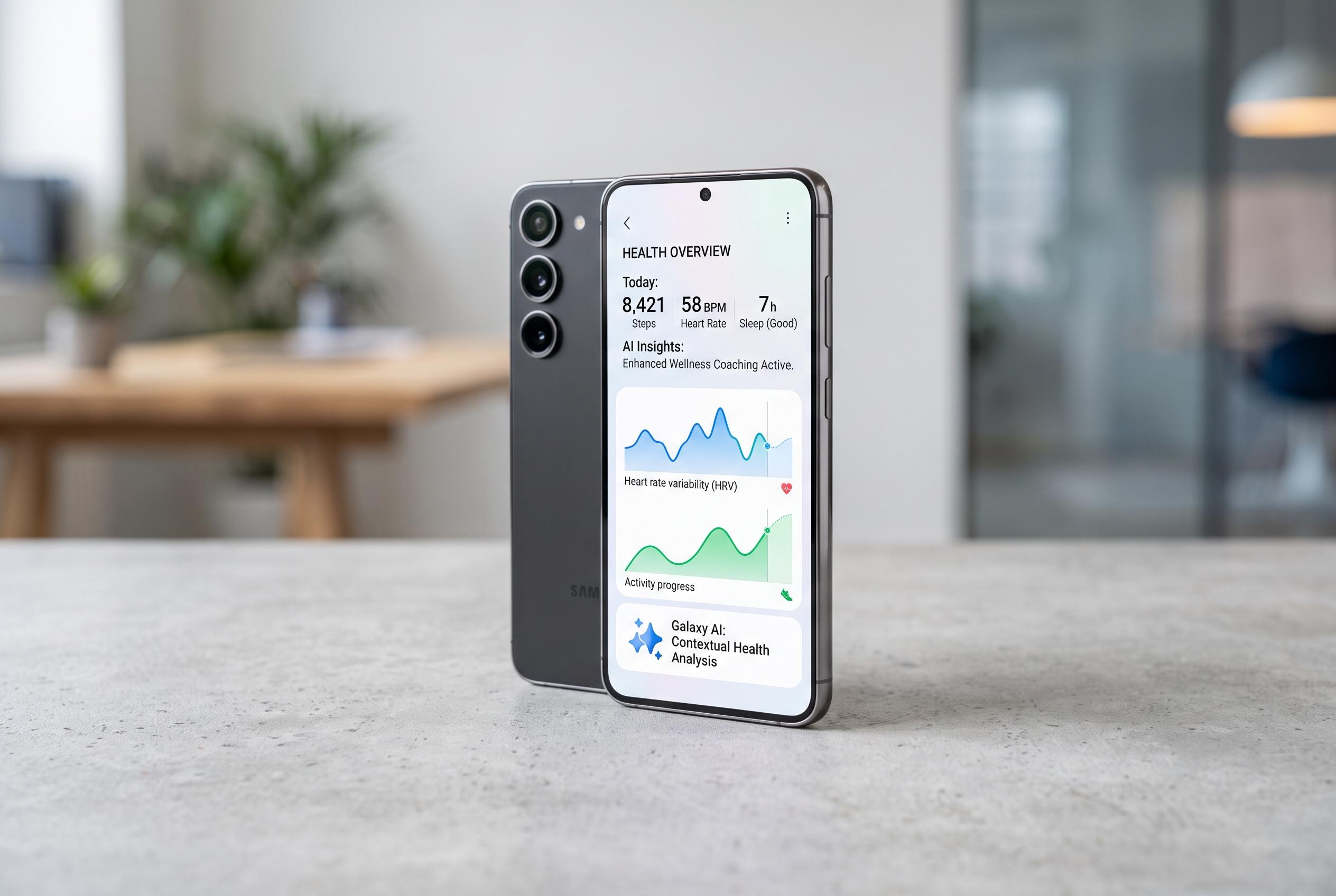

Samsung responds to criticism of its product strategy by emphasising ongoing hardware design efforts and a focus on health enhancements and optional AI features, signalling a nuanced approach ahead of the Galaxy S27 launch.
Samsung is defending its recent product strategy against criticism that it has become too cautious. In a Reddit AMA, Annika Bizon, Samsung Electronics UK and Ireland’s vice-president for product and marketing in mobile experience, argued that the company is still putting substantial effort into hardware design, pointing to the wider-screen Galaxy Z Fold 8 and the Galaxy Watch Ultra 2 as examples of meaningful changes driven by customer demand. Samsung’s own launch material says the new Galaxy Z range is intended to deliver more contextual, connected AI across foldables and wearables, while keeping user control and privacy central to the experience.
The exchange came after some long-time customers complained that annual phone upgrades no longer feel substantial. Bizon pushed back on that view, saying Samsung is still experimenting, but in ways shaped by how people actually use their devices. TechRadar reported that she linked that approach to the company’s foldable line-up and to wearable design, suggesting Samsung sees larger screens, more adaptable software and better cross-device integration as the clearest areas for change. A separate report from Android Authority said the company also highlighted the Galaxy S26 Ultra’s Privacy Display, underscoring that hardware features beyond AI remain part of its roadmap.
Health appears to be the area where Samsung sees the strongest opportunity for future differentiation. Bizon said features such as overnight vitals tracking, sleep latency measurement, Fitness Index and Nutrition Alert are moving Galaxy devices towards more preventative health support. Samsung has also framed this as part of a broader push to make mobile devices more responsive to context, with the company saying Galaxy AI will work more closely across apps, services, watches and other connected devices. The wider message is that Samsung wants its hardware and software to anticipate needs rather than merely display information.
AI, however, remains contentious. Several Reddit users told Bizon they do not want it on their phones, and she replied that Galaxy AI features are optional and can be switched off. She also urged sceptical users to test one small task at a time, such as using the camera to identify a concert poster and search for tickets. That may not persuade people who object to AI on ethical grounds as much as practical ones, but it does show Samsung is trying to present AI as a tool rather than a requirement. With the Galaxy S27 series expected early next year, the company will soon have another chance to show whether its current pace of innovation is real or merely selective.
Disclaimer: This content is intended for informational purposes only. Readers are advised to exercise their own judgement, conduct due diligence, or consult a qualified expert before acting on any information provided.