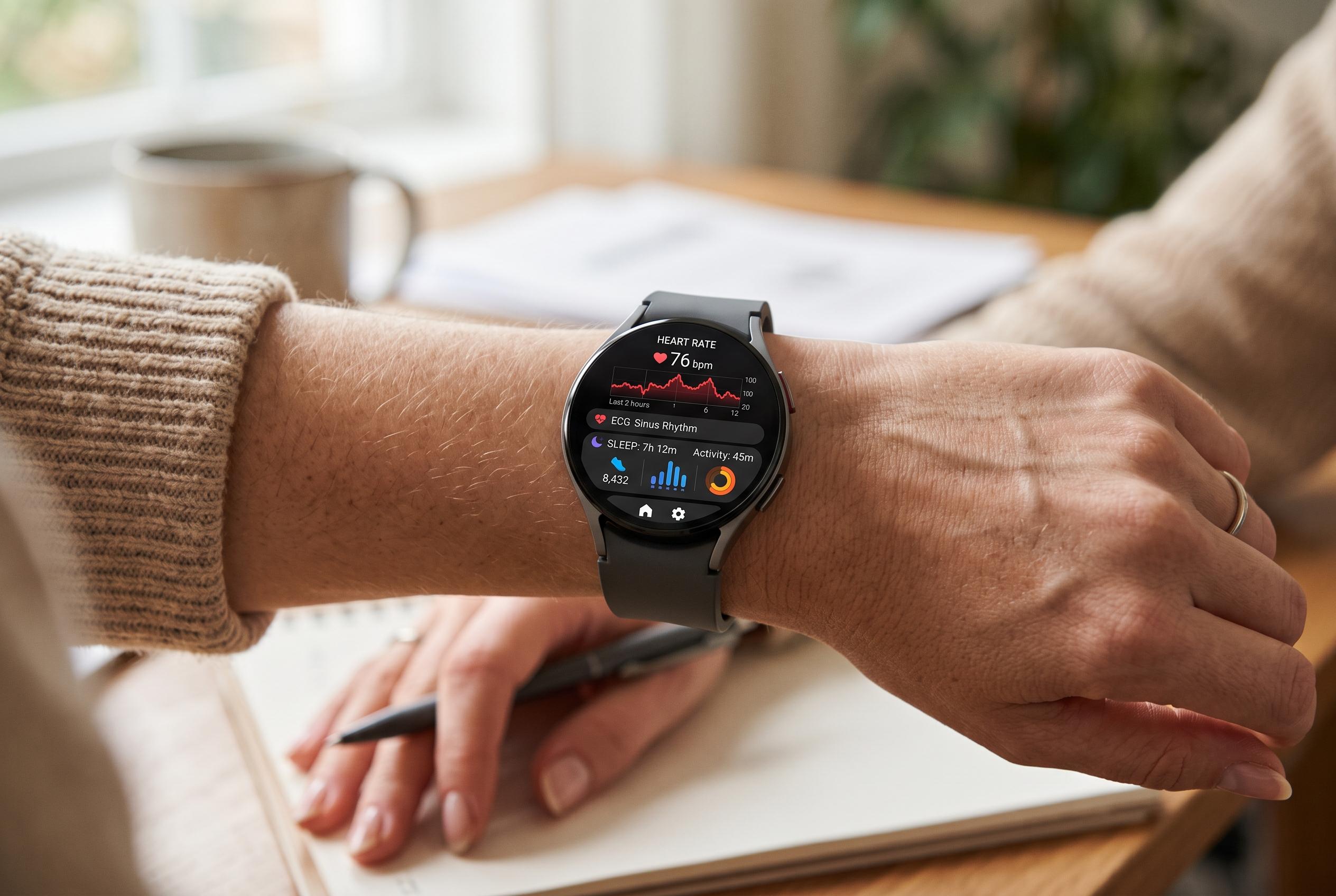

Samsung Research introduces xMAE and HiMAE, two AI models designed to analyse biosignals from wearables, marking a shift towards continuous, on-device health tracking and integration with medical research.
Samsung Research has set out two artificial intelligence models, xMAE and HiMAE, that are designed to find health patterns in data from wearables such as smartwatches. The work reflects a wider move by the South Korean company towards continuous health monitoring, with AI used to interpret biosignals such as heart activity, movement and sleep data as connected information rather than isolated readings.
The first model, xMAE, is built around synchronised electrocardiogram and photoplethysmogram signals, using ECG as a training framework to strengthen PPG representations. In Samsung Research’s description, this approach is intended to make wearable health models more robust and more data-efficient, while better capturing cardiovascular timing across different tasks.
HiMAE takes a different approach, focusing on patterns across multiple time scales, from rapid changes such as individual heartbeats to longer-term trends linked with sleep and activity. Samsung said the model can run on a smartwatch-class processor in less than a millisecond, suggesting that the company is aiming at on-device processing rather than depending entirely on cloud computing.
The models are still research projects rather than consumer products, but they sit within a broader health-AI strategy that Samsung has been building over the past year. In July, the company launched a beta version of its Health Assistant, which uses health data to generate personalised wellness recommendations, and it has also described a wider “Connected Care” vision that combines AI with wearable data for more continuous monitoring. Separately, Samsung has said it is working with the clinical research organisation Alcedis to turn wearable biometrics into evidence for trials, linking consumer health tracking more closely to medical research.
Disclaimer: This content is intended for informational purposes only. Readers are advised to exercise their own judgement, conduct due diligence, or consult a qualified expert before acting on any information provided.