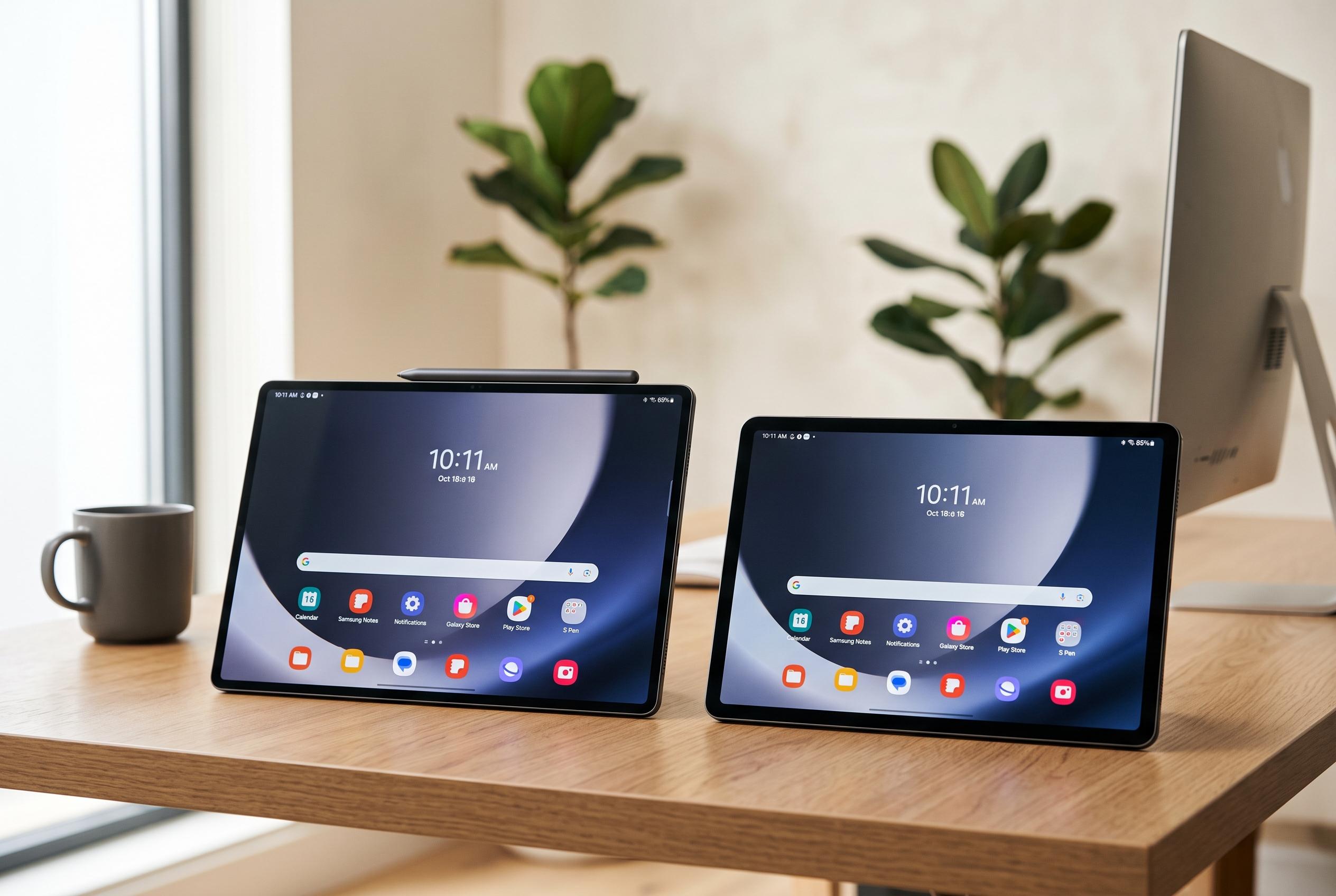

Leaked details suggest Samsung will focus on internal improvements and new AI capabilities in its upcoming Galaxy Tab S12 Plus and Ultra models, with a mid-September launch on the horizon.
Samsung’s next premium tablets are shaping up as an incremental but important refresh, with leaks pointing to a Galaxy Tab S12 Plus and Galaxy Tab S12 Ultra rather than a broader redesign. According to Geeky Gadgets, the focus this year appears to be on internal changes, above all a move to MediaTek silicon, while the external design is expected to remain close to the current line.
That processor shift would be notable. Several reports, including coverage from Android Authority and Samwelt, say Samsung plans to use MediaTek’s Dimensity 9500 family in the new tablets, continuing a recent pattern of relying on MediaTek in its flagship Android slates. Android Authority’s teardown-based reporting suggests Samsung is preparing AI-focused capabilities tied to the chip, while Samwelt says the platform brings stronger neural processing and lower power use than its predecessor.
The leaked model information also suggests Samsung is keeping the range relatively focused. Gizmochina reports that the Galaxy Tab S12 Ultra and Tab S12 Plus have appeared in the GSMA IMEI database, with model numbers SM-X946B and SM-X846B respectively, while noting there is no sign yet of a standard Tab S12. That fits with PhoneArena’s view that the launch lineup may comprise just two models, with the Plus and Ultra positioned as the main devices in the series.
Certification sightings imply the launch is getting closer. PhoneArena says the Tab S12 Plus appeared in BIS certification on 6 July 2026, while SamMobile reports that a Safety Korea listing has offered an early look at the device’s front side. Both outlets point to a late-summer unveiling, most likely around September 2026, in line with Samsung’s usual timetable for flagship tablet launches.
Connectivity is expected to remain a selling point. Geeky Gadgets says Samsung is preparing Wi-Fi-only and cellular versions, although cellular availability will vary by market, with carrier-specific variants likely in the US and Europe and broader options expected in South Korea and other international regions. If those details hold, Samsung will be aiming for a launch that balances performance gains with regional flexibility rather than a major design break.
Disclaimer: This content is intended for informational purposes only. Readers are advised to exercise their own judgement, conduct due diligence, or consult a qualified expert before acting on any information provided.