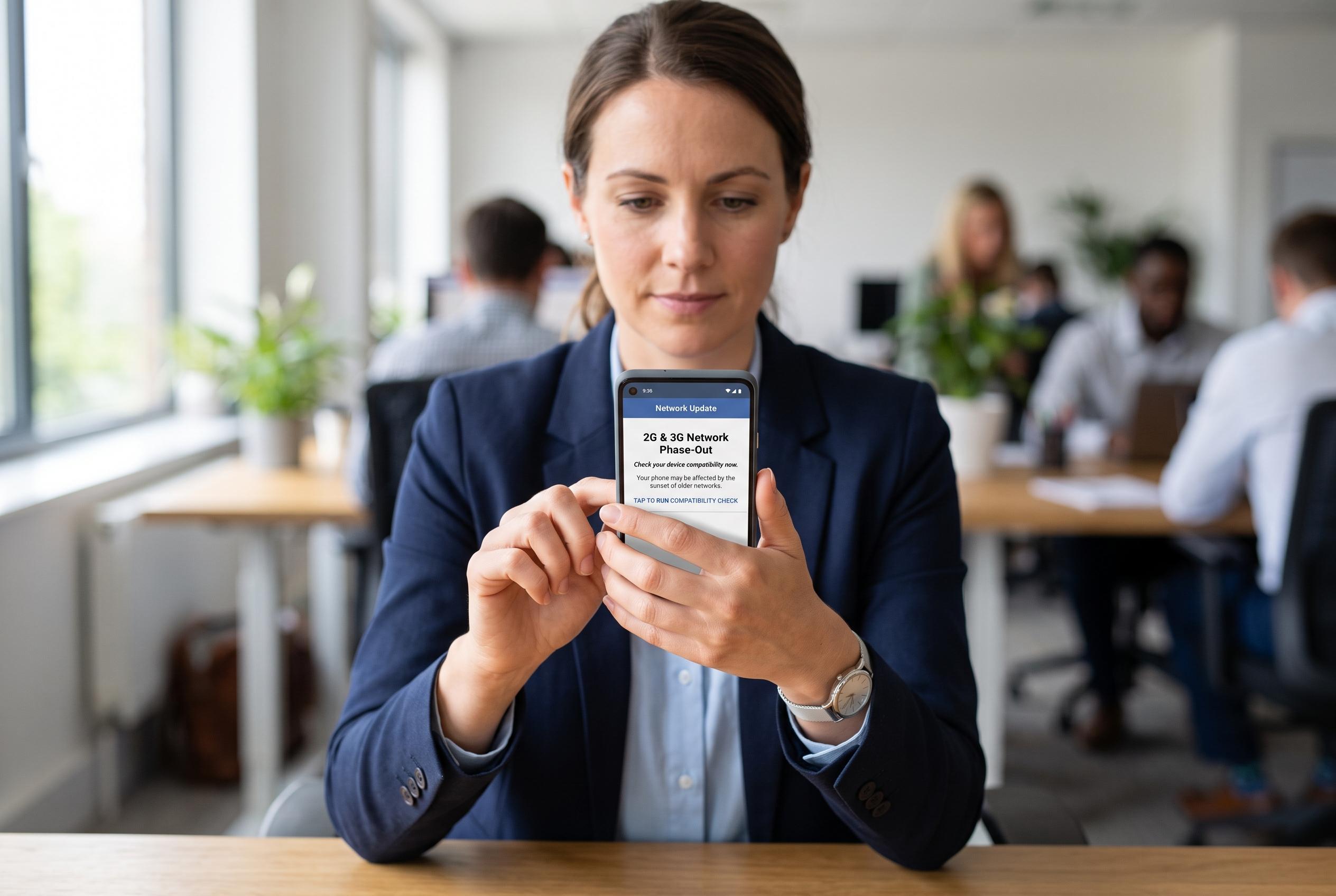

With 2G set to be disabled by the end of 2026 and the end of 3G services, consumers and businesses must verify that their phones can still make calls and receive emergency alerts on Singapore’s current networks, highlighting the importance of practical compatibility tests over mere network branding.
A handset that shows a 4G or 5G signal is not necessarily ready for use in Singapore. The more important question is whether the device can place ordinary calls and handle emergency communication over Voice over LTE, or VoLTE, especially now that 3G has already been switched off and 2G is being pushed further into the background. According to IMDA’s updated technical specification, 2G must be disabled by default on covered handsets from 31 December 2026, while emergency cell-broadcast requirements took effect on 1 April 2026.
That makes voice testing more important than ever. A phone bought locally or imported from overseas may appear compatible on paper but still fail in practice if its exact model variant lacks the right radio bands, carrier profile or software configuration. The practical test is simple: insert the intended SIM, check that mobile data works, then make and receive a standard call with Wi-Fi turned off to confirm that the handset stays on LTE rather than dropping to an unsupported fallback mode.
Imported devices deserve particular caution. Regional model suffixes can differ even when the retail name is the same, and those differences may affect certification, band support and VoLTE behaviour. Before buying, the model number should be matched against the manufacturer’s specification and the operator’s support guidance for Singapore. If the seller cannot confirm compatibility in writing, the return terms should cover failure on the intended local network.
The transition away from legacy networks has already changed what counts as a usable phone. Sony Singapore has warned that after 3G services ended on 31 July 2024, older devices without VoLTE could no longer make normal or emergency calls. IMDA’s latest rule goes a step further by making 2G unavailable by default, which is meant to reduce dependence on ageing networks rather than rescue incompatible phones. In other words, a device that can still browse the internet is not automatically fit for voice service.
For buyers, the safest approach is to treat network readiness as a checklist, not an assumption. Confirm the exact handset model, install the latest operating system and carrier updates, verify that VoLTE is enabled, then test outgoing calls, incoming calls and SMS. Device menus vary, so operator instructions matter. For businesses managing a fleet, the same checks should be repeated after major firmware changes or resets, since software updates can alter network behaviour. The result of the test should be recorded with the handset model, software version, operator and support contact so that faults are easy to trace later.
Emergency readiness needs separate attention. IMDA’s 2026 specification also covers emergency cell-broadcast behaviour, which means handset support is no longer just about making a call in normal conditions. Users should not test emergency numbers directly; instead they should rely on operator-supported checks and keep another contact method available during setup. For anyone reusing an older handset, the practical lesson is clear: 4G or 5G branding alone is not enough. What matters is whether the device can still complete a voice call, receive alerts and operate on Singapore’s current network rules.
Disclaimer: This content is intended for informational purposes only. Readers are advised to exercise their own judgement, conduct due diligence, or consult a qualified expert before acting on any information provided.