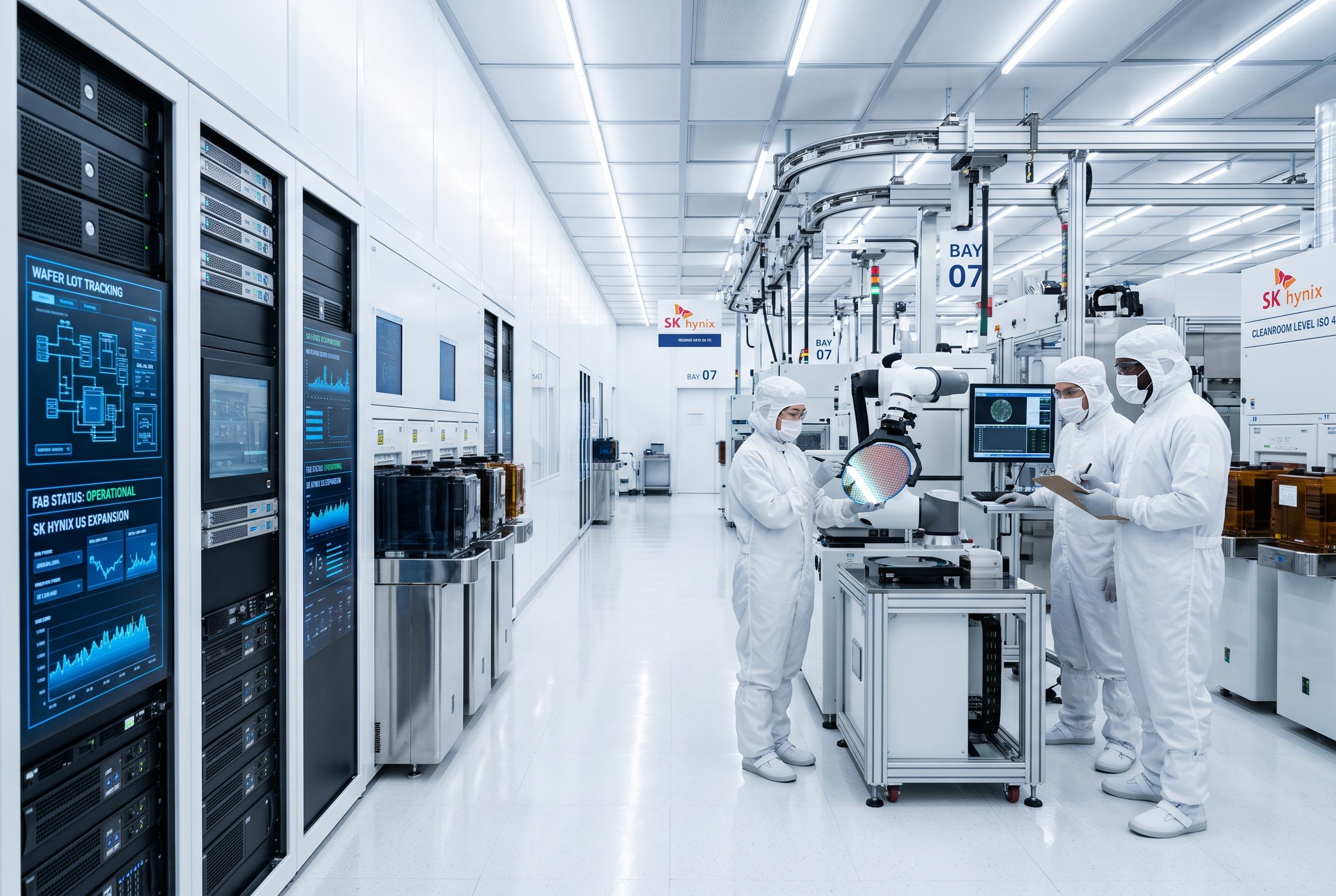

SK Hynix’s exploration of American wafer fabrication sites signals a strategic shift driven by a persistent memory shortage forecasted to last until 2030, impacting global electronics markets.
SK Hynix’s search for possible front-end wafer fab sites in the United States marks a notable shift in its American strategy, even as the company continues to expand much faster at home. According to the company’s chairman, Chey Tae-won, the memory industry is heading towards a prolonged supply squeeze, with wafer demand set to outstrip supply by more than 20% and the shortage likely to last for years. He told reporters that securing additional wafer capacity typically takes four to five years, underlining how slowly the industry can respond to demand shocks.
That warning matters because SK Hynix is not just talking about packaging and testing, but about the much more difficult business of making memory wafers themselves. The company’s current US presence is centred on advanced packaging, not fabrication, and that distinction is crucial: packaging brings chips closer to customers, while wafer fabrication creates the memory dies in the first place. Industry reporting says the new US site search is still exploratory, but it suggests SK Hynix is at least considering a step far beyond its existing American footprint.
The wider market context is bleak. SK Hynix chief executive Kwak Noh-jung has said 2027 will be the worst year in the industry’s history from a supply perspective, and that demand will remain above capacity even beyond 2030. Other reports have carried the same broad message: AI-related demand for high-bandwidth memory is rising quickly, customers are reserving supply years ahead, and the shortage is not expected to ease quickly. SK Hynix’s own plans to double memory wafer capacity over five years show how aggressively it is trying to respond, but also how limited short-term relief is likely to be.
Chey has also suggested that the company’s 2026 capital spending will rise well above the 30.2 trillion won spent in 2025, reinforcing the scale of investment now flowing into memory production. At the same time, SK Hynix has filed to list American depositary receipts in New York, a move that could further deepen its financial and commercial links with the US market. The combination of heavier spending, deeper US ties and a search for domestic wafer sites points to a company preparing for a much larger American role, even if no final commitment has yet been made.
For consumers and device makers, the implications are straightforward. When wafer supply lags demand for several years, the pressure does not stay confined to server racks and AI accelerators. It spreads into smartphones, laptops and other electronics that rely on the same memory ecosystem. If SK Hynix’s executives are right, the shortage will remain a defining feature of the market well into the end of the decade, and any US fab decision would still arrive too late to change the immediate outlook.
Disclaimer: This content is intended for informational purposes only. Readers are advised to exercise their own judgement, conduct due diligence, or consult a qualified expert before acting on any information provided.