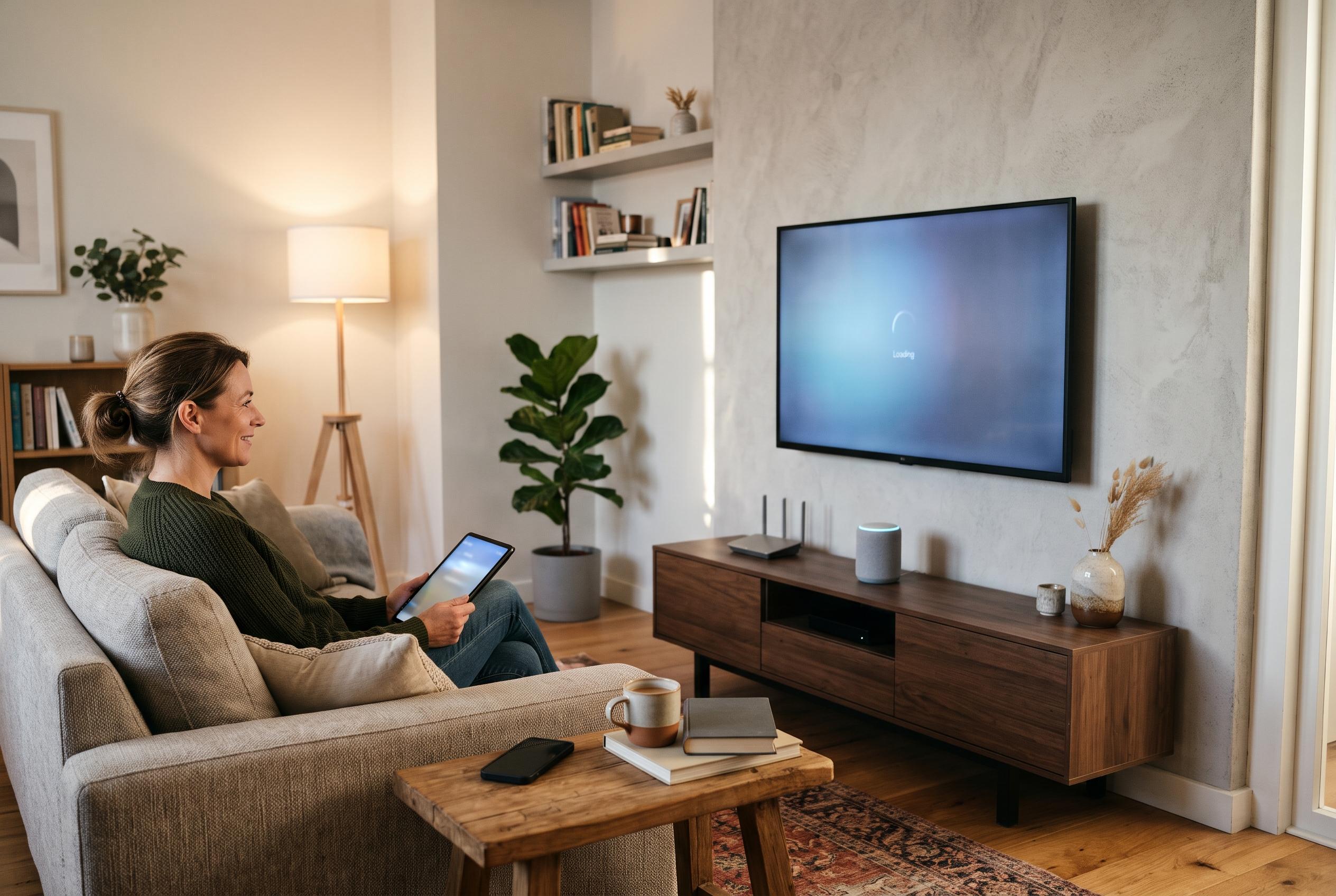

A government consultation proposes tighter limits on standby and off-mode power use for connected appliances, bringing Britain closer to EU rules.
Smart televisions and other connected household devices could take longer to power up under government plans to tighten Britain’s rules on standby and off-mode energy use so they more closely match the European Union. The Department for Energy Security and Net Zero has opened a consultation on updated ecodesign standards covering products such as televisions, robot vacuum cleaners, air fryers and voice-controlled lighting, arguing that the current UK framework has failed to keep pace with the spread of smart technology. According to the department, the proposed changes are intended to reduce wasted electricity and ease household bills.
The consultation would set new limits on how much power devices may draw when switched off, left on standby or connected to a networked standby mode. Officials say the wider aim is to bring domestic and office equipment rules into line with Regulation (EU) 2023/826, the EU standby regulation that took effect in May 2025 after being adopted in 2023. Brussels estimates the revised rules could save 4 terawatt hours of electricity a year by 2030 and cut emissions by around 1.4 million tonnes of carbon dioxide equivalent, while also extending coverage to more products using low-voltage external power supplies and some motorised furniture and building elements.
For manufacturers, the practical benefit of alignment is that products sold in Britain and the EU could continue to be designed to the same standard, avoiding the need for separate technical specifications for each market. The UK consultation is open to manufacturers, importers, retailers, trade bodies, consumer groups, environmental organisations and other civil society bodies. Responses can be submitted online or by email, and the government says it wants views on whether the revised limits should be adopted.
The political argument around the proposal is already sharpening. A DESNZ spokesperson told The Independent that smart devices should not “hit people’s pockets”, adding that the changes would reduce wasted energy and save households money. Andrew Bowie, the shadow energy secretary, criticised the plan in comments to The Telegraph, saying Labour’s net zero policies risk making everyday appliances “slower, more irritating and less convenient”. The consultation comes alongside broader government work on smart electricity systems, including separate proposals on energy smart appliances, cybersecurity and tariff interoperability.
Disclaimer: This content is intended for informational purposes only. Readers are advised to exercise their own judgement, conduct due diligence, or consult a qualified expert before acting on any information provided.