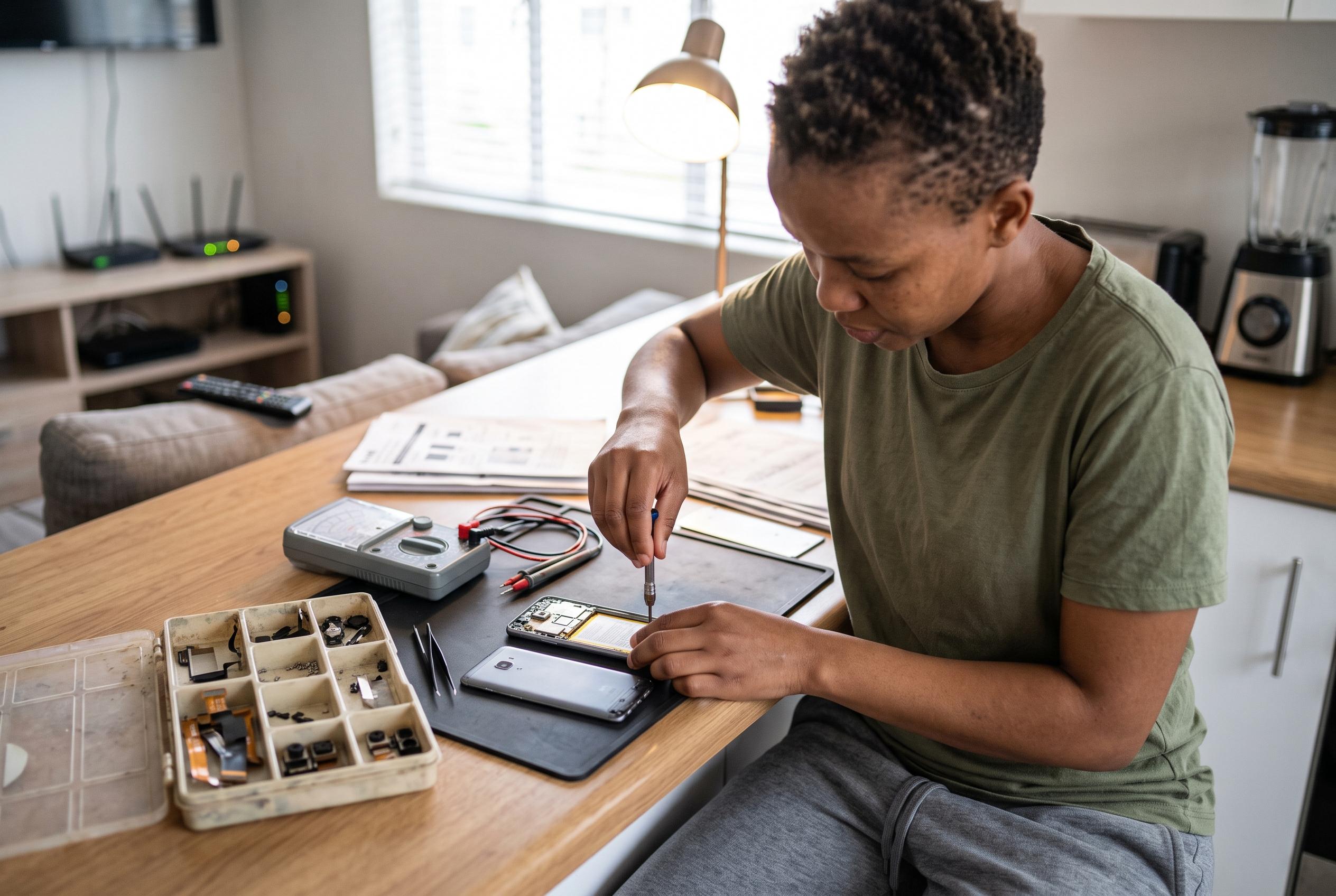

The South African Competition Commission has finalised new guidelines to enhance access to spare parts, repair data, and diagnostics, promoting competition and reducing repair costs for consumers across electronic and household devices.
South Africa’s Competition Commission has finalised a set of guidelines designed to make it easier for consumers and independent businesses to repair a broader range of products, from mobile phones and tablets to gaming consoles, televisions, household appliances, medical devices and backup power and water systems. The regulator says the framework is intended to widen choice in aftermarkets for repair, service and maintenance, while reducing the barriers that can keep prices high and limit competition.
At the centre of the move is access to spare parts, repair information and diagnostic tools. According to the Commission, some manufacturers and authorised service networks can, in practice, leave consumers with little alternative but to return to the original producer for repairs. That can happen when independent repairers are denied parts, software, technical specifications or other information needed to diagnose and fix faults. The Commission argues that such restrictions can raise costs and make it harder for smaller repair businesses to enter or expand in the market.
The guidelines are aimed mainly at repairs that fall outside a statutory, implied or express warranty, although they can also apply to work not covered by the warranty even while a product is still under guarantee. Motor vehicles are excluded because they are already covered by the Commission’s separate automotive aftermarket guidance. The regulator says the new framework does not create fresh legal duties beyond the Competition Act, but instead sets out how it will assess conduct that may undermine competition in repair markets.
The Commission has also stressed that restrictions are not automatically unlawful. In some cases, limits on access to parts or repair data may be justified on grounds such as safety, efficiency, intellectual property protection, technological improvement or compliance with other laws. Even so, it says it will look at complaints individually and assess whether conduct could breach sections 5, 8 or 9 of the Act. The Commission is encouraging independent repairers to report cases where original equipment manufacturers allegedly obstruct their ability to provide repair, service or maintenance work.
The finalisation of the guidelines follows a period of public consultation with businesses and other stakeholders. Business Day reported that the Commission wants to address anti-competitive practices that can distort the electronics and appliance repair market, while TimesLIVE earlier described the draft version as part of a broader right-to-repair push that extends well beyond the automotive sector. The regulator’s stated aim is straightforward: more competition, lower repair bills and longer product lifespans for consumers.
Disclaimer: This content is intended for informational purposes only. Readers are advised to exercise their own judgement, conduct due diligence, or consult a qualified expert before acting on any information provided.