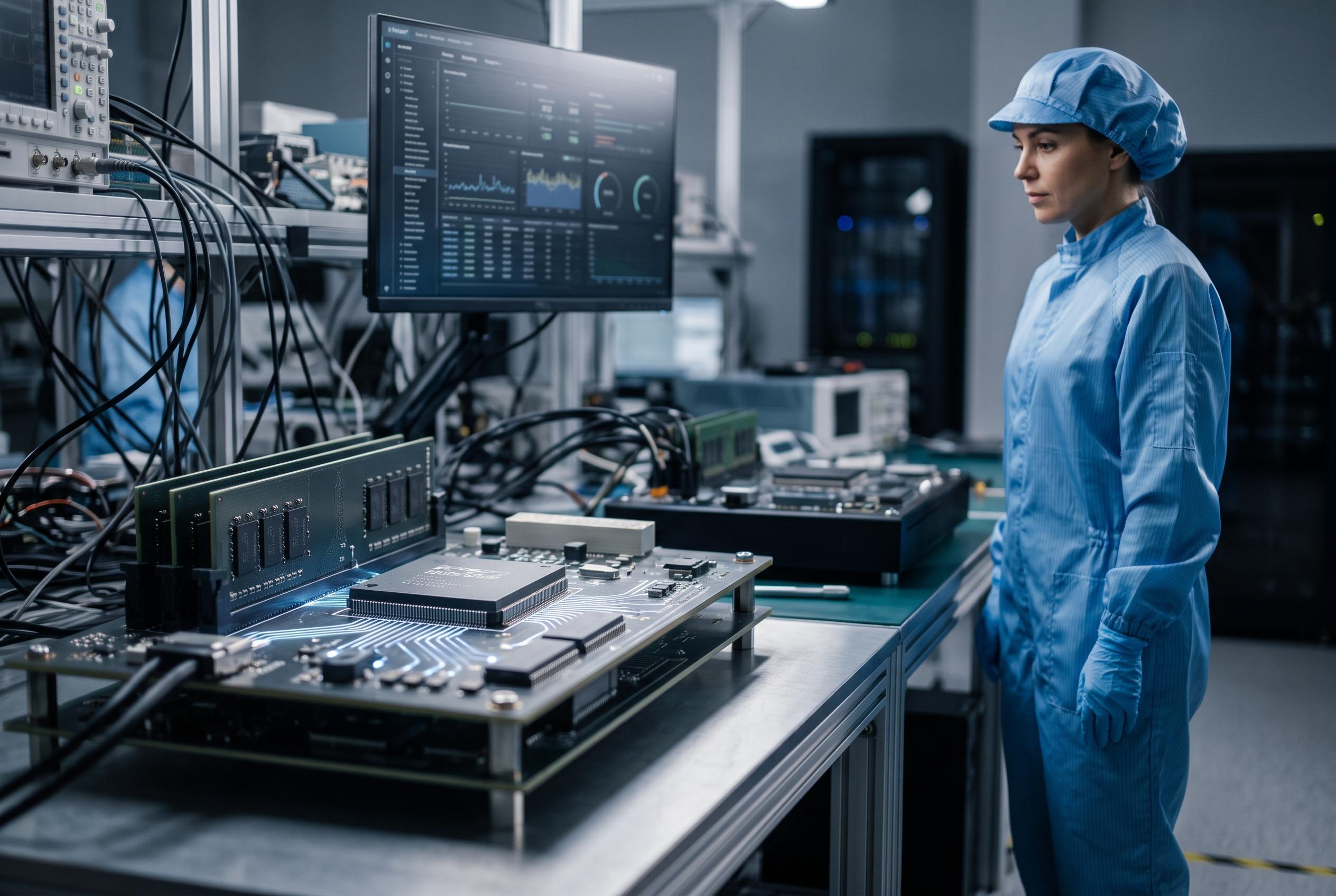

South Korea’s industry minister warns that without faster investment support, the country’s leading position in the global memory-chip market could be threatened as China intensifies its resource push, risking a shift in market power amid rising demand and supply shortages.
South Korea’s industry minister has warned that the country risks slipping from its dominant position in memory chips unless it moves faster to support investment, as China pours unprecedented resources into the sector and narrows the gap. Kim Jung-kwan, speaking at a gathering of senior reporters in Seoul, said the pace of China’s progress was alarming and argued that the government should help manufacturers secure the basic infrastructure they need, including power and water. Bloomberg has reported that the global memory-chip market could be worth almost $1 trillion before the end of the decade, underscoring how much is at stake.
South Korea still accounts for about 65% of the global memory-chip market, but Kim said that lead cannot be taken for granted. He pointed to CXMT, China’s best-known memory maker, saying it was spending more on research and development than its annual revenue, a sign of how aggressively Beijing is backing the industry. His comments reflect mounting concern in Seoul that speed, rather than scale alone, will determine who controls the next phase of the market.
The warning comes as shortages and surging demand continue to reshape the memory business. Tom’s Hardware reported that HP, Asus and Acer have begun using small amounts of CXMT DRAM in limited notebook models for non-U.S. markets as manufacturers look for extra supply amid an unprecedented shortage driven in part by demand from AI data centres. GamesRadar said CXMT’s global DRAM share rose to 8% in the second quarter, while PC Gamer reported that the company now holds about 7% of DRAM revenue worldwide, though Samsung, SK Hynix and Micron still dominate the market.
Yet the rise of Chinese memory has not yet translated into cheaper products for buyers. Tom’s Hardware reported that Lexar recently launched a 32GB DDR5 kit in China using domestically produced chips at a price that was still close to comparable Western products, suggesting that wider price relief may not arrive quickly. PC Gamer said the broader shortage could last until at least 2029, while industry plans for new factories and higher output suggest CXMT is preparing for a much bigger role in the years ahead.
Disclaimer: This content is intended for informational purposes only. Readers are advised to exercise their own judgement, conduct due diligence, or consult a qualified expert before acting on any information provided.