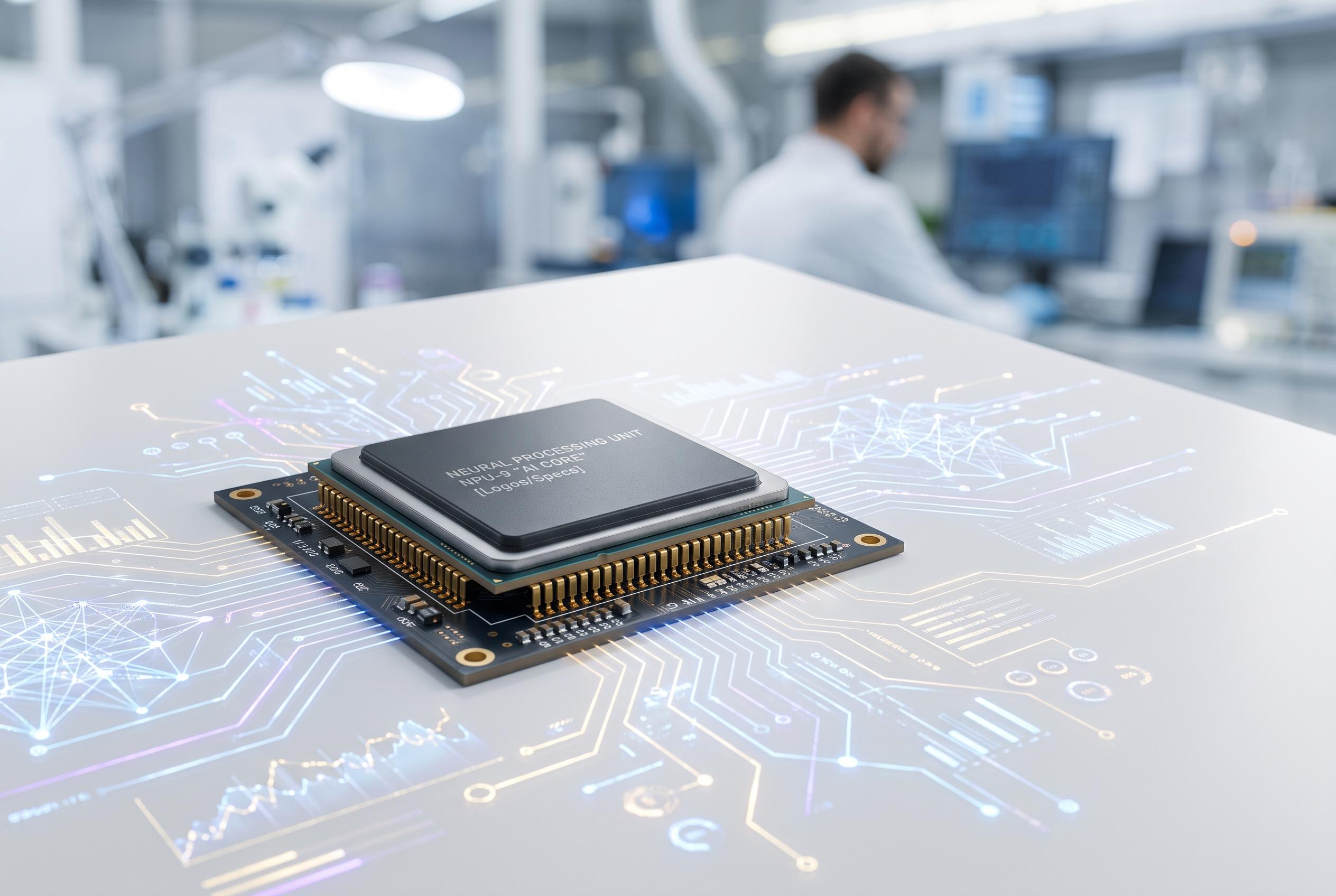

South Korean companies like DeepX and Mobilint are transforming the global AI landscape by developing specialised neural processing units for on-device intelligence, signalling a shift from cloud reliance to local processing in consumer electronics, vehicles, and industrial systems.
Low-power artificial intelligence chips are moving from a niche technology to a central part of the next phase of consumer electronics, vehicles and industrial equipment, as device makers look for faster processing without the power drain and heat associated with conventional graphics processors. Market research cited by the Korean publication shows the global on-device AI semiconductor market could rise from $47.2bn this year to $105.7bn by 2030, a trajectory that reflects rising demand for local AI processing in smartphones, PCs, cars and physical AI systems.
That shift is increasing attention on neural processing units, or NPUs, which are designed specifically for AI workloads. Unlike general-purpose GPUs, NPUs are built for efficient inference, the stage at which a trained model makes predictions or decisions. That makes them better suited to devices that must run continuously on limited battery life and within tight thermal limits. Grand View Research says the wider on-device AI market is being driven by the need for instant processing on devices such as smartphones, wearables, vehicles and internet-connected equipment, without relying on cloud servers.
Among South Korean chip developers, DeepX has emerged as one of the most closely watched. The company has recently been valued at about $2.2bn after a Series D investment round, according to the report, with follow-on funding also under discussion. DeepX said it intends to use the capital to expand mass production, push research and development on next-generation NPUs and widen its sales network across the United States, Japan, Europe, China, Taiwan and south-east Asia. The company says it already has purchase orders from customers in more than 10 countries.
DeepX chief executive Kim Nok-won said the funding would support large-scale commercialisation in global markets, with an emphasis on manufacturing, supply chains, local operations and technical support. TechCrunch reported last year that DeepX had already raised funding for mass production of its first products and for further development of on-device large language model systems, underscoring how quickly the company has moved to align itself with commercial demand.
Mobilint is following a similar path. The company is developing edge AI semiconductors and an ultra-low-power on-device AI system-on-chip, or SoC, which combines an NPU and central processor on a single chip. In practice, that allows devices to carry out AI tasks without sending data to a remote server. Mobilint says it has worked with large Korean industrial groups including POSCO, Lotte Innovate and Intellivix, and it raised 70bn won in Series C funding in April.
Other domestic chip designers are also shifting towards local AI applications. Rebellions has expanded its NPU supply work into public sector projects, including CCTV systems that apply AI analysis at the edge before sending selected images to servers for deeper processing. Puriosa AI has completed chip design for robotics, autonomous vehicles and smart factories and is preparing to bring those products to market. The broader direction is clear: as on-device AI moves deeper into mainstream products, the competitive battle is moving from cloud infrastructure towards chips that can deliver intelligence directly inside the device.
Disclaimer: This content is intended for informational purposes only. Readers are advised to exercise their own judgement, conduct due diligence, or consult a qualified expert before acting on any information provided.