

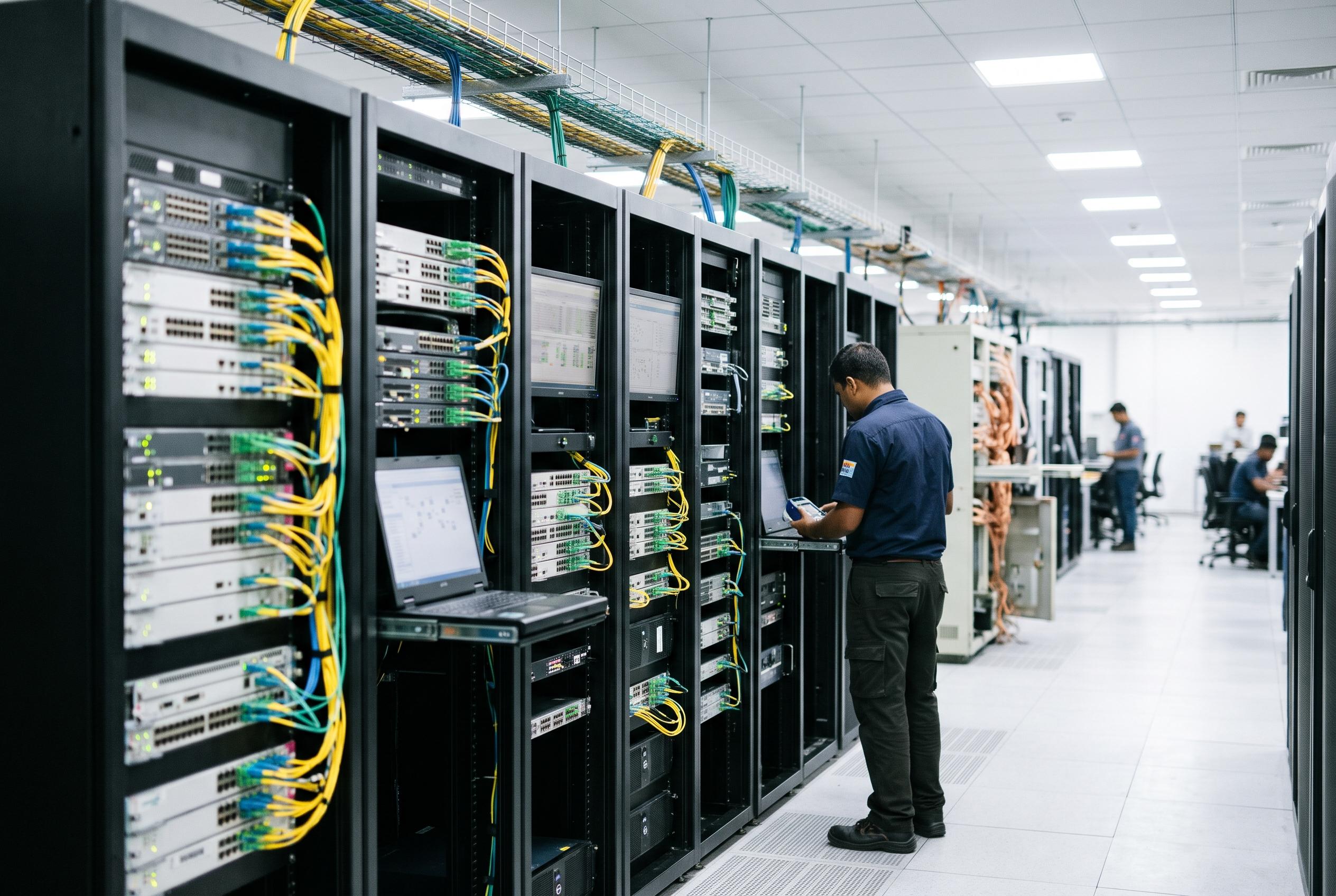

India’s new rules require operators to move traffic exchanges to licensed service area level and make IP the standard for new links, with migration due by January 2030.
India’s telecom regulator has approved a new framework for how operators connect their networks, with changes intended to simplify the exchange of calls and other traffic. The Telecommunication Interconnection (Third Amendment) Regulations, 2026 were published by the Telecom Regulatory Authority of India (TRAI) on 3 November 2026 and are due to take effect on 1 January 2027. (trai.gov.in)
Interconnection is the infrastructure and arrangements that let customers on different networks communicate. When a call or message crosses from one provider to another, it passes through connection points between their systems. TRAI’s amendment updates how that traffic is handed over, as operators modernise networks to carry voice and data services. (trai.gov.in)
A central change is the move away from the existing Short Distance Charging Area and Long Distance Charging Area points towards exchange at Licensed Service Area level. Operators will be able to agree where within a licensed area to pass traffic. TRAI says existing traffic must migrate to the new arrangement within three years, a transition intended to reduce unnecessary routing layers and support more direct exchanges. (trai.gov.in)
The rules also set IP-based links as the standard for new interconnections after commencement. Older E1 and time-division multiplexing links will be moved to IP in stages over the same three-year period. IP networks can carry voice alongside other digital traffic, but the change alone does not guarantee better calls: the practical results will depend on operators’ implementation and the capacity and quality of the links they provide. (trai.gov.in)
For capacity planning, providers must account for both the number of simultaneous sessions a link can support and its available bandwidth, while meeting service-quality requirements. The amendment also sets out a process for operators to surrender points of interconnection they no longer need. Other provisions address bank guarantees, interest on late payments, reporting and graded financial disincentives, extending the changes beyond network technology to operational and compliance matters. (trai.gov.in)
Mobile users are unlikely to notice an immediate difference when the rules begin. The migration will unfold over three years, and expected gains such as more efficient routing, lower latency and improved reliability will depend on how providers carry out the transition. The regulatory direction is towards a more uniform, IP-based system for traffic between operators, rather than an overnight change to call quality. (trai.gov.in)
Disclaimer: This content is intended for informational purposes only. Readers are advised to exercise their own judgement, conduct due diligence, or consult a qualified expert before acting on any information provided.



